Robotic welding arms have transformed various industries, showcasing improved efficiency and precision. Manufacturers increasingly rely on automation to stay competitive. With the rise of technology, many are asking, "what industries use robotic welding arms?" This inquiry reveals a landscape where automation is becoming essential.
In automotive manufacturing, robotic arms excel at executing repetitive tasks. They provide consistency and speed that human welders cannot match. The aerospace industry also utilizes these advanced machines to ensure the highest safety standards. Precision is vital in aircraft production, where even minor errors can have significant consequences.
Moreover, the construction sector is now incorporating robotic welding. These arms can work in harsh environments, minimizing human risk and enhancing productivity. Despite the benefits, challenges remain. Companies must balance technology adoption and workforce training. As industries evolve, a reflective approach is necessary to integrate robotic welding responsibly.
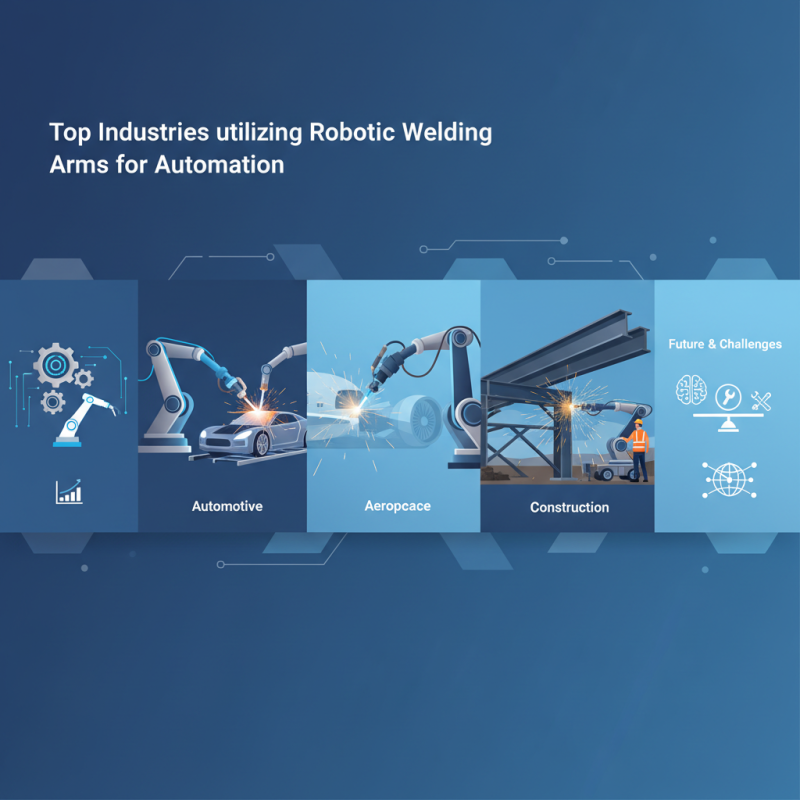
Robotic welding arms are becoming essential in various industries. Their precision and efficiency have transformed traditional manufacturing processes. By adopting these automated systems, companies can enhance productivity significantly. The automotive industry stands out as a primary adopter, relying on these technologies for high-volume production. The consistency in weld quality is a major advantage. That’s crucial for safety and durability.
Another sector benefiting from robotic welding is shipbuilding. The complexity of welding steel hulls requires accuracy and speed, which robotic arms deliver. The integration of robotic systems allows for better worker safety. It reduces manual labor and minimizes human error. However, the initial investment can be daunting. Companies must weigh the benefits against costs carefully.
Tips: Consider evaluating your current processes. Identify tasks that may lead to errors or delays. Look for opportunities where robotic arms can improve efficiency. Assessing your specific needs can guide your decision. It’s also wise to stay updated on industry trends. Embracing automation is a step, but it requires ongoing research and adjustment.
The automotive manufacturing industry stands at the forefront of automation with robotic welding arms. These advanced machines enhance precision and efficiency on assembly lines. According to a report by the International Federation of Robotics, industrial robots in this sector increased by nearly 25% in the past five years. This rise highlights a significant shift towards automation.
Robotic welding arms can perform complex tasks with speed and consistent quality. They reduce human error and minimize defects in welding processes. However, integrating this technology is not without challenges. Companies face a steep learning curve and must invest in training staff to operate and maintain these robots.
Furthermore, reliance on robotics can lead to a skills gap in the workforce. While automation improves productivity, it may reduce demand for manual labor jobs. This creates a critical need for reskilling initiatives. Balancing technology and human skill remains a pressing concern for manufacturers.
In the aerospace sector, the demand for lightweight structures is driving the integration of robotic welding arms. These advanced machines enhance precision and consistency in weld quality, crucial for components such as airframes and wings. According to a recent industry report, the aerospace welding market is projected to grow by over 5% annually through 2028. This growth reflects the shift towards automation in ensuring safety and performance.
Manufacturers face challenges in adapting their workforce. Training employees to work alongside machines is critical. Robotic welding arms can reduce human error, but an over-reliance on automation might lead to skill gaps. Balance is key. Integrating robotics does not eliminate the need for human expertise.
Tips: Always assess the compatibility of robotic systems with existing processes. Consider pilot programs before full-scale implementation. Regular maintenance of robotic arms can prevent costly downtimes. Understanding the technology is crucial for successful integration. Engaging in continuous learning helps workers stay relevant in this evolving field.
The shipbuilding industry is rapidly changing due to automation. Robotic welding arms are becoming central in this evolution. They enhance productivity and precision, significantly reducing human error. Ships, often large structures, require complex welding processes. Using robotic arms ensures uniformity and strength in welds. Speed is another advantage. These robotic welders can work tirelessly, cutting down production time.
Yet, the transition to automation is not without challenges. Some workers fear job loss as machines take over manual tasks. Training and reskilling are essential to ease this transition. Furthermore, the initial investment in robotic technology can be daunting for small shipbuilders. They must weigh costs against long-term benefits. Automation may promise efficiency, but it also requires thoughtful implementation. The key is balancing technology with human talent.
In the construction and infrastructure industry, robotic welding arms are revolutionizing metal fabrication. These advanced machines streamline processes, reduce labor costs, and enhance precision. Studies show that robotic welding can improve production speed by up to 50%, a significant increase compared to manual techniques.
However, integrating robotic systems requires careful planning. Not all tasks are suitable for automation. For instance, unique or complex welds may still need human intervention. Operators must understand the limitations of these machines. A report by the International Federation of Robotics highlights that while automation boosts efficiency, workforce training remains essential.
Moreover, safety concerns persist. Robot welders need to operate in controlled environments to minimize risks. Despite their advantages, initial setup costs can be a barrier. A careful cost-benefit analysis is essential before transitioning to automation. Balancing technology and skilled labor creates a more effective workflow.
| Industry | Automation Level (%) | Primary Benefits | Key Challenges |
|---|---|---|---|
| Automotive Manufacturing | 85 | Precision, Speed, Cost Reduction | High Initial Investment |
| Aerospace | 80 | Enhanced Safety, Lightweight Structures | Technical Skill Shortage |
| Construction | 70 | Improved Efficiency, Versatility | Regulatory Compliance |
| Shipbuilding | 75 | Consistency, Labor Reduction | High Equipment Costs |
| Heavy Machinery | 78 | Faster Production, Quality Control | Maintenance Complexity |
| Energy Sector | 60 | Safety, Efficiency | Integration with Existing Systems |
| Metal Fabrication | 90 | Customizability, Reduced Waste | Skilled Labor Shortage |
| Railways | 68 | Durability, Lower Delays | Funding and Budgeting Issues |
| Electronics | 65 | Precision Assembly | Rapid Technology Changes |
| Military | 75 | Safety, Precision Manufacturing | High Security Regulations |
In the electronics manufacturing sector,
robotic welding arms play
a crucial role. They enhance both quality and consistency throughout the assembly process.
These advanced machines reduce human error, a significant factor in production flaws.
Precision is vital when creating
intricate electronic components. Robotic arms excel in delivering consistent welds, ensuring
that each piece meets quality standards.
However, reliance on automation can sometimes lead to challenges. Companies may find it
difficult to adapt their workforce to this new technology. Training employees to work alongside
robotic systems requires time and resources. Furthermore, while robotic arms provide high
consistency, they lack the nuanced judgment that human operators possess. This disconnect
can result in oversight, especially in complex assembly tasks that require creative problem-solving.
Maintaining quality is not solely about machines.
Regular monitoring and maintenance of the robotic systems are essential to prevent breakdowns.
Even the most advanced robotic technology can malfunction. Thus, businesses must invest in both the
technology and their workforce. Finding the right balance between automation and human insight
is key to achieving optimal results in electronics manufacturing.
: Various industries, including automotive, shipbuilding, and aerospace, are adopting robotic welding arms for efficiency.
They provide high-volume production and ensure consistent weld quality, enhancing safety and durability.
They deliver accuracy and speed, crucial for welding complex steel hulls, while improving worker safety.
Yes, the initial investment can be high. Companies must carefully weigh costs against potential benefits.
Evaluate current processes to identify errors and delays. Look for tasks where automation can increase efficiency.
Training is critical. Employees must learn to work alongside machines to avoid skill gaps in the workforce.
The market is expected to grow by over 5% annually through 2028, driven by the demand for lightweight structures.
Assess compatibility with current processes. Start with pilot programs and ensure regular maintenance of equipment.
An over-reliance can create skill gaps in the workforce, making human expertise still necessary.
It helps them stay relevant and adapt to new technologies, essential for navigating the evolving industrial landscape.
Robotic welding arms have become integral to a variety of sectors looking to enhance efficiency and precision in their operations. Notably, the automotive manufacturing industry utilizes these advanced tools to revolutionize assembly line processes, significantly increasing production rates and consistency. In the aerospace sector, robotic welding arms facilitate precision welding, essential for creating lightweight yet durable structures that meet stringent safety standards.
Other key industries adopting robotic welding arms include shipbuilding, where automation accelerates production timelines, and construction and infrastructure, streamlining metal fabrication. Electronics manufacturing also benefits from these technologies, as they help improve quality and consistency in assembly. Overall, the question of what industries use robotic welding arms reveals that this technology is reshaping multiple sectors, driving innovation and efficiency across the board.

Sandai Robot