Industry-leading 6-axis robotic stations engineered for speed, accuracy, and durability.
In the contemporary industrial landscape, the transition from manual welding to Multi-Station Welding Automation Arms represents a fundamental shift in manufacturing efficiency. As a leading manufacturer and exporter, Shenzhen Sandai Robot Co., Ltd. is at the forefront of this evolution, providing integrated solutions that transcend simple robotic movement to offer synchronized, multi-tasking industrial ecosystems.
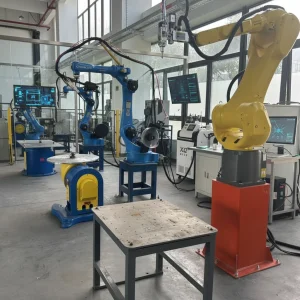
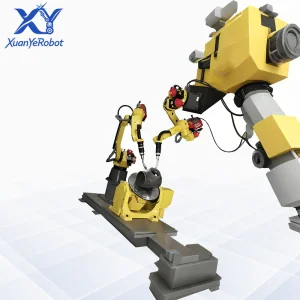
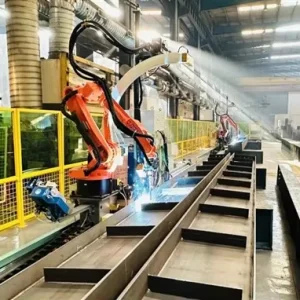
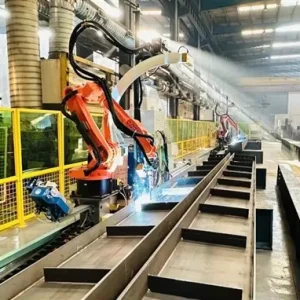
The traditional manufacturing model often relied on isolated welding cells, which created bottlenecks during part loading and unloading. Today’s multi-station welding workstations utilize dual or triple-station configurations. While the robot arm is actively welding on Station A, the operator (or a secondary robot) can load Station B. This "zero-downtime" philosophy increases throughput by up to 40-60% compared to traditional setups.
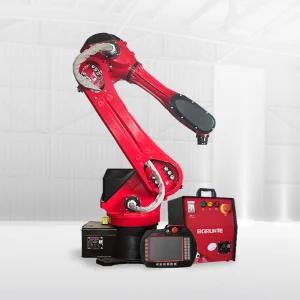
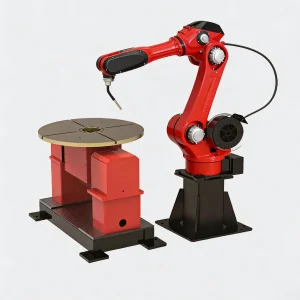
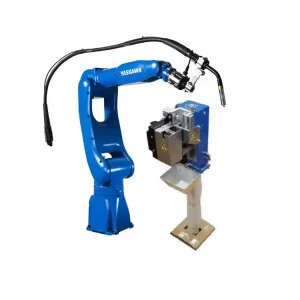
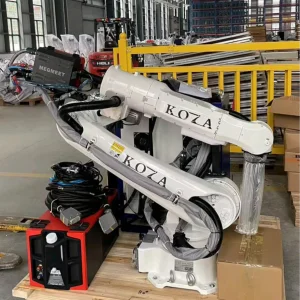
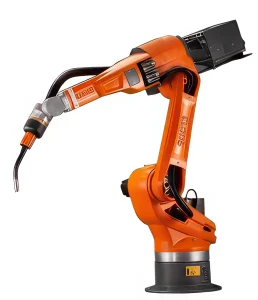
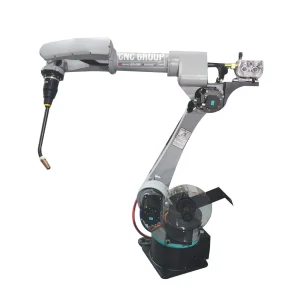
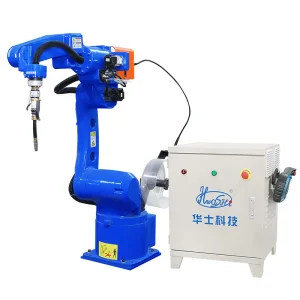
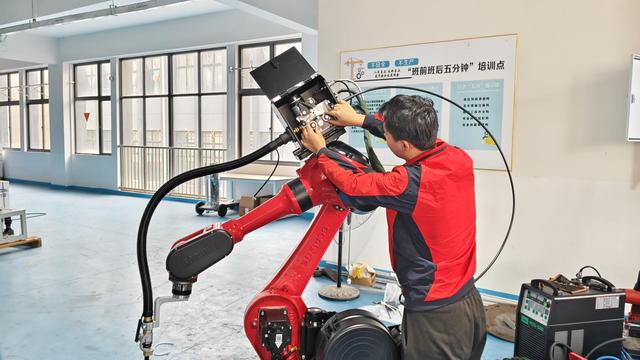
Our 6-axis CNC welding robot stations are equipped with advanced PLC control systems and rotary table positioners. This integration allows the robot to access complex geometries with a high degree of repeatability (±0.05mm), essential for industries such as automotive sub-frames, metal bed frames, and aerospace structural components.
Procurement departments in North America, Europe, and Southeast Asia are increasingly prioritizing total cost of ownership (TCO) over initial purchase price. A multi-station welding automation arm from Sandai Robot offers significant ROI through:
The future of welding automation lies in Adaptive Intelligence. Our current R&D focus involves integrating 3D laser vision sensors that can detect weld gap variations in real-time. By automatically adjusting the voltage, current, and travel speed (Adaptive Control), our 6-axis robotic arms can weld even when parts have slight fit-up variations.
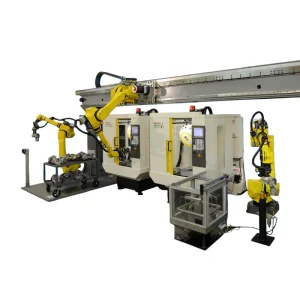
Our partnership with global leaders like FANUC, YASKAWA, and KUKA ensures that our integration capabilities are world-class, combining the best of international robotic controllers with our proprietary tooling and station synchronization software.
As a global exporter, we understand that "compliance" is non-negotiable. Every system exported by Sandai Robot adheres to CE, UL, and RoHS standards. We provide comprehensive documentation, including wiring diagrams in English, maintenance schedules, and safety protocols for HMI operation.
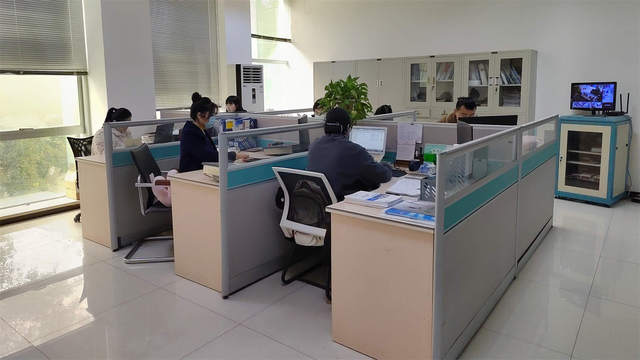
With over 380 employees, our technical support team provides 24/7 remote diagnostics via IoT-enabled controllers, ensuring that if a station stops in Mexico, our engineers in Shenzhen or our local partners in North America can provide an immediate resolution.
Why we are the preferred partner for heavy industrial automation.
Features area scanners, safety light curtains, and emergency stop synchronization across all workstations.
Capable of handling up to 1150 packs/hour with precision path planning and motion smoothing.
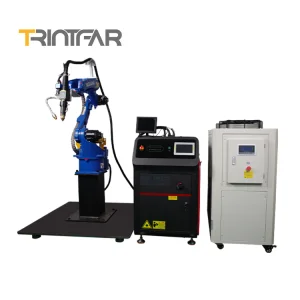
Seamlessly switch between TIG, MIG, MAG, and Fiber Laser welding within a single multi-station environment.
Cloud-ready HMI monitors weld quality, cycle times, and wire consumption for data-driven production.
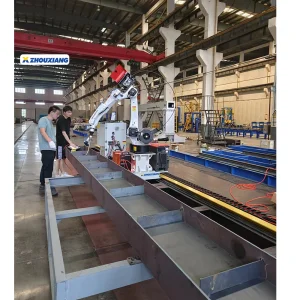
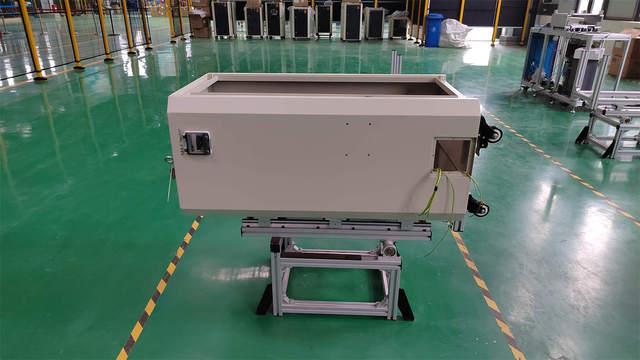
Heavy-duty rail systems and positioners designed for 24/7 operation in harsh industrial environments.
Customized workstation layouts tailored to your factory's specific footprint and workflow requirements.
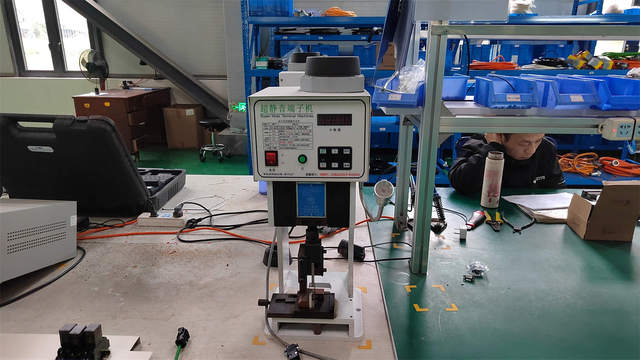
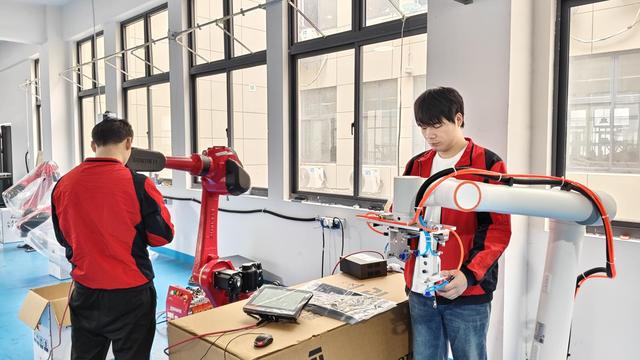
Shenzhen Sandai Robot Co., Ltd. is a professional industrial automation enterprise specializing in the development and manufacturing of welding robot arms, robotic welding systems, and intelligent welding automation solutions for global manufacturing industries. Established in 2012 and headquartered in Shenzhen, China, the company integrates advanced robotics technology, precision engineering, software development, and automated production capabilities to deliver reliable and efficient welding solutions worldwide.
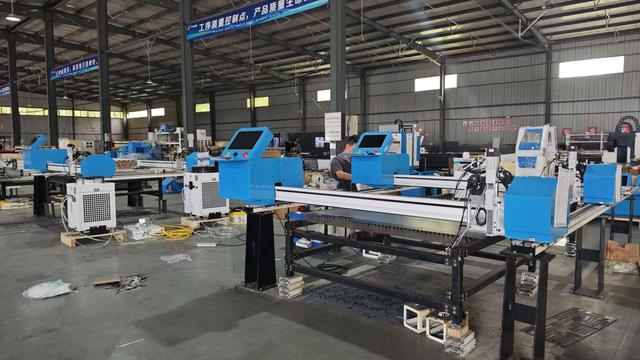
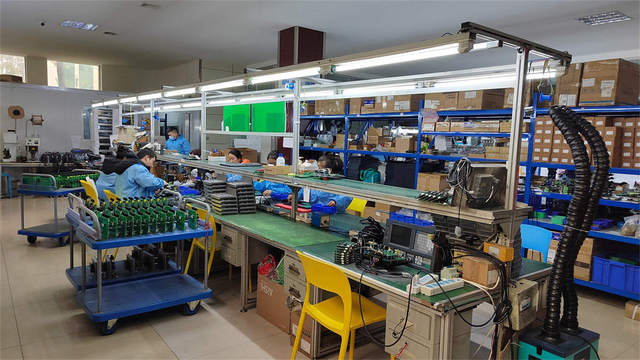
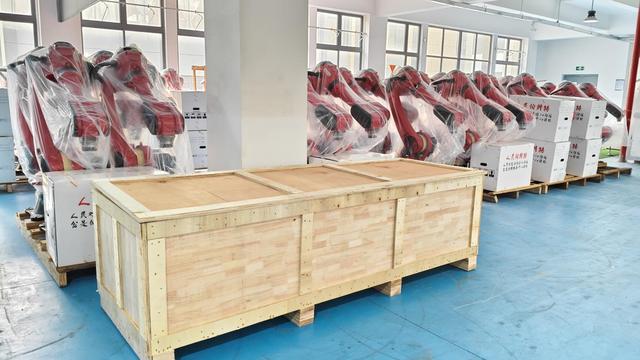
Sandai Robot operates a modern manufacturing facility covering more than 32,000 square meters and employs over 380 experienced engineers, technicians, and production specialists. With 20 automated assembly and testing lines, the company maintains strict quality control procedures throughout design, production, calibration, and final inspection processes. Its annual production capacity exceeds 8,000 industrial robotic welding units, serving customers across automotive manufacturing, metal fabrication, shipbuilding, construction machinery, aerospace components, and heavy industrial equipment sectors.
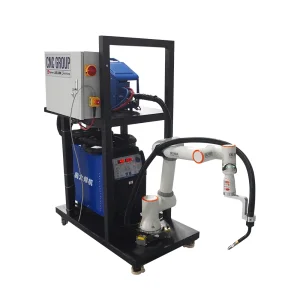
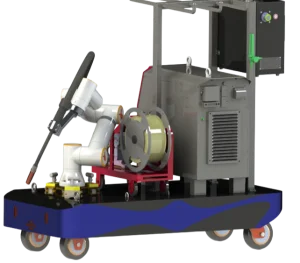
The company’s core product portfolio includes six-axis welding robot arms, collaborative welding robots, laser welding systems, MIG/TIG robotic welding stations, automated welding manipulators, and customized robotic integration solutions. By combining AI visual positioning, servo motion control technology, intelligent path programming, and real-time monitoring systems, Sandai Robot provides high-precision and stable welding performance for complex industrial applications.
Insights into the procurement and implementation of welding automation.
Typically, our clients see full ROI within 12-18 months. This is achieved through a 50% reduction in labor costs, a 30% reduction in consumable waste (wire and gas), and a drastic reduction in post-weld rework.
Yes. Our stations use universal communication protocols (Profinet, EtherNet/IP, Modbus) and PLC control systems that allow them to interface with your existing conveyors, ERP systems, and safety networks.
We offer a two-tiered support strategy: 1. Remote diagnostics via the robot's cloud-connected HMI. 2. A global network of certified service partners for on-site hardware maintenance and spare parts supply.
Absolutely. We provide comprehensive training packages (on-site or at our Shenzhen facility) covering robot programming, station safety, routine maintenance, and weld parameter optimization.
Explore our specialized range of multi-axis and multi-process automation stations.
 Sandai Robot