Explore our cutting-edge configurations engineered for structural steel layout, heavy automotive dynamics, and automated infrastructure welding.
Shenzhen Sandai Robot Co., Ltd. is a professional industrial automation enterprise specializing in the development and manufacturing of welding robot arms, robotic welding systems, and intelligent welding automation solutions for global manufacturing industries. Established in 2012 and headquartered in Shenzhen, China, the company integrates advanced robotics technology, precision engineering, software development, and automated production capabilities to deliver reliable and efficient welding solutions worldwide.
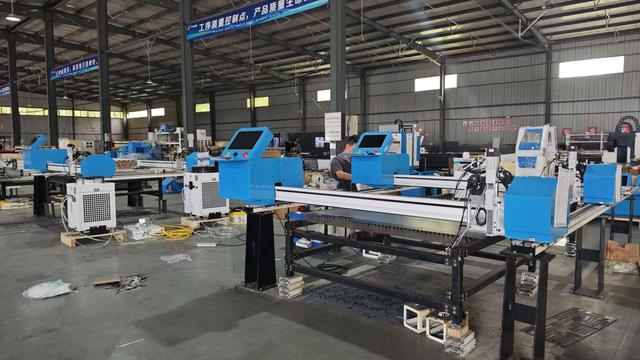
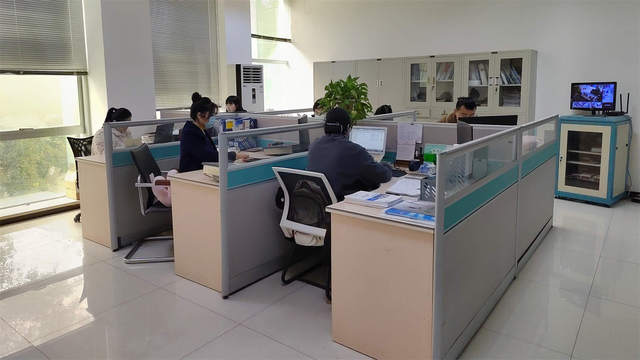
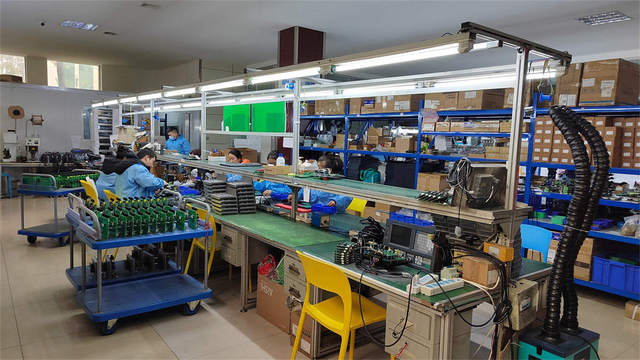
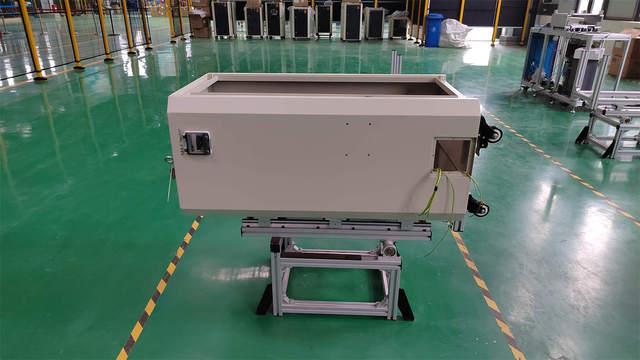
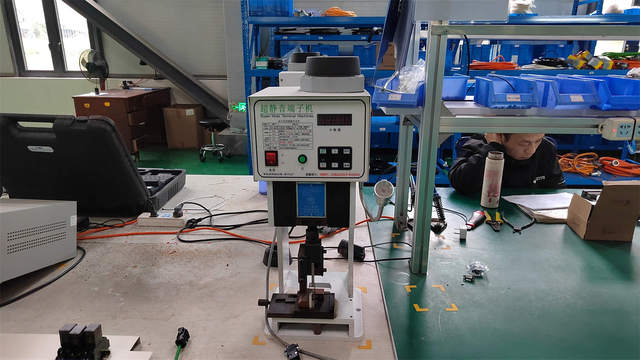
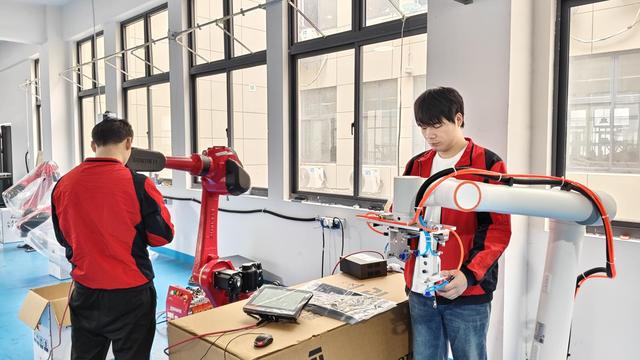
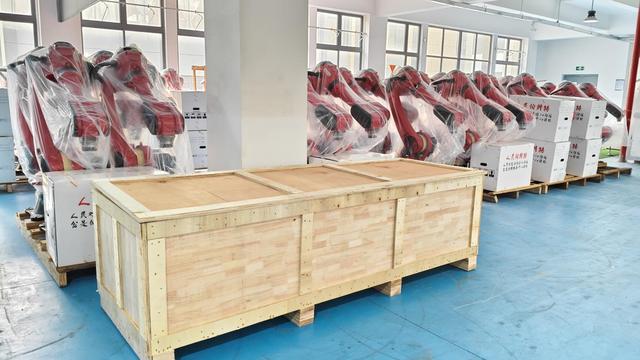
Sandai Robot operates a modern manufacturing facility covering more than 32,000 square meters and employs over 380 experienced engineers, technicians, and production specialists. With 20 automated assembly and testing lines, the company maintains strict quality control procedures throughout design, production, calibration, and final inspection processes. Its annual production capacity exceeds 8,000 industrial robotic welding units, serving customers across automotive manufacturing, metal fabrication, shipbuilding, construction machinery, aerospace components, and heavy industrial equipment sectors.
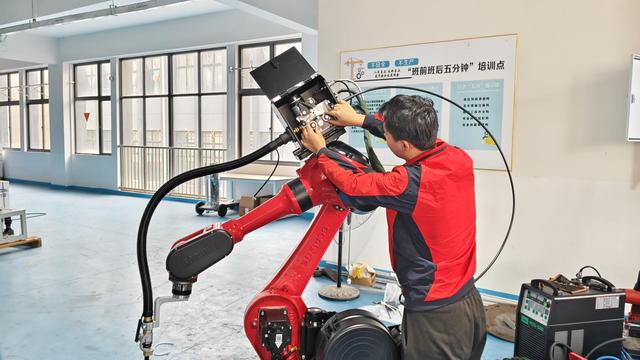
The company's core product portfolio includes six-axis welding robot arms, collaborative welding robots, laser welding systems, MIG/TIG robotic welding stations, automated welding manipulators, and customized robotic integration solutions. By combining AI visual positioning, servo motion control technology, intelligent path programming, and real-time monitoring systems, Sandai Robot provides high-precision and stable welding performance for complex industrial applications.
Driven by continuous innovation and smart manufacturing development, Sandai Robot invests heavily in robotics research and automation software optimization. The company is committed to helping global manufacturers improve production efficiency, welding consistency, workplace safety, and long-term operational performance through advanced robotic welding technologies and flexible OEM/ODM cooperation services.
Information Gain Axiom: Modern heavy structural fabrication requires more than simple path execution. True reliability lies in structural stiffness, joint torque capabilities, and real-time kinetic corrections capable of compensating for localized thermal expansion during heavy-gauge multi-pass deposition.
The manufacturing paradigms governing heavy structural steel fabrication have transitioned drastically from basic mechanical track fixtures to intelligent, high-degree-of-freedom (DoF) multi-axis articulated welding arms. Historically, structural metal joining relied on manual operators or rigid, single-axis gantry tracks. These legacy setups suffered from significant yield variations, low arc-on time, and limited adaptiveness to spatial inaccuracies in raw structural mill materials.
Today, advanced steel fabrication welding arms feature heavy-duty casting designs with optimized structural kinematics. By employing finite element analysis (FEA), modern structural arms achieve incredible torsional stiffness while mitigating weight, allowing for high velocity movements without positional overshoot. The inclusion of zero-backlash harmonic drives and precision planetary gearboxes ensures repeatability limits within ±0.03mm, a necessity when dealing with deep penetration multi-pass joint configurations.
Furthermore, the integration of multi-wavelength laser tracking systems and vision-guided weld profiling has completely changed torch positioning. Modern systems do not merely follow pre-programmed paths; they dynamically scan the groove topology, evaluate root gaps in real-time, adjust travel speed, and modulate wire feed rates dynamically to optimize the deposition matrix. This shift from blind mechanical manipulation to cyber-physical sensory processing defines the current generation of intelligent robotic assembly.
Optimized cast iron and carbon steel structures minimize mechanical deflection during high-payload structural movements.
Real-time laser and seam-tracking vision integration identifies spatial geometry updates instantly.
Precision gear assemblies ensure accurate path repeatability down to sub-millimeter tolerances over years of continuous use.
Procurement executives in Tier-1 construction, heavy infrastructure, and heavy transport manufacturing operate within tight capital expenditure parameters and rigorous total cost of ownership (TCO) matrices. The process of auditing a steel fabrication welding arm manufacturer goes far beyond evaluating base machine pricing; it demands a deep evaluation of industrial reliability, duty-cycle limits, and long-term integration support.
Global operations face severe labor shortages for certified structural welders (such as AWS D1.1 or EN ISO 9606 experts). Consequently, buying cycles are shifting from manual tooling setups toward complete automated turn-key cells. Procurement teams prioritize high-duty-cycle stability (typically 100% duty cycle at maximum amperage parameters) and standardized software frameworks that easily bridge the gap with pre-existing ERP and product lifecycle management (PLM) architectures.
Additionally, asset flexibility has emerged as a key requirement. Manufacturers can no longer afford single-purpose automated infrastructure dedicated to a single product lifetime. Modern investment focuses heavily on flexible 6-axis deployments equipped with versatile mounting options (such as extended linear floor tracks or overhead traveling gantries) to accommodate wide-ranging part variations without requiring comprehensive floor plan overhauls.
Deploying standalone machinery onto a complex production floor often results in bottleneck migration rather than comprehensive plant optimization. To realize the full potential of robotic investments, modern factories must look at macro-level workflow integration, connecting workpieces from initial prep stations through final nondestructive testing (NDT).
A true industrial automation solution ties together multiple manufacturing elements:
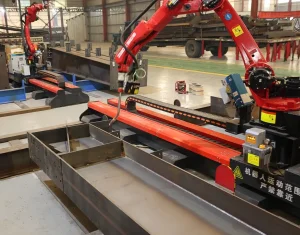
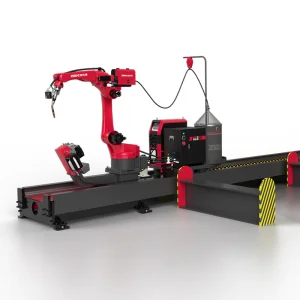
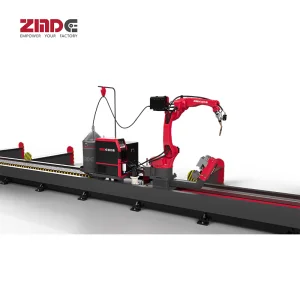
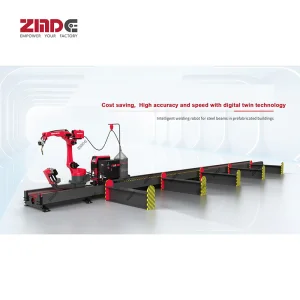
Integrating 6-axis ground rail welding arms with multi-ton positioners enables automated fabrication of massive heavy-gauge H-beams, structural columns, and box girders. Automated seam hunting modules scan the massive workpieces, clearing scale or fit-up anomalies before initiating heavy-amperage sub-arc or gas metal arc welding (GMAW) processes.
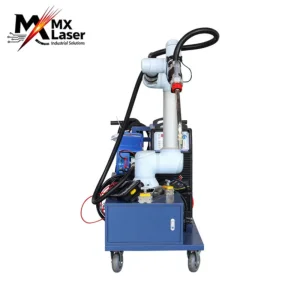
For custom fabrication facilities, collaborative robot arms (Cobots) paired with easy-to-use parametric programming interfaces allow rapid part-to-part switchovers. Quick-change torch packages let operators toggle between high-deposition MIG torches and high-precision laser-welding optical heads in seconds, maintaining high utilization rates across diverse job lots.
Operating high-energy automation machinery globally requires absolute compliance with regional safety frameworks and industrial manufacturing standards. A premier factory must provide rigorous validation protocols to ensure seamless deployment and risk mitigation across all international operational boundaries.
Our manufacturing and quality control methodologies ensure complete alignment with critical industrial directives:
Furthermore, reliable field operation depends heavily on dedicated localized support infrastructure. By establishing certified regional service centers, we provide on-demand access to critical components, prompt engineering interventions, and standard calibration support, ensuring maximum machine availability for our global industrial partners.
The roadmap for structural steel welding arms is centered on deeper software autonomy and cognitive adjustments. As factory networks migrate toward fully realized Industry 4.0 architectures, the industrial welding arm is changing from an execution tool into an intelligent edge-computing node.
Our current R&D vector prioritizes three foundational technological branches:
By collecting continuous vibrational, thermal, and torque data from every kinematic joint, edge-AI models predict harmonic component fatigue before mechanical failure happens. This predictive approach aims for zero unscheduled downtime across multi-year factory operations.
Next-generation optical systems track the structural weld pool in real-time. By processing high-speed imaging via neural networks, the arm dynamically tunes voltage, gas output, and wire feed parameters millisecond-by-millisecond to stop porosity or undercut defects before the metal solidifies.
Eliminating manual teaching steps, our future software suites automatically read raw 3D CAD models, identify weld seams, calculate optimal torch angles, plan collision-free motions, and push operational instructions to the machine floor without requiring specialized code engineering.
Addressing structural engineering considerations, control methodologies, and procurement parameters for automated welding systems.
Review the full industrial collection of support extensions, 6-axis configurations, and heavy structural manipulation options.
 Sandai Robot