In today's competitive manufacturing landscape, companies continually seek innovations to enhance efficiency. One promising advancement is the robotic welding arm. This technology raises an important question: can a robotic welding arm improve productivity?
Robotic welding arms streamline operations by performing tasks faster than human hands. They ensure consistent quality in welds, reducing errors that can lead to costly rework. Additionally, these machines can work around the clock, maximizing output. Industries from automotive to aerospace benefit from this automation.
However, challenges exist. Initial investments are substantial. Training staff to work alongside robots poses another hurdle. Businesses must weigh these factors against potential productivity gains. The impact of robotic welding is profound, yet it requires careful consideration and strategic planning.
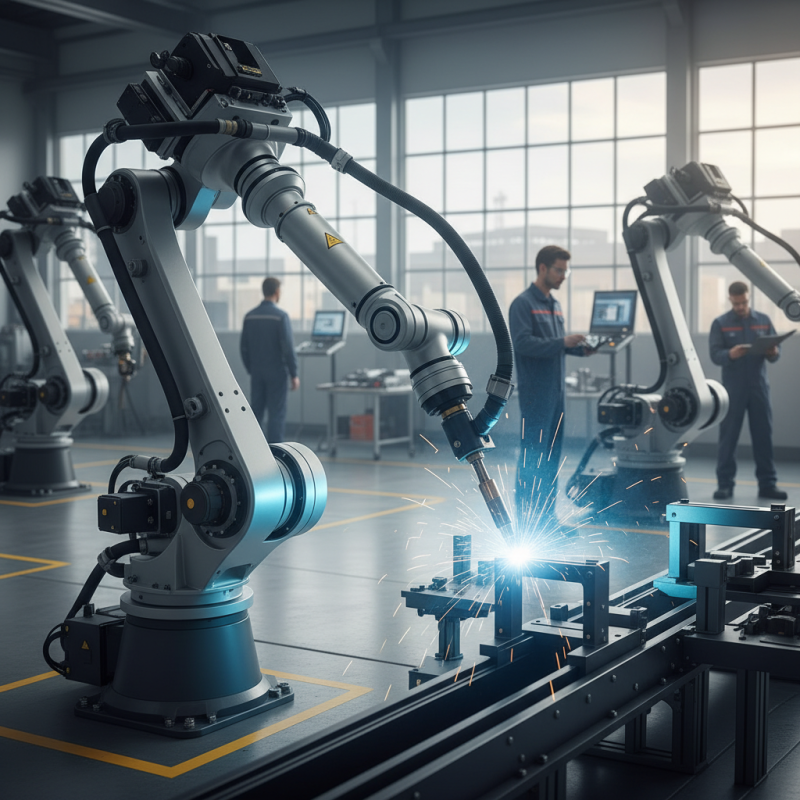
Robotic welding technology has transformed manufacturing by enhancing precision and efficiency. At its core, this technology utilizes automated arms to perform welding tasks. These robotic arms are programmed for specific routines, allowing for consistent weld quality. Unlike manual welding, robotic systems minimize human error, which is crucial for projects requiring high accuracy.
Many manufacturers have started incorporating robotic welding into their production lines. One advantage is the reduction in cycle time. Robots can work continuously without fatigue, leading to faster output. However, integrating this technology is not without challenges. For instance, initial setup and programming require skilled technicians. Training staff to work alongside robots can also be demanding.
Despite these hurdles, many industries see the value in robotic welding. It not only boosts productivity but also enhances safety by reducing worker exposure to hazardous conditions. There is still room for improvement in optimizing these systems. Assessing the balance between automation and human intervention is necessary for long-term success.
Robotic welding arms have become a game-changer in modern manufacturing. These machines increase productivity significantly by enhancing speed and precision. With automated processes, manufacturers can produce consistent welds, reducing the likelihood of defects. This not only minimizes waste but also lowers costs over time.
Moreover, the integration of robotic welding arms allows for greater flexibility in production lines. They can adapt to various tasks and change configurations quickly, which is beneficial in custom manufacturing. However, transitioning to robotic systems can be daunting. Workers might fear job loss or the need for new skills. It’s crucial to focus on training employees, ensuring they understand the technology.
Investing in robotic technology can also present challenges. Initial costs may be high, and maintenance requires specialized knowledge. Companies must weigh these factors against the long-term gains in efficiency and reduced labor costs. Achieving a smooth balance is essential for successful implementation.
Manual welding processes have long been a staple in manufacturing. However, they come with limitations. Human welders can only maintain focus for short periods. Fatigue leads to errors, resulting in inconsistent weld quality. According to a recent industry report, manual welding typically yields a productivity rate of 20 to 40 parts per hour. This varies with the skill level of the worker and the complexity of the task.
In contrast, robotic welding arms can operate 24/7 with minimal downtime. They achieve a productivity rate of 60 to 120 parts per hour. These robots deliver consistent weld quality, reducing the risk of defects. A study from the International Institute of Welding highlighted that automated welding reduced rework costs by up to 30%. This not only streamlines production but also enhances overall efficiency.
Nonetheless, shifting to robotic welding is not without challenges. Initial setup costs can be high. Companies must invest in training staff to operate and maintain these systems. Integration into existing workflows can also be complex. As manufacturers weigh these factors, the potential for improved productivity through robotic systems is compelling and merits serious consideration.
Implementing robotic welding systems in manufacturing can boost productivity significantly. However, challenges exist. One main issue is the upfront cost. Investing in robotic arms can strain budgets, especially for small businesses. Maintenance costs also add up over time. Planning for these expenses is crucial to avoid financial strain.
Training staff is another hurdle. Workers need to understand both the technology and safety protocols. Without proper education, systems can malfunction, leading to accidents. Therefore, investing time in comprehensive training programs is essential. A skilled team can operate robotic welders efficiently, minimizing errors.
Tips: Consider starting with a gradual rollout of robotic systems. Test these robots on less critical projects first. This approach allows teams to adapt without overwhelming them. Regular evaluation of the system's performance is key. Track production rates and quality to identify areas for improvement. Balancing technology with human skill will ensure smoother operations and enhance overall productivity.
The rise of robotics continues to reshape the manufacturing sector. Robotic welding arms are a prime example of this evolution. These machines enhance precision and speed while reducing errors. Many manufacturers see a significant increase in productivity with their integration. They can operate continuously, minimizing downtime and allowing for consistent output. However, relying solely on machines can lead to challenges in workforce dynamics.
Future trends suggest that robotics will become even more advanced. Innovations in artificial intelligence and machine learning are on the horizon. These technologies can help robots learn from their mistakes and improve their processes over time. The idea of human-robot collaboration is also gaining traction. This combination could lead to even greater efficiencies. Yet, not every factory is ready for these changes. Some may struggle with the transition, highlighting a need for training and adaptation.
As the manufacturing landscape evolves, companies must assess their unique needs. While robotic arms offer many benefits, they are not a one-size-fits-all solution. A proper balance between automation and human input is crucial. Embracing change is vital, but it is also important to consider the broader implications for the workforce. Adapting to these trends will require thoughtfulness and strategic planning.
: It uses automated arms to perform welding tasks. These arms enhance precision and efficiency in manufacturing.
Robots can work continuously, leading to faster output and consistent weld quality. This reduces cycle time significantly.
Initial setup requires skilled technicians and staff training can be demanding. Transitioning may also create job security concerns.
Employees need to understand the technology. Adequate training helps them adapt and work safely alongside robots.
Robotic systems operate 24/7, achieving higher productivity rates and reducing errors due to fatigue. Manual welding is limited by human focus.
Initial costs can be high but may lead to long-term savings. Maintenance requires specialized knowledge, which can add complexity.
Yes, it reduces worker exposure to hazardous conditions. This enhances overall safety in the workplace.
Yes, optimizing robotic systems for better balance with human intervention is necessary. Continuous improvement is vital for success.
Robotic welding technology has transformed the manufacturing landscape by significantly improving efficiency and productivity. The implementation of robotic welding arms can enhance productivity by offering precision, consistency, and faster production rates compared to traditional manual welding processes. By automating labor-intensive tasks, these systems minimize human error and reduce cycle times, ultimately leading to cost savings and higher output.
However, the transition to robotic welding systems is not without its challenges, including high initial investment and the need for skilled personnel to manage and maintain the equipment. Despite these hurdles, solutions such as modular systems and training programs can facilitate a smoother integration. Looking ahead, the future trends in the manufacturing sector indicate a growing reliance on robotics. Indeed, as industries continue to seek ways to optimize operations, the question remains: can a robotic welding arm improve productivity? The evidence suggests a resounding yes, positioning robotics as a cornerstone of efficient manufacturing practices.

Sandai Robot