7 Tips to Improve Productivity with a Robotic Welding Arm?

Time:2026-09-30 Author:Isabella
0%

Can a robotic welding arm improve productivity? In many fabrication cells, yes, but not through automation alone. A stable arm can repeat torch angle, travel speed, and weld sequence across similar parts. That consistency may reduce rework and let skilled welders focus on fit-up, inspection, and complex joints. Yet a robot cannot correct poor joint preparation. A misplaced clamp, worn contact tip, or inconsistent part can stop the cell. Small details matter. Real gains depend on cycle-time data, fixture design, operator training, and planned maintenance. Compare good parts per shift, downtime, and repair rates before and after making changes.

The seven tips below turn those checks into a manageable improvement plan. They address task selection, workholding, programming, consumables, maintenance, operator skills, and performance review. Begin with one repeatable job, then record cycle time, arc-on time, changeover minutes, and defects. Follow the robot manufacturer’s operating limits, and involve a qualified welding professional when changing processes. Protect the cell with suitable guarding and verify procedures before production. Do not judge success by faster arm motion alone. Quality and uptime count. One honest baseline can reveal whether the bottleneck is welding, loading, or inspection. That finding may challenge the first assumption. Progress is rarely perfectly smooth; a fixture adjustment can help one part and complicate another. Test changes during a controlled run, document results, and keep reviewing the numbers.
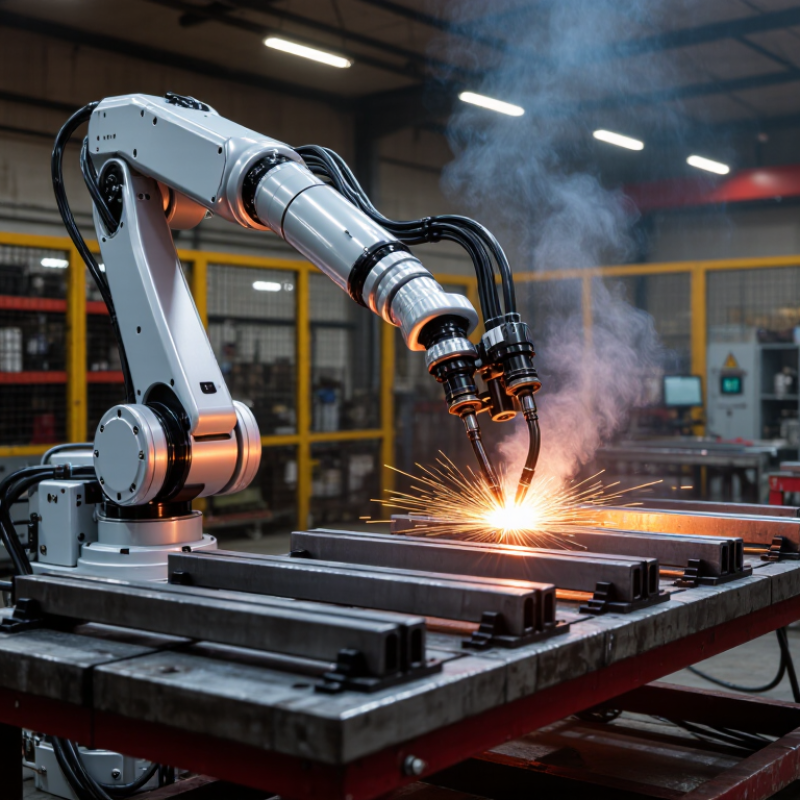
7 Tips to Improve Productivity with a Robotic Welding Arm?

Understanding Robotic Welding Arms and Their Productivity Benefits

Robotic welding arms combine a programmable robot, a welding power source, a torch, and safety equipment to repeat a defined weld path. Their productivity benefits come from consistent motion and reduced pauses between parts, not from speed alone. The International Federation of Robotics reported 553,052 industrial robot installations worldwide in 2022. That figure describes all industrial sectors, not welding specifically, but it shows how widely manufacturers are adopting automation. A welding cell still needs suitable fixtures, stable parts, and skilled oversight. Small fit-up errors can become repeatable defects.

Tip: Standardize the workpiece position. Use rigid fixtures and check that parts sit flush before each cycle.

Tip: Track cycle time alongside rework and downtime. A faster arm may not improve output if operators spend time correcting welds or clearing jams.

Tip: Keep torch consumables clean and replace worn contact tips on a planned schedule. The dull details matter.

The American Welding Society has highlighted a persistent shortage of skilled welders in its workforce discussions, making automation one option for handling repeatable work while experienced staff focus on setup and quality checks. It is not a substitute for weld inspection. Record parameters such as travel speed and wire feed, then compare sample welds against the approved procedure. One caution: robot programming and integration take time, and poor planning can delay production. Start with a stable, repetitive job, measure results over several shifts, and revise the process when the data disagrees with expectations.

Preparing the Workspace and Welding Parameters for Efficient Operation

A productive robotic welding cell begins with a workspace that stays predictable. Clear away cables, spatter, and loose fixtures around the arm’s travel path. Keep the torch, wire, and shielding gas lines routed so they cannot snag during movement. Good lighting helps operators inspect fit-up and weld appearance without leaning into the cell. Small details matter.

Clamp parts against clean, stable stops, then check that joints sit consistently before running the program. A gap that changes from one workpiece to another can cause uneven penetration or excess spatter. Keep sample coupons nearby for setup checks. They are useful, though they do not perfectly match every production part.

Set travel speed, voltage, wire-feed rate, and torch angle to suit the material, joint, and position. Use qualified procedures where applicable, and adjust one variable at a time when testing. Record the settings that produce a sound bead, including gas flow and contact-tip distance. Watch the first few passes for arc instability, porosity, or unusual heat distortion. Stop and investigate if the result differs from the expected appearance. A tidy workspace cannot compensate for poor fit-up, and a good parameter sheet still needs practical verification.

Programming Consistent Welding Paths and Automating Repetitive Tasks

A robotic welding arm can improve productivity when its movements are repeatable, not merely fast. Program each path around the joint’s actual geometry, including start points, travel direction, and torch angle. A small change in fixture position can shift the seam. Test the path on a sample part before running a full batch. Watch the arc and bead, not just the screen. That detail matters.

Tip 1: Use fixed reference points. Touch off or measure the workpiece after loading, then verify the arm’s coordinates. Tip 2: Break long seams into clear segments. This makes it easier to adjust approach and exit moves without disturbing the whole program. Tip 3: Automate repetitive tasks, such as loading a fixture or welding identical brackets, only after the cycle is stable. Keep a simple checklist for wire condition, torch cleanliness, and fixture seating. Miss one, and consistency slips.

Save proven path versions and note what changed between trials. Record travel speed, weld settings, and inspection results for each setup. A neat bead on one part does not prove every part is sound. Check samples at the start of a run and after any fixture adjustment. Automation reduces repeated hand movements, but it still needs thoughtful setup and routine observation. I have seen a path look perfect in simulation and still need a small correction on the real part.

7 Tips to Improve Productivity with a Robotic Welding Arm? - Programming Consistent Welding Paths and Automating Repetitive Tasks
Tip Productivity Practice How to Apply It Practical Benefit Key Check
1. Standardize welding paths Use a consistent sequence of waypoints and travel directions for repeatable joints. Program and validate the path on a representative workpiece, then reuse it for parts with the same joint geometry. Reduces variation between cycles and limits repeated manual adjustments. Confirm torch angle, travel direction, reach, and clearance along the full path.
2. Automate repetitive tasks Automate recurring motions such as approach, welding, retract, and return to a safe position. Build these motions into a clearly organized program and use suitable start, stop, and interlock conditions. Frees operators to focus on loading, inspection, and other value-added work. Verify that fixtures are loaded correctly and safety interlocks are active before cycling.
3. Create reusable program templates Organize commonly used weld settings and motion sequences into documented templates. Keep controlled versions for each part family and record approved changes to parameters and paths. Speeds up setup for similar jobs and makes program changes easier to review. Check that the selected template matches the material, joint, and approved welding procedure.
4. Optimize tool approach and repositioning Reduce unnecessary travel while maintaining safe clearances and suitable torch orientation. Review non-welding moves in the program and remove avoidable detours between welds. Can shorten cycle time without changing the required weld sequence. Simulate or dry-run revised motions to check for collisions and cable interference.
5. Use consistent fixturing Locate workpieces securely so the joint remains in the programmed position. Use repeatable datums, locating features, and clamping methods; inspect fixtures for wear. Reduces positional variation that can cause rework or interrupted cycles. Confirm part seating, clamp operation, and fixture condition at the start of production.
6. Monitor weld quality and process data Track relevant production measures such as cycle time, downtime, and defect or rework counts. Review results regularly and investigate changes before adjusting a proven program. Helps identify recurring causes of delays and quality problems. Compare measurements using consistent definitions and approved inspection criteria.
7. Maintain the cell and train operators Combine routine equipment checks with training in safe operation and basic troubleshooting. Follow the equipment maker's maintenance instructions and document checks, faults, and corrective actions. Helps prevent avoidable stoppages and supports consistent program execution. Use required lockout procedures for servicing and keep guards and safety devices functional.

Optimizing Material Handling, Cycle Time, and Equipment Coordination

A robotic welding arm works best when material arrives in the right position, not merely on time. Use fixed loading points, clear part orientation, and simple locating pins to reduce searching and re-clamping. Keep frequently used fixtures within easy reach of the operator. Small details matter: a misplaced clamp can shift a joint, while a pile of mixed parts can interrupt a steady cycle. Check part presentation at the start of each shift, especially after a fixture change.

Cycle time includes more than the weld itself. Measure loading, clamping, robot movement, and unloading separately. If the arc is active for 20 seconds but handling takes 40, shortening weld time alone will not raise output much. Review the robot path for unnecessary travel, but preserve safe clearances and consistent torch angles. A shorter path is not always a better one. Test adjustments on representative parts and inspect weld quality before adopting them.

Coordinate the arm with positioners, conveyors, and operator tasks through clear handshakes. A positioner should confirm its location before the robot begins, and the next part should be ready before the current cycle ends. Use visible status lights or screen messages to show whether the system is waiting, welding, or paused. Real shops are messy. Parts vary, and operators may need to intervene. Leave room for those interruptions, record recurring delays, and revise the setup when the evidence points to a better workflow.

Maintaining Welding Quality Through Monitoring and Preventive Maintenance

A robotic welding arm can repeat a programmed path with impressive consistency, but repeatability does not guarantee a sound weld. Monitor key signals during production, including current, voltage, wire feed speed, and travel speed. A sudden change may point to a worn contact tip, unstable wire feeding, or a poor ground connection. Record readings by job and compare them with acceptable process ranges. Small changes matter.

Visual checks remain useful. Look for uneven bead width, excessive spatter, undercut, and inconsistent starts or stops. When a defect appears, review the part, its settings, and recent maintenance records before changing the program. Changing several variables at once makes the cause harder to identify. A dashboard helps, but it cannot inspect every joint.

Preventive maintenance should follow actual operating conditions as well as the equipment schedule. Clean fixtures and torch components, inspect cables and hoses, and check that the arm moves smoothly through its path. Replace worn consumables before they cause repeated defects, and verify torch alignment after service. That is not enough by itself. Operators should also document what they found and what they adjusted. In practice, records may be incomplete, especially during busy shifts. A brief checklist beside the cell can make inspections more reliable and help teams spot recurring faults before they disrupt production.

FAQS

What is a robotic welding arm?

It combines a programmable robot, welding power source, torch, and safety equipment. It repeats a defined weld path. Repeatable motion matters more than raw speed.

How can robotic welding improve productivity?

It reduces pauses and repeats consistent movements between parts. However, output also depends on fixtures, loading time, repairs, and downtime.

What workplace conditions support reliable robotic welding?

Use rigid fixtures and stable loading points. Parts should sit flush and face the same direction. Small fit-up errors can become repeated defects.

How should cycle time be measured?

Measure loading, clamping, robot movement, welding, and unloading separately. For example, a 20-second weld may follow 40 seconds of handling.

How can material handling delays be reduced?

Keep common fixtures nearby and use simple locating pins. Separate mixed parts before production starts. A misplaced clamp can shift the joint.

How should the robot coordinate with other equipment?

Use clear signals between the arm, positioner, conveyor, and operator. The positioner should confirm its location before welding begins.

What signals can reveal welding problems?

Monitor current, voltage, wire feed speed, and travel speed. Sudden changes may indicate a worn tip, unstable feeding, or poor grounding.

Does repeated robot movement guarantee weld quality?

No. Repeatability does not guarantee a sound weld. Inspect bead width, spatter, undercut, starts, and stops. A dashboard cannot inspect every joint.

What maintenance should be performed regularly?

Clean fixtures and torch parts, inspect cables and hoses, and check smooth arm movement. Replace worn consumables before defects repeat.

What should teams do when results differ from expectations?

Review settings, parts, and maintenance records before changing the program. Change one variable at a time. The original plan may be wrong.

Conclusion

A robotic welding arm can increase output by performing repetitive welds with speed, precision, and consistency. To get the most from the system, prepare a clean, accessible workspace and set suitable welding parameters for the materials and joint requirements. Carefully programmed paths help maintain uniform results while automation reduces time spent on repeated tasks. In this context, asking “can a robotic welding arm improve productivity” means considering not only welding speed, but also how effectively the entire operation is organized.

Productivity also depends on coordinating material handling and equipment so the arm spends less time waiting between cycles. Monitor weld quality during operation, and use regular preventive maintenance to address wear or setup issues before they cause interruptions. By combining thoughtful preparation, reliable programming, efficient workflow coordination, and ongoing quality checks, businesses can improve throughput while maintaining consistent welds and dependable equipment performance.

Isabella

Isabella

Isabella is a dedicated marketing professional with a sharp focus on driving brand growth and engagement through strategic content creation. With an extensive background in digital marketing, she combines her passion for storytelling with her keen understanding of industry trends to deliver......