Explore our leading precision control robotic arms engineered for high-durability welding, material handling, and automated structural processing.
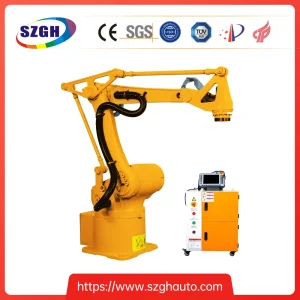
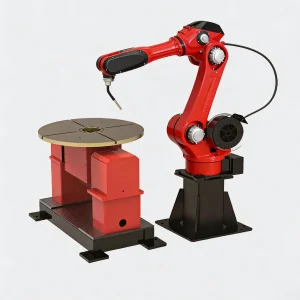
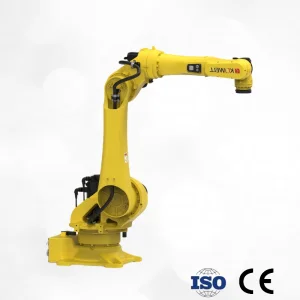
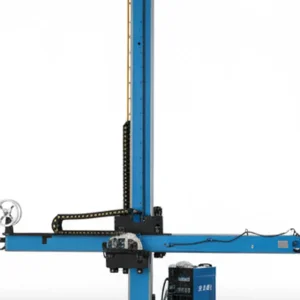
The smart manufacturing sector is currently undergoing a massive structural transformation. Driven by the convergence of labor deficits, safety mandates, and the rising complexities of global product specifications, manufacturers are shifting from legacy mechanical processing models to adaptive robotic configurations. In this environment, multi-axis industrial robotic arms serve as the indispensable backbone of digital workshop transformation.
Historically, robotic arms were configured with static programs designed to execute highly repetitive, linear tasks without variation. Today's commercial landscape, however, demands intelligent systems equipped with real-time feedback loops. Dynamic visual localization, localized sensor fusion, and closed-loop control algorithms allow modern six-axis robotic arm units to dynamically adapt to workpiece tolerances, surface anomalies, and complex positioning environments. This agility ensures consistent throughput quality while mitigating operational overhead, paving a rapid trajectory toward sustainable high-yield operations.
Complete control over domestic raw materials, high-density alloy castings, and key gearbox component supply chains.
Utilizing high-torque servo drives and RV-reducer combinations to achieve tolerances within ±0.02 mm to ±0.05 mm.
Extensive load capacities ranging from lightweight 5kg collaborative arms up to 50kg heavy palletizing systems.
China's manufacturing ecosystem has evolved beyond simple assembly services, emerging as a leading supplier of advanced technology and system integrations. At the center of this transformation is the Factory 4.0 paradigm, combining automated casting, robotic machining, and comprehensive digital tracking. For global purchasers, sourcing robotic arms from Chinese manufacturers delivers substantial cost, efficiency, and engineering advantages.
By leveraging the localized supply networks in Shenzhen and adjacent industrial zones, manufacturers can secure critical sub-components—such as RV gearboxes, harmonic reducers, absolute encoders, and specialized casting alloys—directly within the regional network. This minimizes logistics transit times and reduces custom machining friction. Additionally, local engineering teams can modify kinematic designs and adapt communication protocols to meet specific client requirements in a fraction of the time required by standard suppliers.
Furthermore, quality control within China's Factory 4.0 facilities is supported by automated testing beds. Every industrial robot arm undergoes continuous calibration cycles under simulated stress levels to confirm repeatability tolerances and mechanical compliance. This structured ecosystem yields scalable production capacity, allowing factories to efficiently deliver high-capacity industrial orders without compromising product consistency.
Shenzhen Sandai Robot Co., Ltd. is a professional industrial automation enterprise specializing in the development and manufacturing of welding robot arms, robotic welding systems, and intelligent welding automation solutions for global manufacturing industries. Established in 2012 and headquartered in Shenzhen, China, the company integrates advanced robotics technology, precision engineering, software development, and automated production capabilities to deliver reliable and efficient welding solutions worldwide.
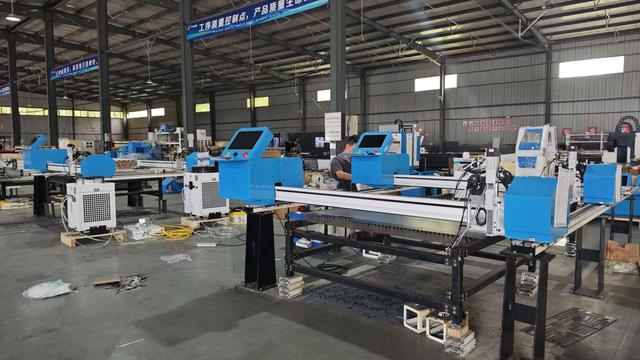
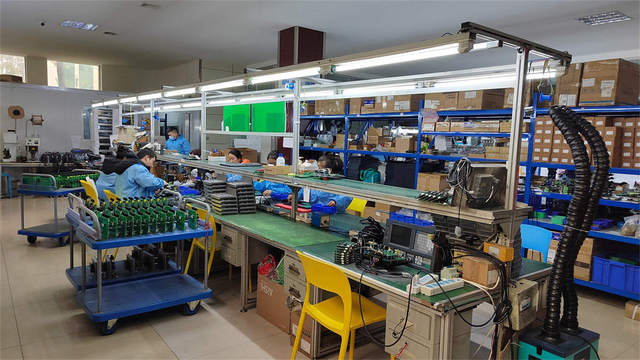
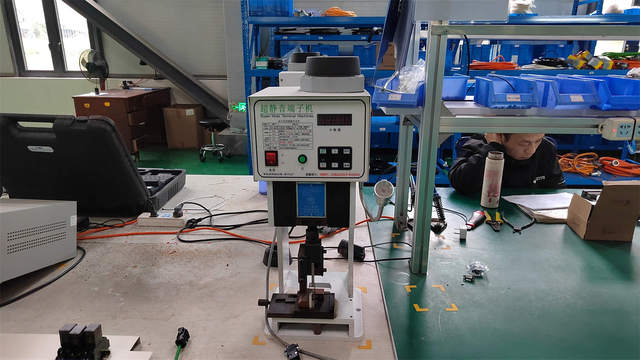
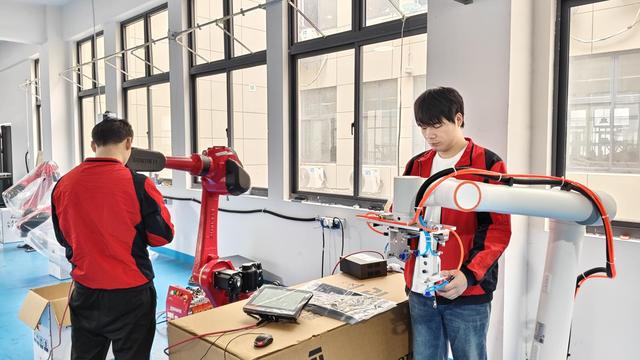
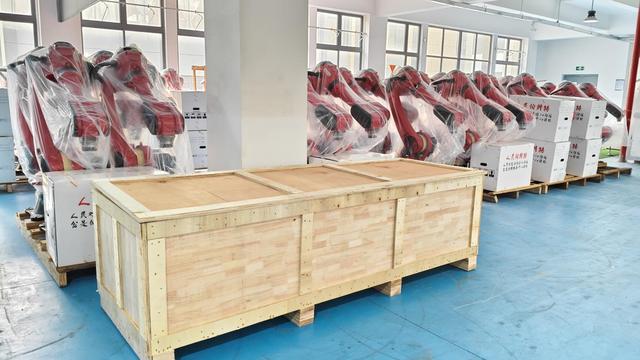
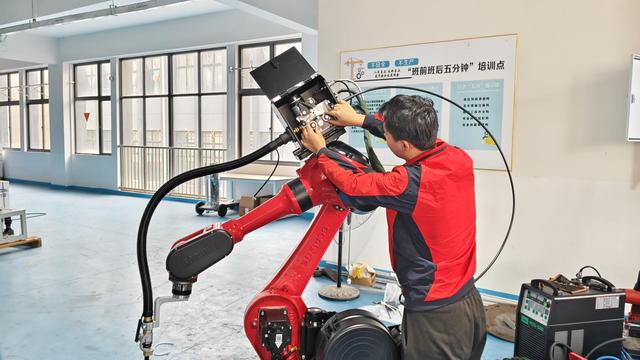
Sandai Robot operates a modern manufacturing facility covering more than 32,000 square meters and employs over 380 experienced engineers, technicians, and production specialists. With 20 automated assembly and testing lines, the company maintains strict quality control procedures throughout design, production, calibration, and final inspection processes. Its annual production capacity exceeds 8,000 industrial robotic welding units, serving customers across automotive manufacturing, metal fabrication, shipbuilding, construction machinery, aerospace components, and heavy industrial equipment sectors.
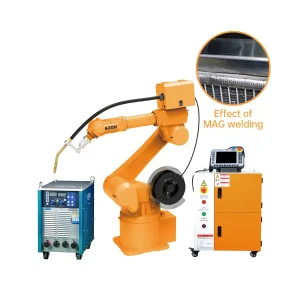
The company’s core product portfolio includes six-axis welding robot arms, collaborative welding robots, laser welding systems, MIG/TIG robotic welding stations, automated welding manipulators, and customized robotic integration solutions. By combining AI visual positioning, servo motion control technology, intelligent path programming, and real-time monitoring systems, Sandai Robot provides high-precision and stable welding performance for complex industrial applications.
Driven by continuous innovation and smart manufacturing development, Sandai Robot invests heavily in robotics research and automation software optimization. The company is committed to helping global manufacturers improve production efficiency, welding consistency, workplace safety, and long-term operational performance through advanced robotic welding technologies and flexible OEM/ODM cooperation services.
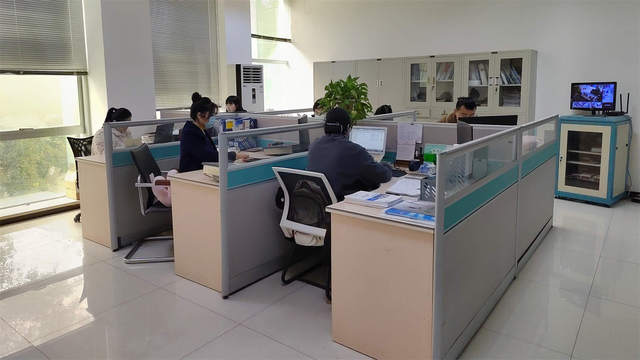
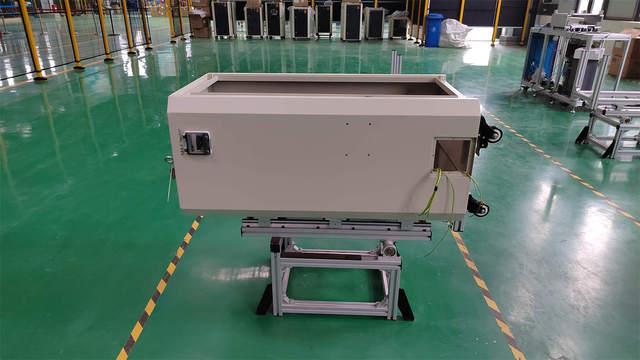
Inside Sandai Robot: Modernized 32,000㎡ factory facility and standard manufacturing operations.
Procurement teams face the challenge of selecting robotic solutions that align with long-term technological roadmaps while meeting immediate ROI targets. Beyond baseline price-to-performance comparisons, enterprise buyers evaluate several key technical and operational parameters:
Robotic arm deployments must adapt to specific regional conditions, plant layouts, and material handling systems. The following scenarios demonstrate how customized integrations address common operational bottlenecks:
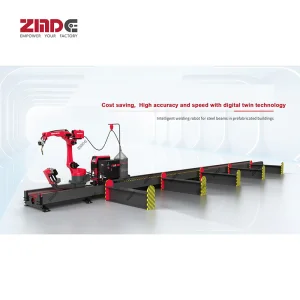
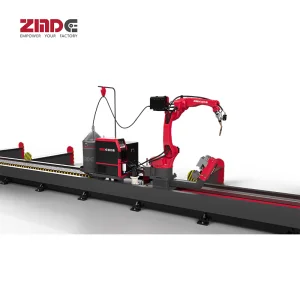
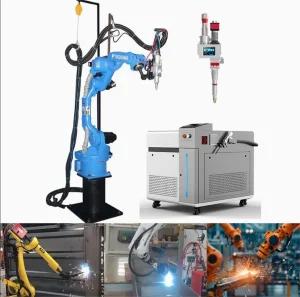
In structural steel fabrication facilities, manual welding is slow and suffers from weld profile inconsistencies. By integrating a six-axis robotic arm with a gantry system and a laser-based seam tracking sensor, the robotic welder dynamically tracks the joint root. The control system adjusts torch angles and feed speeds on the fly, reducing weld-repair rates to under 0.5% while maintaining structural integrity.
Automotive parts manufacturing demands fast cycle times. A collaborative 30kg payload robotic arm (such as the GD30) configured with a pneumatic gripper can handle multiple parts simultaneously. Integrating an AI vision camera allows the system to identify randomly oriented parts on a conveyor belt, align them, and load them into a CNC machine without manual intervention.
In large distribution centers, static automated cells can limit layout flexibility. Mounting a lightweight, six-axis collaborative arm on an Automated Guided Vehicle (AGV) creates a mobile processing station. This unit travels between picking racks and assembly stations, executing automated retrieval and sorting tasks without requiring manual transport.
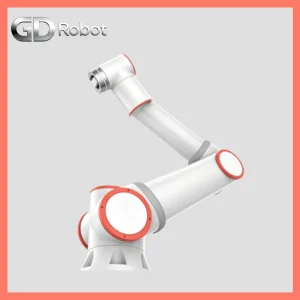
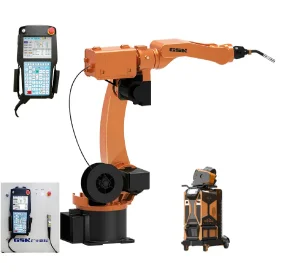
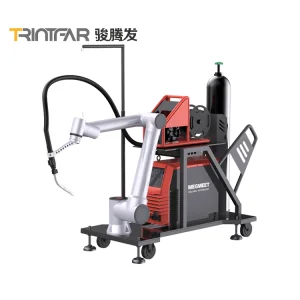
Explore our high-performance collaborative solutions, long-reach welding stations, and gantry integration platforms.
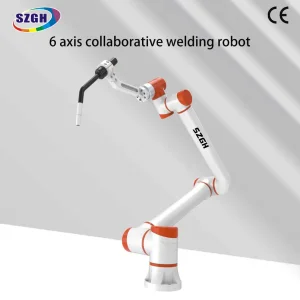
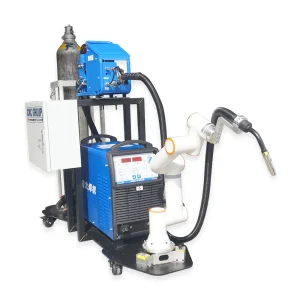
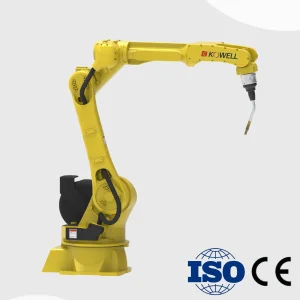
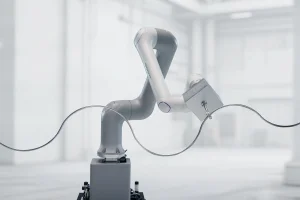
Technical guidance and sourcing support for international procurement, production setup, and system compatibility.
Repeatability is determined by the mechanical tolerances of the gear reducer systems (such as high-precision RV cycloid or harmonic reducers), the resolution of the optical or magnetic absolute encoders on each joint, and the rigidity of the arm castings under load. Sandai Robot models achieve tolerances between ±0.02 mm and ±0.05 mm through precision assembly and strict calibration.
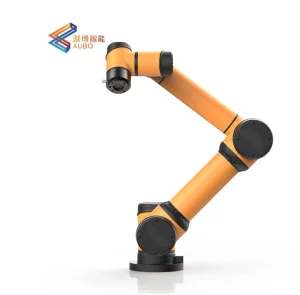
Cobots (like the Aubo or GD30 series) feature built-in torque sensors that support safe, direct interaction with human operators, eliminating the need for safety cages. Traditional heavy industrial robotic arms operate at higher maximum linear speeds and payloads, but require physical guarding and light curtains. Cobots are ideal for flexible, high-mix runs, while traditional arms excel in continuous, high-volume production.
Our systems support standard fieldbus and Ethernet communication options, including EtherCAT, Modbus TCP/RTU, CANopen, and Profinet. This enables plug-and-play integration with factory PLC networks and host computers, facilitating real-time telemetry streaming and remote control configurations.
An AI vision system uses active laser line triangulation to scan the weld joint geometry. The control software compares this data with the CAD profile, allowing the controller to dynamically adjust the torch position to correct for variations in plate alignment or part warping.
Sandai benefits from Shenzhen's integrated supply chain, which provides efficient access to electronic and mechanical components. This proximity lowers component costs and enables rapid engineering turnaround times, allowing customized OEM/ODM builds to be designed, tested, and shipped quickly.
Our product range supports payloads from 5kg (designed for small welding tasks) up to 30kg (GD30 collaborative unit) and 50kg (for heavy-duty palletizing and material handling). This covers applications ranging from lightweight sub-assemblies to heavy load transport.
Our quality control process is supported by 20 automated assembly and testing lines within our 32,000㎡ facility. Every robot arm undergoes a 48-hour continuous runtime test under load, tracking kinematic deviations and thermal profiles before shipping to ensure consistent quality.
Yes, our mobile workstations integrate a 6-axis collaborative robotic arm with an AGV chassis. These units are configured with independent battery and safety systems, allowing them to perform tasks across multiple production stations without manual material handling.
All our standard robotic arms and custom configurations comply with key international directives and carry CE marks, ISO 9001 quality system certifications, and relevant environmental declarations, ensuring compliance with global import regulations.
Our engineering teams can customize the robot's physical reach, paint options, mounting flanges, cable packages, and control software interfaces. This ensures the equipment integrates directly with your specialized welding power sources, grippers, or safety networks.
 Sandai Robot