★
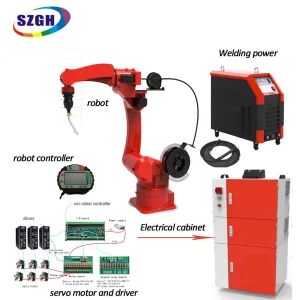
Support up to 12 axis control, realizes the control of external axes (traveling axes and positioner).
★
Structural optimization algorithm suitable for the body control of various types of structure.
★
Open structure for synchronization of international technology and extension of functions. Industrial standards & reliable stability.
★
Software PLC functions facilitate logic control. Process functions make programming easy.
★
Modular setting of functions suitable for diverse applications. Safety module ensures safe production of the robots.
★
Suitable for multiple increments; absolute servo. Improved computer bus connection ensures reliability and practicability.
| Storage | 2 GB |
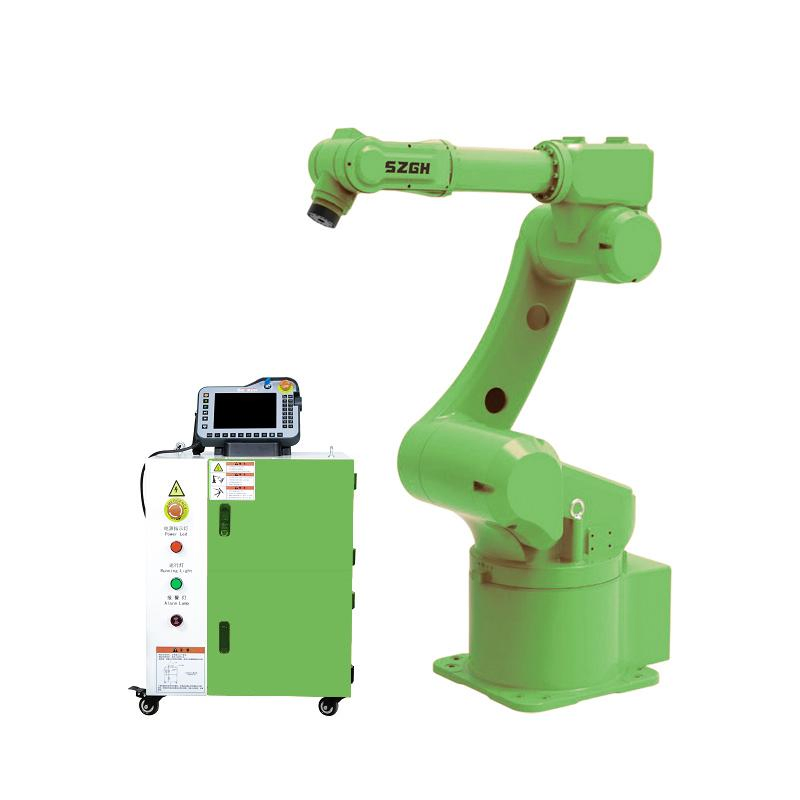
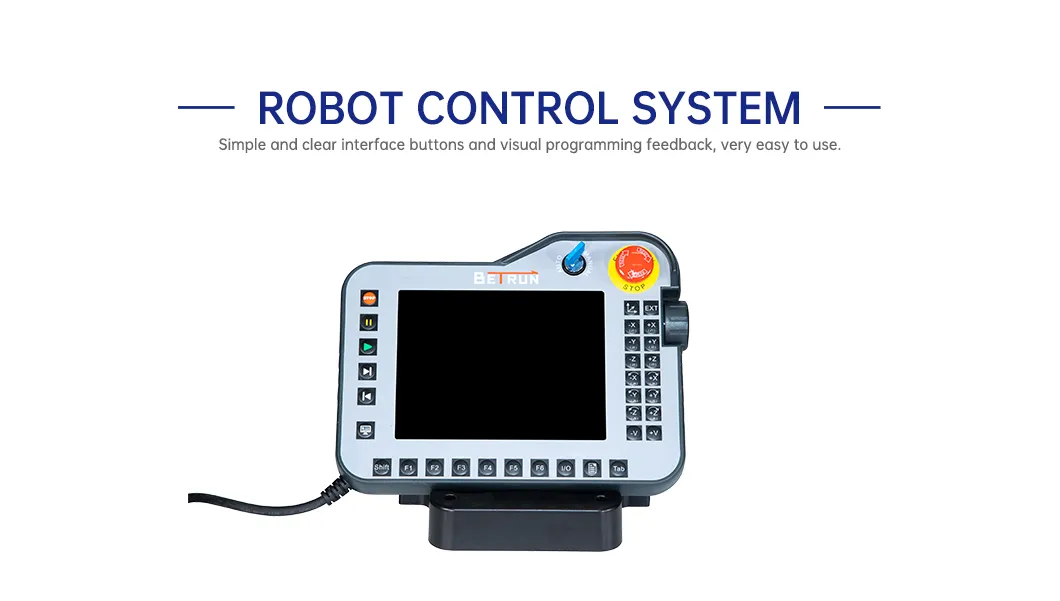
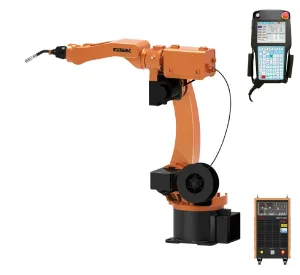
| Teaching box | Full keyboard+touch screen, mode select switch, safety switch, emergency switch |
| Controlled axes | 6 basic axes + 6 external axes |
| Interface | Multiple encoder signal interfaces, Ethernet, serial communication |
| Safety module | Emergency and anomaly linkage for rapid stop |
| Operation Mode | Teaching, representation, remote control |
| Programming | Online teaching, process programming, teaching by dragging |
| Motion Function | Point-to-point, linear, circular |
| Anomaly Detection | Anti-collision, arcing anomaly, tool coordinate anomaly, servo anomaly |
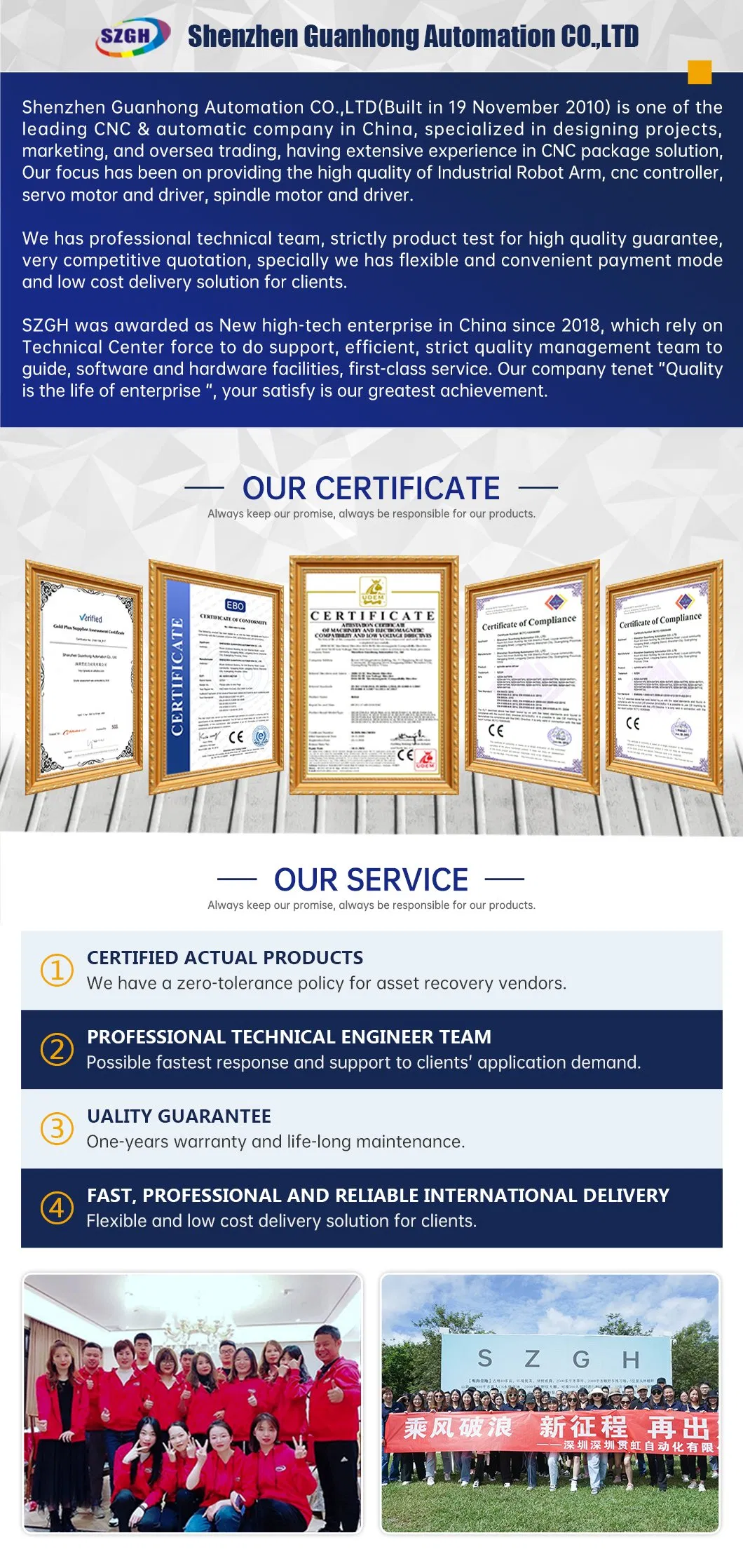
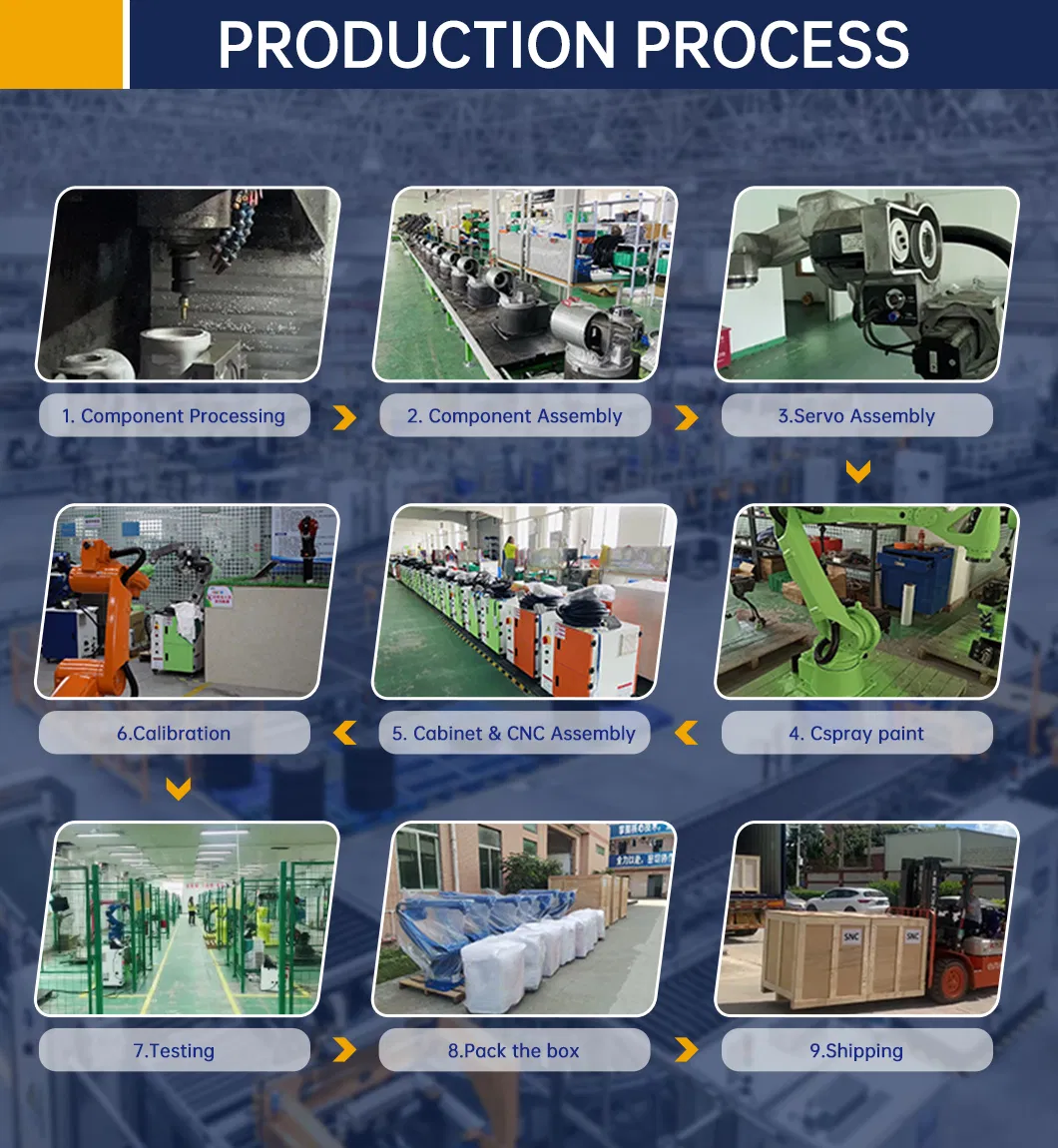
Quality Assurance: Professional engineers finish full pre-testing and 100% final inspection before shipment.
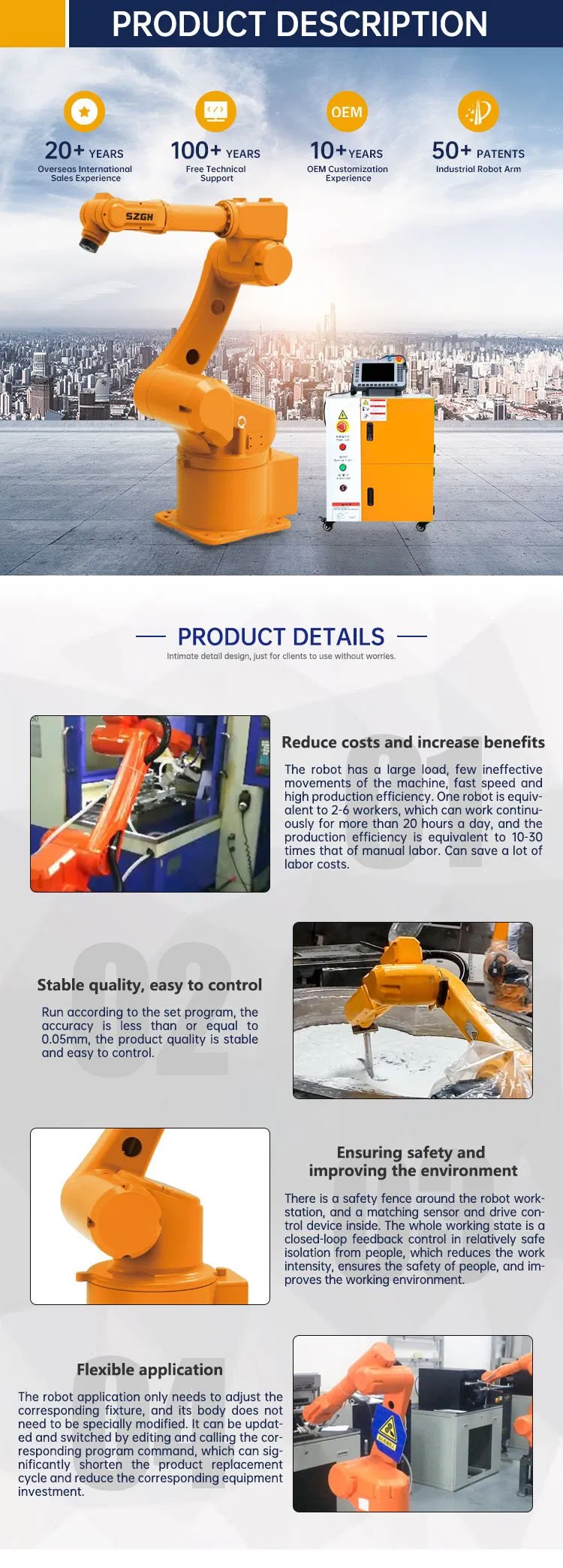
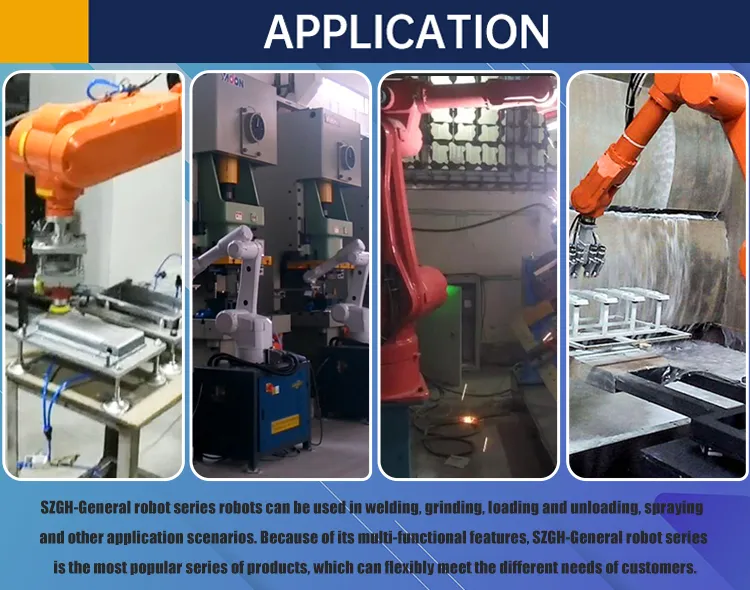
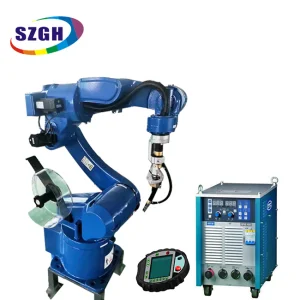
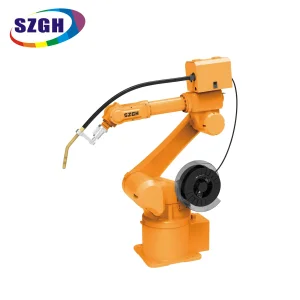
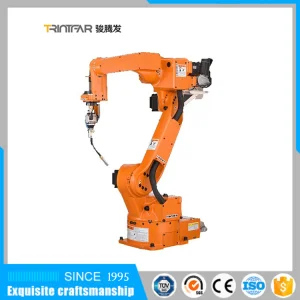
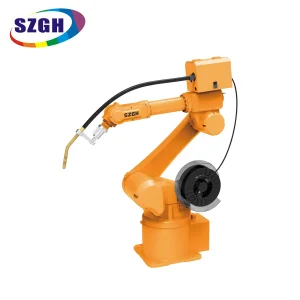
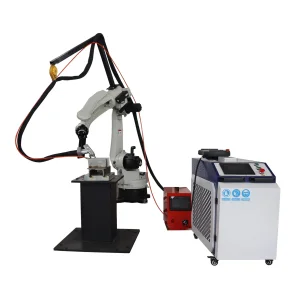
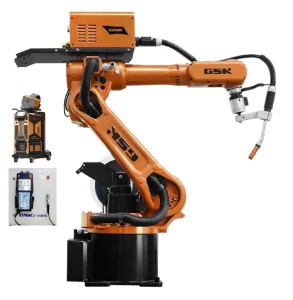
Product Range: Industrial Robot Arms for welding, painting, spraying, material handling, pick and place, and grinding.
Solutions: Customized design and suitable package solutions for diverse automation needs.
Global Support: Multilingual support including English, Spanish, Russian, Korean, and more.
Frequently Asked Questions (FAQ)
1. What are the key specifications of the T1500-C-6 robot arm?
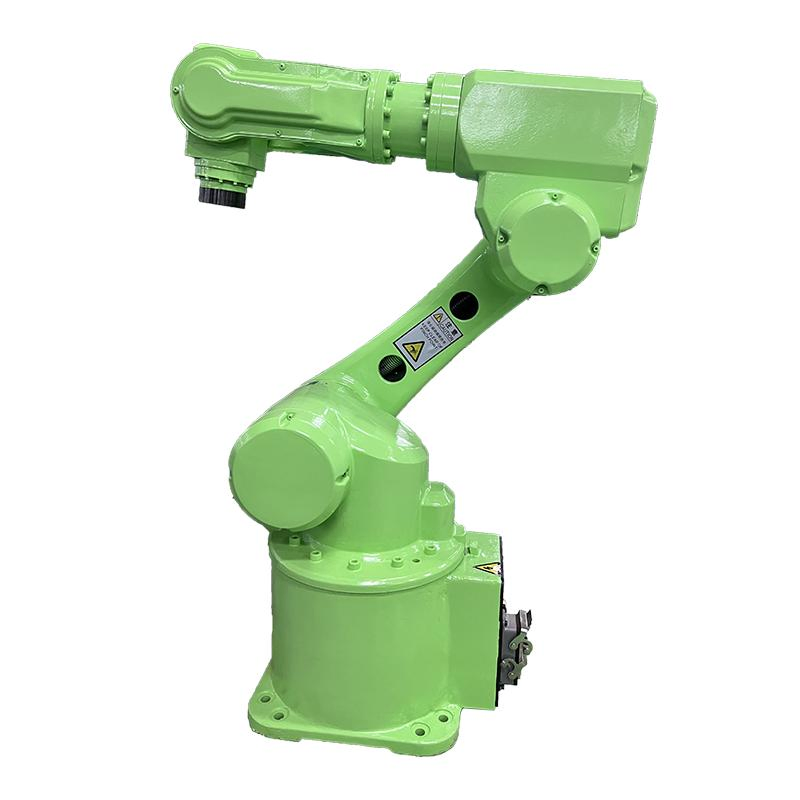
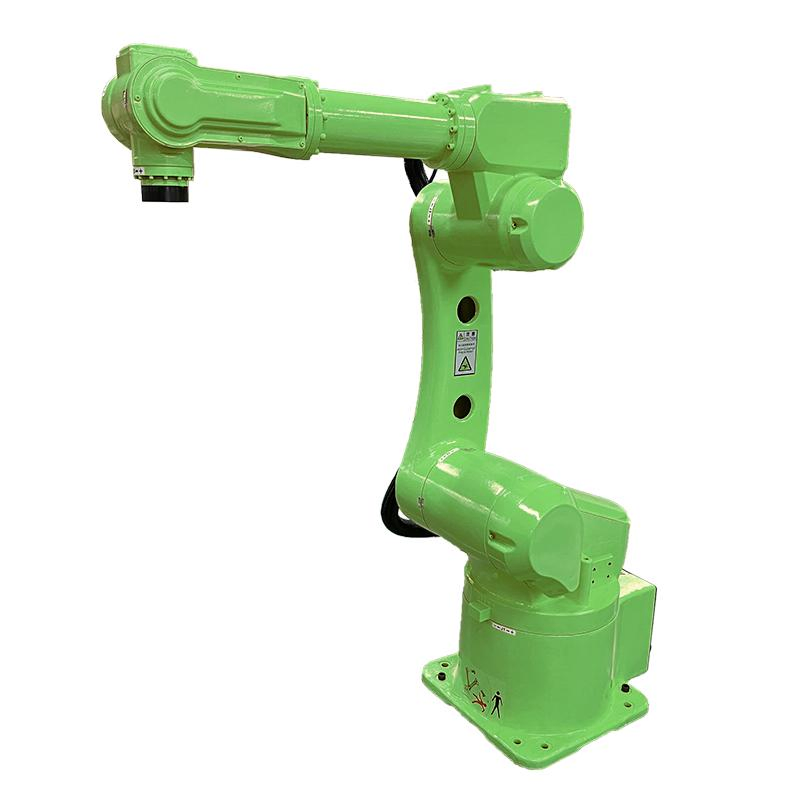
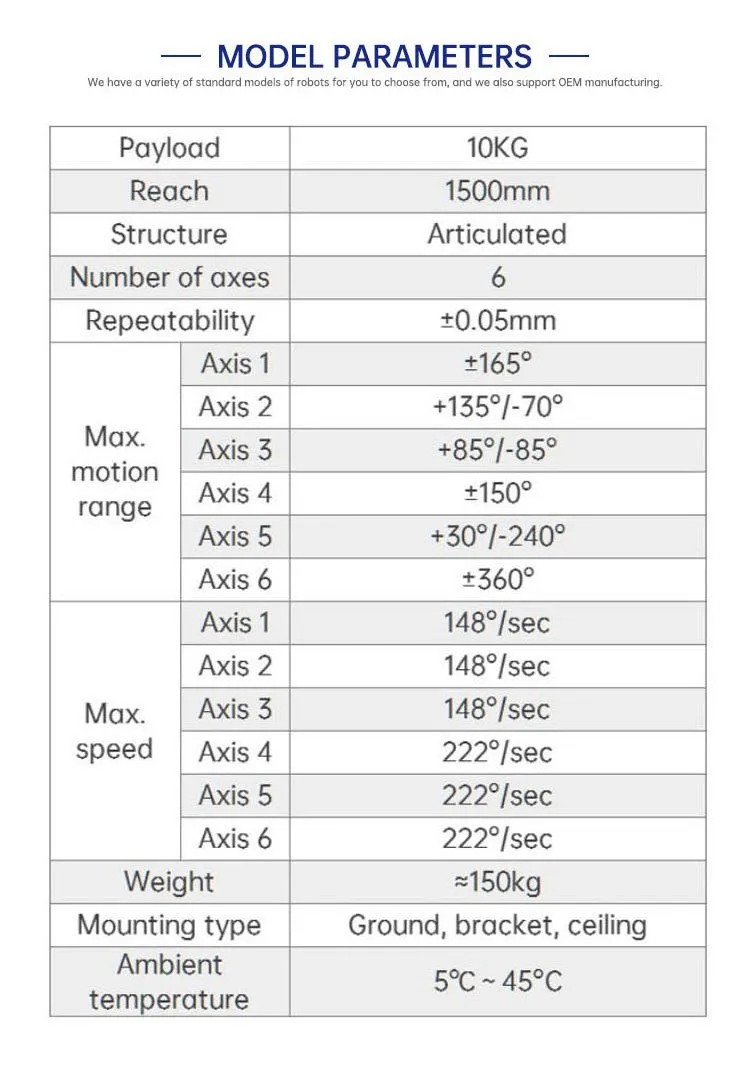
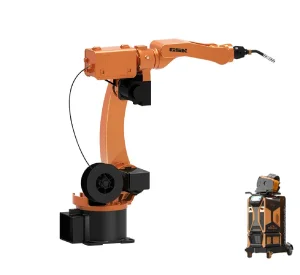
This 6-axis articulated robot features a 1500mm reach and a 10kg payload capacity, with a high repeatability of 0.05mm.
2. Can this robot control external equipment?
Yes, the system supports up to 12-axis control, allowing it to manage external axes such as traveling rails and positioners.
3. What programming methods are supported?
The robot supports multiple programming modes including online teaching, process programming, and teaching by dragging for user convenience.
4. What applications is this industrial robot suitable for?
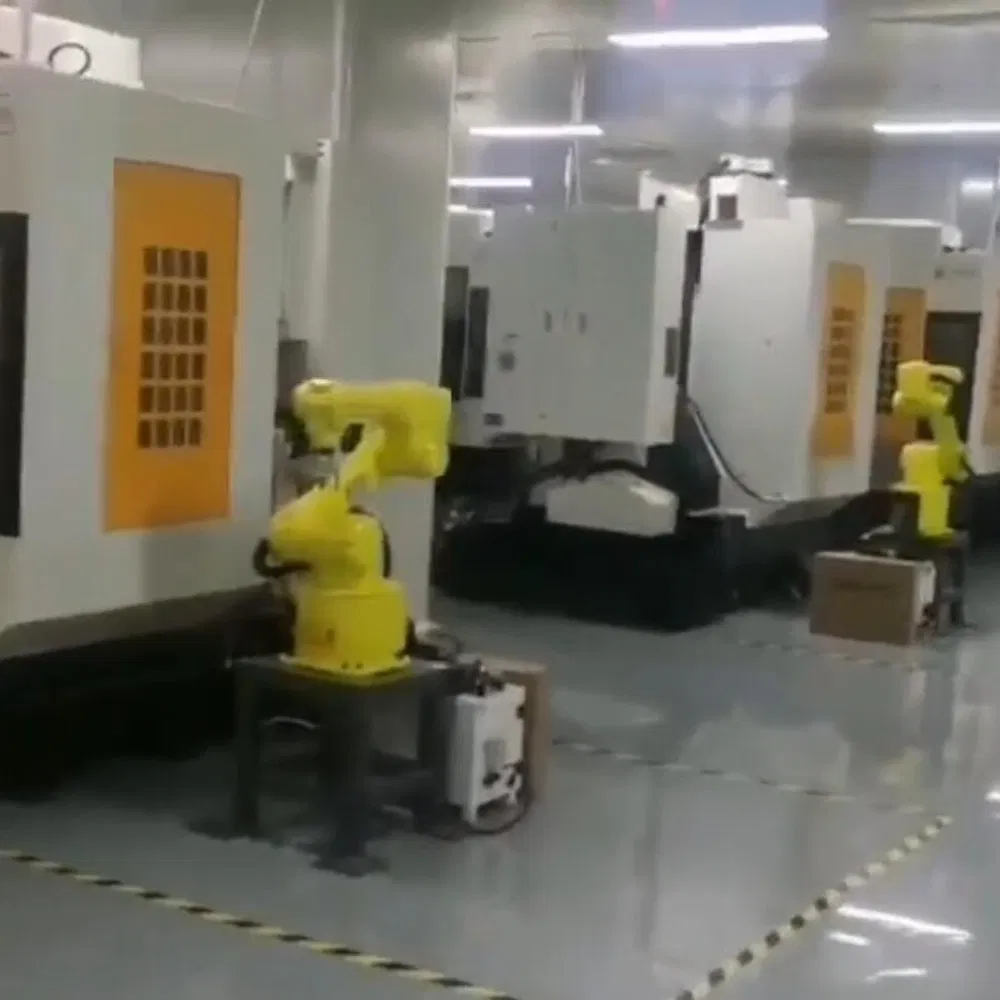
It is designed for diverse industrial applications such as argon welding, TIG welding, material handling, painting, spraying, and grinding.
5. What safety features are integrated into the system?
The robot includes a dedicated safety module that links emergency and anomaly signals (like anti-collision and servo errors) for rapid stops.
6. What kind of interface and connectivity does it offer?
It provides an Ethernet interface, serial communication, multiple encoder signal interfaces, and a dedicated interface for the robot terminal.
 Sandai Robot