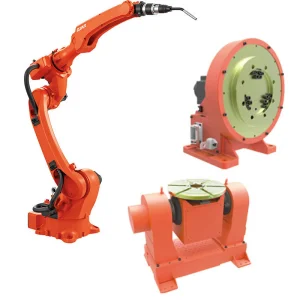
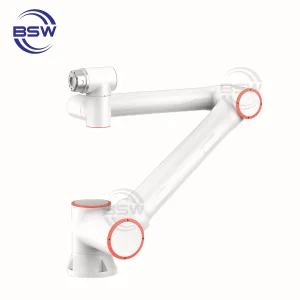
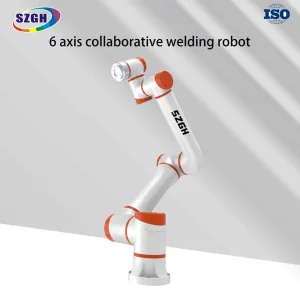
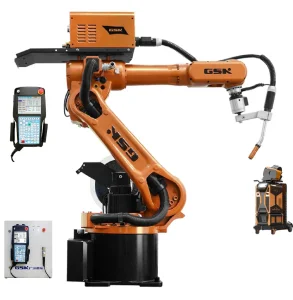
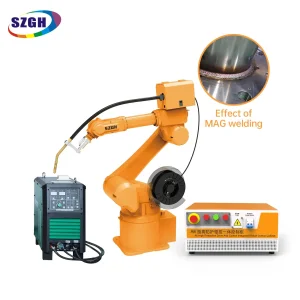
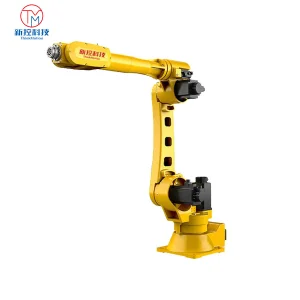
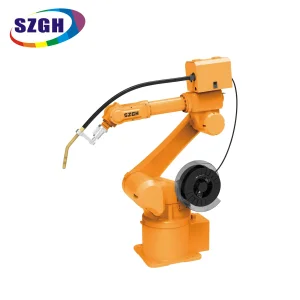
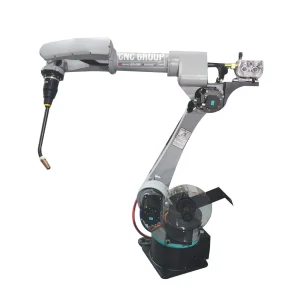
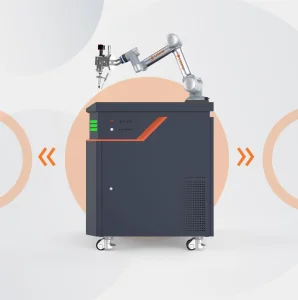
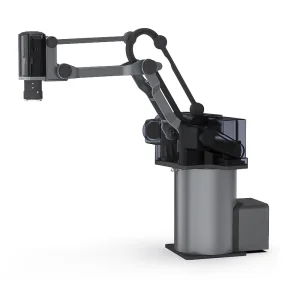
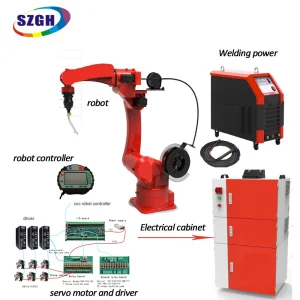
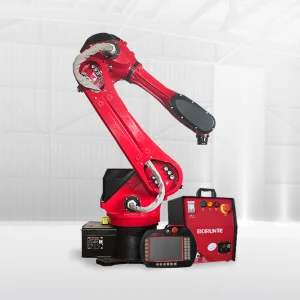
Explore our flagship robotic systems designed for high-stakes industrial manufacturing.
As the "World's Factory," China has transitioned from labor-intensive assembly to high-end intelligent manufacturing. At the heart of this transformation is the Laser Welding Robot. Unlike traditional arc or spot welding, laser welding offers unparalleled precision, minimal heat-affected zones (HAZ), and speeds up to 10 times faster than manual processes.
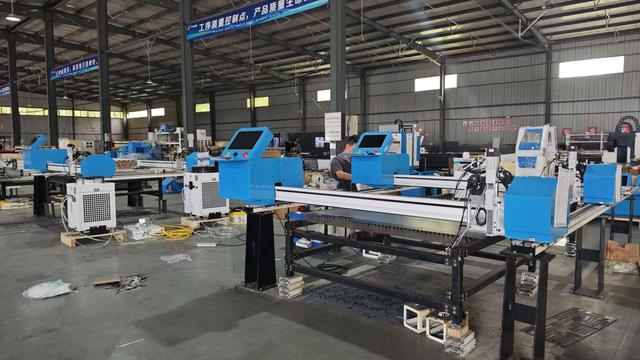
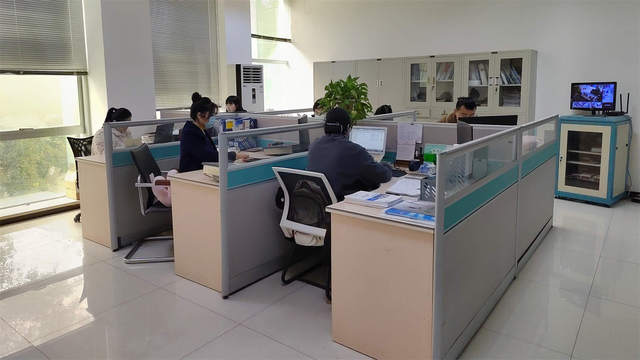
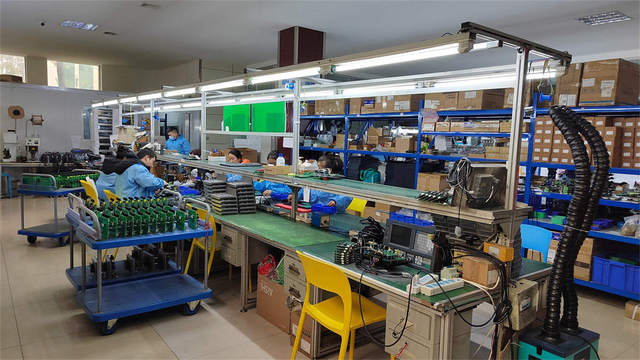
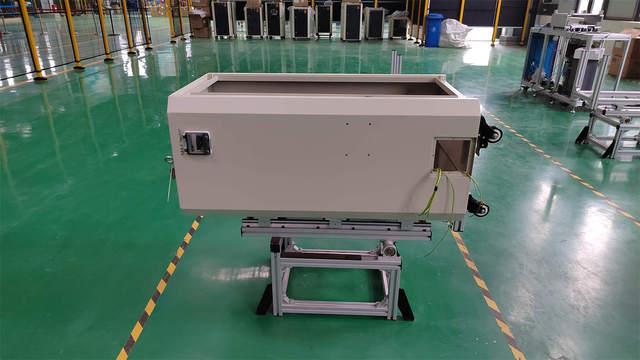
Shenzhen Sandai Robot Co., Ltd., established in 2012, stands as a beacon of this evolution. Operating from a 32,000-square-meter facility in Shenzhen, we bridge the gap between complex robotic kinematics and practical industrial application. Our core mission is to solve the global manufacturing "trilemma": balancing cost, speed, and quality through the deployment of autonomous welding systems.
How we are redefining the boundaries of robotic precision and intelligence.
Our robots utilize 3D structured light and AI vision algorithms to identify weld seams in real-time, compensating for workpiece deviations of up to ±2mm. This ensures "zero-defect" production even with inconsistent raw materials.
Leveraging advanced motion control, Sandai's 6-axis arms achieve a repeatability of ±0.05mm. The integration of the laser head with the robot's motion controller allows for "Flying Welding," significantly reducing cycle times.
We partner with top-tier fiber laser source providers (1kW to 6kW) to deliver concentrated energy density, allowing for deep penetration welding in stainless steel, aluminum, and titanium alloys.
Every unit is equipped with IoT sensors that monitor laser intensity, gas flow, and motor torque, feeding data to an edge-cloud system for predictive maintenance and remote troubleshooting.
The global industrial market often struggles with long lead times and fragmented support. Shenzhen Sandai Robot leverages the unique ecosystem of Shenzhen to provide a resilient supply chain that benefits international clients:
Bridging the gap between Chinese innovation and local compliance.
Today, the demand for Laser Welding Robots is surging in the EU, USA, and Southeast Asia due to the shortage of skilled welders. Sandai Robot addresses this through a robust localization strategy:
All our robotic units are CE, ISO9001, and UL certified, ensuring they meet the stringent safety and operational standards required in Western markets.
We provide "White Label" solutions for local automation integrators, allowing them to skin our technology with their own software front-ends or branding.
Our teaching pendants support 12+ languages, making the transition from manual welding to robotic operation seamless for local technicians.
Expert insights into selecting and maintaining laser welding robots.
Most industrial clients see a return on investment within 12-18 months. This is driven by a 400% increase in output speed and a 90% reduction in post-weld grinding and finishing costs.
Yes. Laser welding is ideal for thin-gauge metals (0.5mm - 3.0mm) because the concentrated heat prevents warping and burn-through, which are common issues in MIG/TIG welding.
We offer 24/7 remote diagnostics via our IoT platform. For hardware issues, we maintain regional spare parts hubs and partner with local service providers for on-site repairs.
Our stations include laser-proof enclosures, light curtains, emergency stop synchronization, and specialized ventilation systems to manage fumes and stray reflections.
Our latest systems feature "Drag-and-Teach" programming and AI path generation, allowing a standard welder to program a new part path in under 15 minutes.
Yes, we design and manufacture custom welding torches, wire feeders, and clamping fixtures tailored to your specific workpiece geometry.
From collaborative COBOTS to heavy-duty manipulators.
 Sandai Robot