Explore our core robotic arms and CNC-guided welding technologies built for precision, durability, and high payload operations.
Transforming industrial welding throughput with dynamic robotic integration and robust mechanical design since 2012.
Shenzhen Sandai Robot Co., Ltd. is a professional industrial automation enterprise specializing in the development and manufacturing of welding robot arms, robotic welding systems, and intelligent welding automation solutions for global manufacturing industries. Established in 2012 and headquartered in Shenzhen, China, the company integrates advanced robotics technology, precision engineering, software development, and automated production capabilities to deliver reliable and efficient welding solutions worldwide.
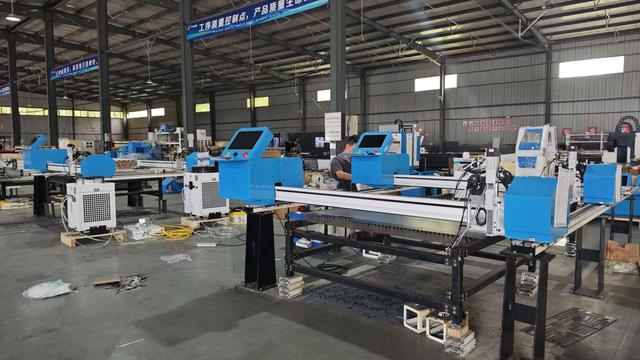
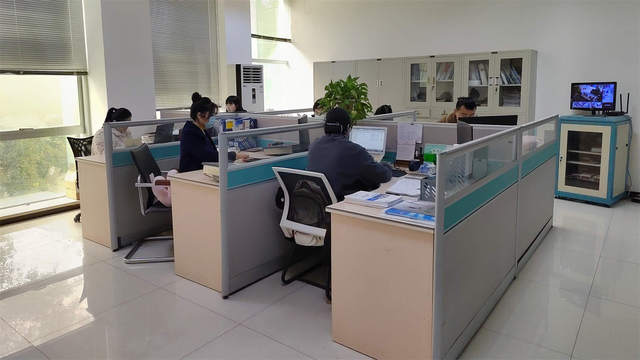
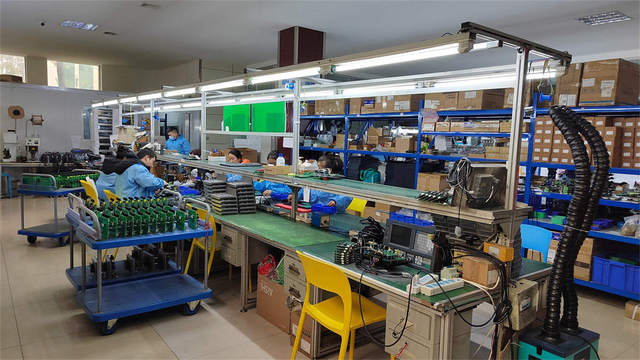
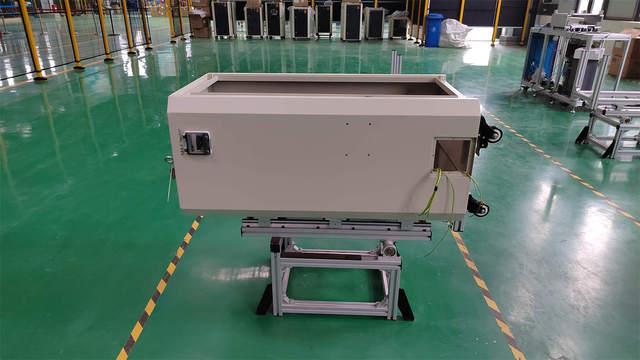
Sandai Robot operates a modern manufacturing facility covering more than 32,000 square meters and employs over 380 experienced engineers, technicians, and production specialists. With 20 automated assembly and testing lines, the company maintains strict quality control procedures throughout design, production, calibration, and final inspection processes. Its annual production capacity exceeds 8,000 industrial robotic welding units, serving customers across automotive manufacturing, metal fabrication, shipbuilding, construction machinery, aerospace components, and heavy industrial equipment sectors.
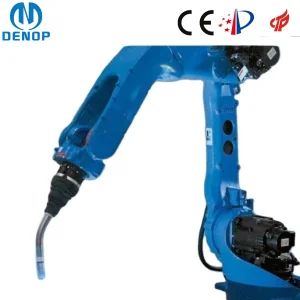
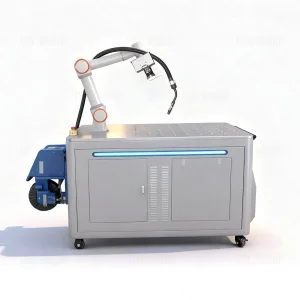
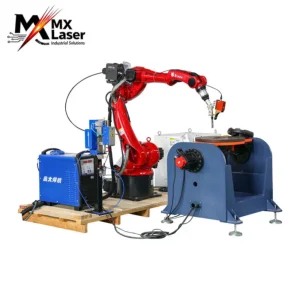
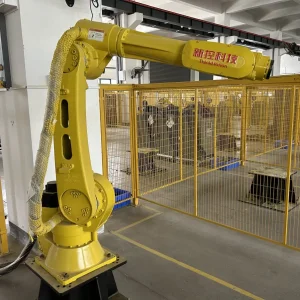
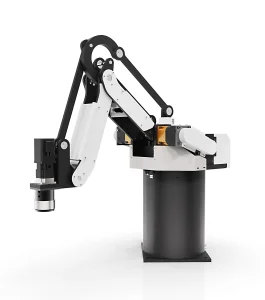
The company’s core product portfolio includes six-axis welding robot arms, collaborative welding robots, laser welding systems, MIG/TIG robotic welding stations, automated welding manipulators, and customized robotic integration solutions. By combining AI visual positioning, servo motion control technology, intelligent path programming, and real-time monitoring systems, Sandai Robot provides high-precision and stable welding performance for complex industrial applications.
Driven by continuous innovation and smart manufacturing development, Sandai Robot invests heavily in robotics research and automation software optimization. The company is committed to helping global manufacturers improve production efficiency, welding consistency, workplace safety, and long-term operational performance through advanced robotic welding technologies and flexible OEM/ODM cooperation services.
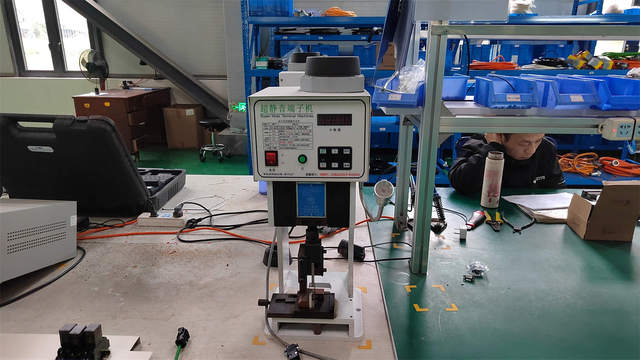
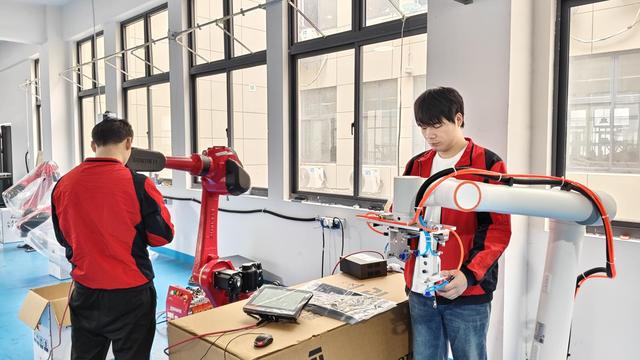


How next-generation intelligence, real-time dynamics, and sensor fusion are redefining smart welding factories globally.
Modern CNC welding setups are transitioning from pre-programmed pathing to AI-driven dynamic adjustments. By utilizing 3D laser profiling and camera sensors, robots can recognize structural variations and realign the welding torch in real-time, drastically reducing the necessity for precise component fixtures.
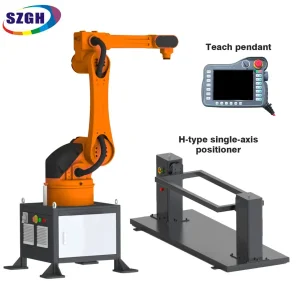
Connecting the multi-axis robot arm seamlessly with dynamic positioning turntables and linear gantries allows complex workpieces to be welded in continuous motions. Real-time controller synchronization eliminates startup/stop defects by maintaining constant welding velocity and correct torch orientation.
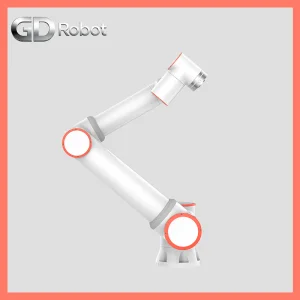
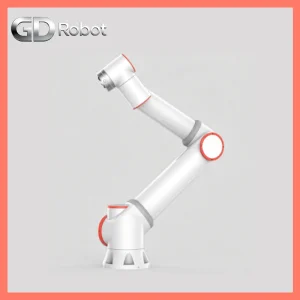
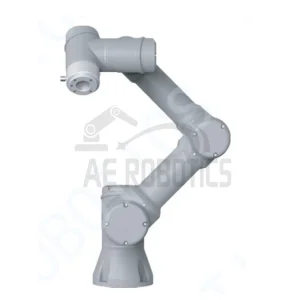
Collaborative welding robots (welding cobots) are highly favored for high-mix low-volume (HMLV) fabrication. Equipped with intuitive hand-guiding teaching features and torque-sensor safety barriers, cobots permit human operators to work directly alongside them without safety enclosures.
Navigating complexity: Key criteria for industrial procurement managers and system integrators.
Acquiring CNC integrated welding robots requires careful evaluation beyond initial machinery acquisition costs. To guarantee long-term operational success, enterprise procurement divisions evaluate key metrics:
| Procurement Criterion | Technical Target / Standard | Strategic Value for Enterprises |
|---|---|---|
| Motion Repeatability | ±0.03 mm to ±0.05 mm | Ensures identical weld seam deposition, minimizing structural defects in safety-critical automotive parts. |
| Fieldbus Interface Compatibility | EtherCAT, Profinet, DeviceNet | Enables rapid PLC integration for handshaking, speed sync, and error feedback loops. |
| IP Safety Ratings | IP54 Main Body / IP65 Wrist minimum | Prevents ingress of conductive metal dust and grinding residues, ensuring long-term hardware survival. |
| Compliance Frameworks | CE, UL, ISO 9001:2015, ISO 10218-1 | Guarantees simple regulatory clearance for imports and local occupational safety compliance (OSHA). |
Global manufacturers often face custom layout constraints. Purchasing a standardized robot model can result in installation bottlenecks. Sandai Robot answers this challenge by offering custom mechanical length modifications, specialized mounting positions, and tailored software interfaces, ensuring that the system interfaces directly with existing factories.
Turnkey automation designs specialized for high-demand vertical manufacturing sectors.
High-volume automotive production requires rapid cycle times. By integrating specialized 6-axis robot arms with heavy payload handlers, manufacturers can execute complex, multi-pass MIG/MAG welds on structural truck frames, heavy lift arms, and safety brackets. Integrated seam tracking corrects for sheet metal assembly variations instantly.
Products like fitness frames, commercial furniture, and medical beds require spatter-free, aesthetic welds to avoid post-weld grinding. Our dynamic MIG/TIG cobot setups deliver consistent weld puddles and beautiful weld ripples on thin-walled carbon steel and aluminum tubing.
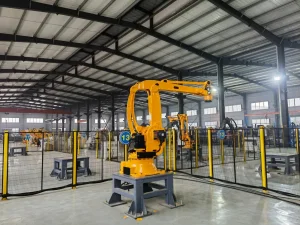
Combining mechanical stamping presses with robotic transfer arms and automated laser cutting setups optimizes cycle times. Parts are stamped, transferred by high-payload arms (such as our GD30 series), and immediately post-processed or welded under one integrated CNC sequence.
Ensuring operational reliability, regulatory compliance, and localized engineering backup globally.
Industrial machinery downtime is costly. Thus, localized engineering assistance, rapid spare parts supply chains, and safety validation are crucial elements of the Sandai Robot support model.
Every robot manufactured in our Shenzhen facility undergoes dynamic laser tracker calibration, vibration testing, and electrical stress tests. Our systems are engineered in strict compliance with safety regulations:
Through our network of integration partners across Europe, North America, and Southeast Asia, we offer 24/7 technical hotlines, remote diagnostics, and on-site repair technicians. Standard parts (such as wire feeders, contact tips, and encoder cables) are stocked locally for overnight shipping.
Insight into our ongoing R&D directions and next-generation automated welding architectures.
As manufacturing demands evolve toward more agile, digital-first factories, Sandai Robot has structured a comprehensive technological roadmap focused on three key areas:
Future systems will not rely on manual process parameters. We are training machine-learning models to analyze weld pool morphology in real-time. By dynamically shifting arc voltage, travel speed, and wire-feed speed during the weld, the robot will actively prevent porosity, undercut, and burn-through defects.
We are expanding our software compatibility to allow complete virtual commissioning. Engineers can model their entire line, run collision checks, optimize robot reach, and simulate heat-induced warping offline, reducing physical teaching time by up to 90%.
To address the demand for high penetration speeds in thick plate structures (like shipbuilding and heavy crane structures), we are developing integrated HLAW heads. This technology pairs the high penetration depth of fiber lasers with the gap-bridging capabilities of MIG welding, enabling single-pass welds on thick plates.
Answering key mechanical, control, and integration queries from system design engineers.
Engineered for high payloads, automated laser cutting, cobot collaboration, and high-duty cycle operations.
 Sandai Robot