The global manufacturing ecosystem is undergoing an unprecedented structural transition. In an era marked by fluctuating labor dynamics, rising overhead costs, and escalating demands for micron-level tolerance accuracy, manual welding no longer meets the capacity requirements of heavy industrial sectors. Today, OEM/ODM Welding Robotics Solutions have transitioned from a high-tech capital luxury to a fundamental infrastructural necessity.
Across key manufacturing epicenters in North America, Western Europe, and Asia-Pacific, industries such as structural steel fabrication, automotive assembly (specifically Body-in-White applications), agricultural tooling, and shipbuilding are aggressively integrating multi-axis robotic articulators. These robotic cells consistently mitigate thermal distortion and mechanical inconsistencies, yielding structural joint integrity that comfortably exceeds human capability.
Crucially, the global market demands flexible engineering solutions. Traditional static automation systems are increasingly replaced by smart, software-driven robotic arms configured with intelligent seam-tracking sensors, closed-loop vision systems, and adaptive power sources. As a premier provider of customizable industrial systems, we bridge the gap between highly specialized operational needs and cutting-edge kinematic technologies.
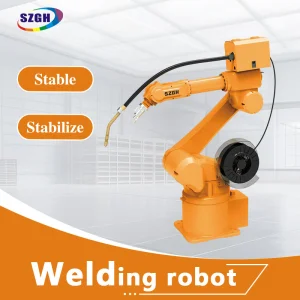
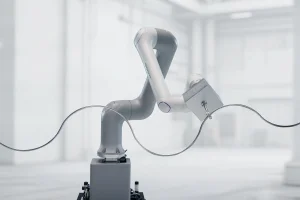
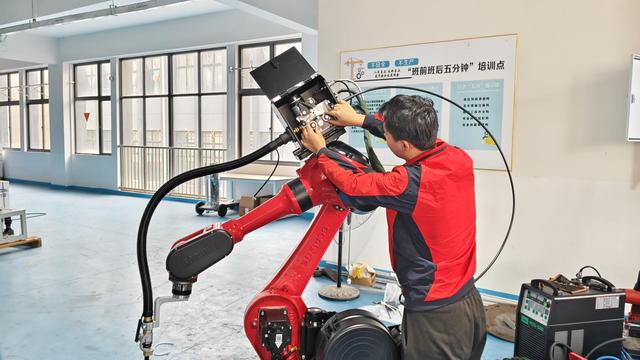
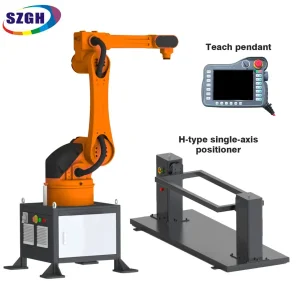
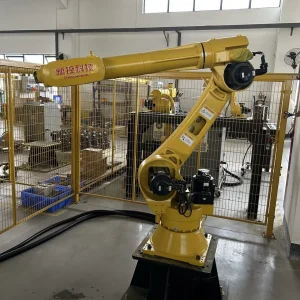
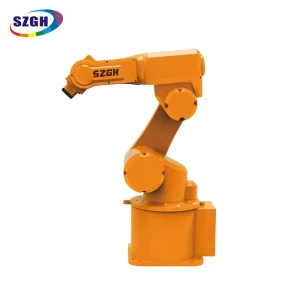
Sophisticated multi-joint coordination facilitates complex dynamic maneuvers, enabling precise torch orientation along intricate weld seams and geometries.
Engineered for high-volume factories requiring continuous round-the-clock operations, reducing cycle times by up to 60% compared to traditional manual operations.
Optimizes consumable wire and shielding gas delivery while minimizing thermal deformities, leading to a substantial drop in material waste.
Established in 2012 and strategically headquartered in the global tech hub of Shenzhen, China, Shenzhen Sandai Robot Co., Ltd. has established itself as an authoritative market leader in robotic welding innovation. We are a professional industrial automation enterprise dedicated entirely to the development, manufacturing, and global deployment of high-tier robotic arms, turnkey welding workstations, and integrated AI positioning systems.
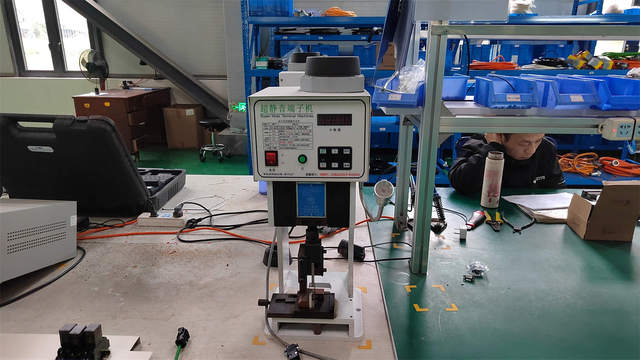
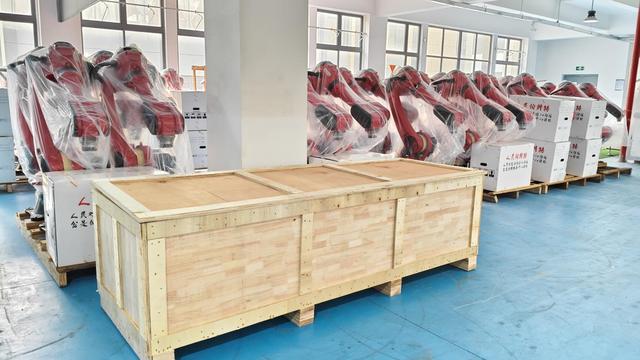
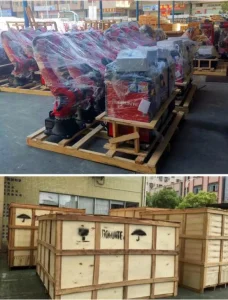
Our operations are backed by a state-of-the-art manufacturing facility spanning over 32,000 square meters, utilizing 20 automated assembly, calibration, and rigorous quality testing lines. With an annual production output capacity exceeding 8,000 industrial robotic units, we support global industries including aerospace engineering, heavy fabrication, shipbuilding, automotive processing, and precision equipment manufacture.
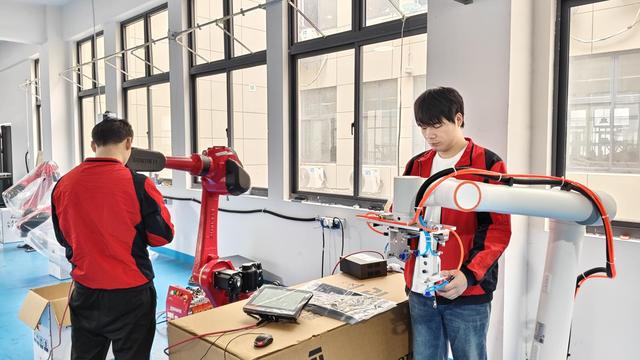
At the core of Sandai Robot's technical competitiveness is our exceptional R&D team of over 380 veteran engineers and quality control inspectors. Through high-frequency innovation cycles, we specialize in seamless OEM & ODM collaborative integrations, helping global enterprise buyers deploy robust, custom-tailored automation platforms that drive massive operational efficiency gains.
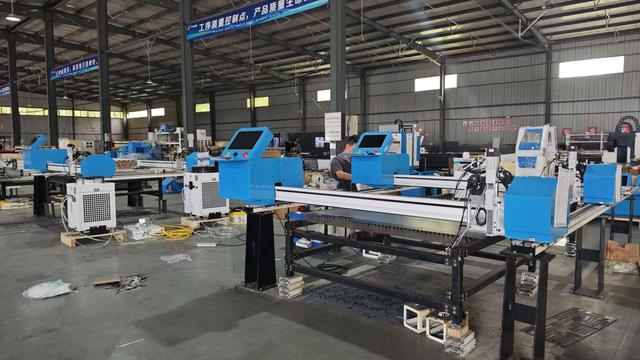
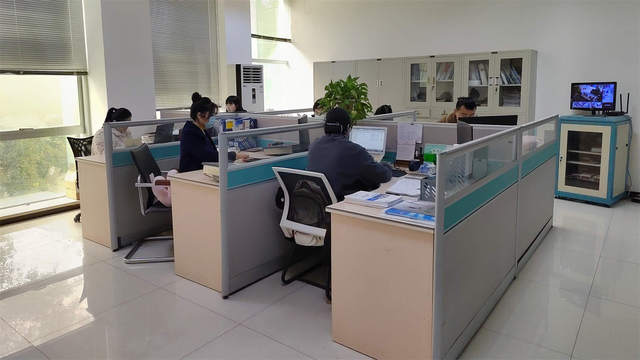
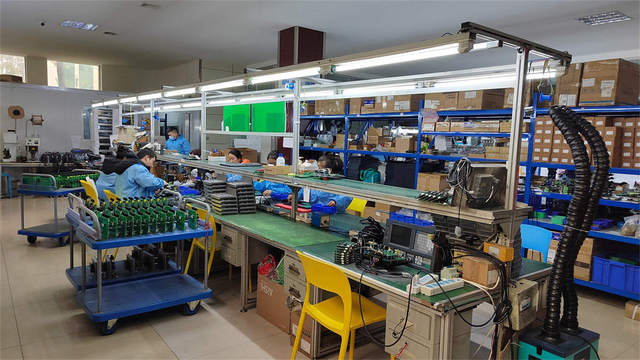
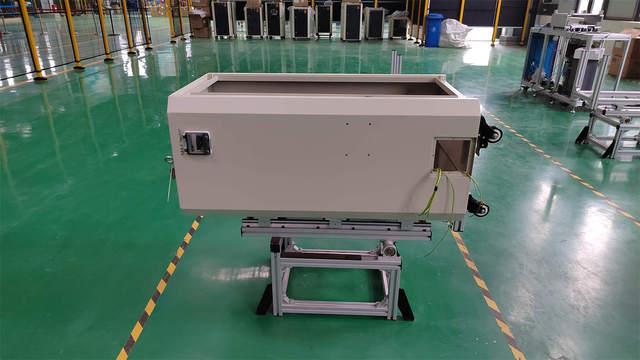
The manufacturing supremacy of China's robotic automation sector is built on robust industrial integration, comprehensive supply chain systems, and unmatched cost-performance advantages. Located in Shenzhen, the heart of the world's most advanced electronics hardware manufacturing ecosystem, Sandai Robot offers global procurement partners several distinct structural advantages:
Modern industrial operations require targeted, application-specific welding processes. Off-the-shelf solutions rarely align perfectly with localized plant setups, material variances, and strict regional welding codes. Sandai Robot excels in configuring custom solutions for high-performance localized settings:
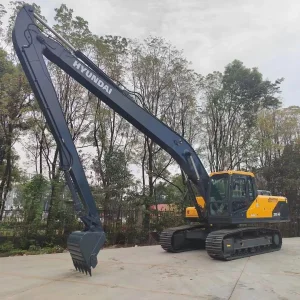
Excavator booms, crane arms, and agricultural load-bearing frames must withstand massive, dynamic physical stresses under extreme conditions. Our heavy-payload six-axis arms, combined with highly stable multi-pass arc control systems, produce deep-penetration structural welds that consistently pass ultrasonic non-destructive testing (NDT).
Automotive body production demands high-speed, repeatable, and ultra-precise welding points. By utilizing high-speed servo-gun interfaces, digital MIG/MAG controllers, and integrated high-resolution vision systems, our collaborative and industrial arms execute micro-accurate welds along complex body-in-white structures without causing thermal distortion.
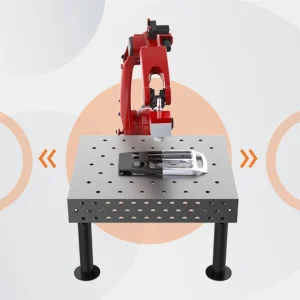
High-volume commercial construction and oil-and-gas pipelines depend on zero-defect circular and longitudinal seam joints. Our mobile modular robotic workstations are engineered specifically to automate multi-joint pipe welding, delivering reliable performance that drastically reduces repair costs.
The next era of industrial welding relies on intelligent adaptation. Traditional programming methods that require point-to-point physical teach pendants are highly inefficient for small-batch, high-variety manufacturing. Sandai Robot is at the forefront of this technological shift, actively integrating the following key innovations into our core product line:
High-accuracy laser sensors actively scan workpiece profiles immediately ahead of the welding arc, dynamically adjusting the arm's trajectory in real time to correct for joint deviations, thermal warping, or positioning tolerances.
By monitoring changes in arc voltage and current, our smart controller dynamically adjusts feed rates and voltage values, maintaining a consistent weld pool volume even during thermal shifts.
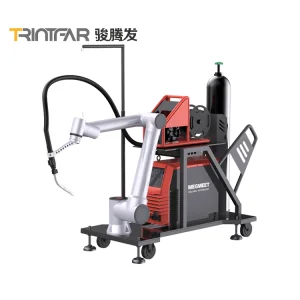
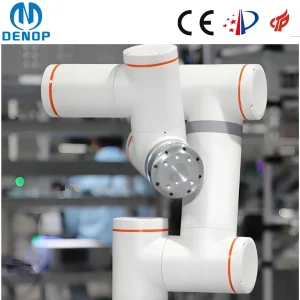
Designed for hybrid workspaces, our next-generation collaborative robots (Cobots) are equipped with high-sensitivity torque sensors that stop instantly upon contact, allowing safe, side-by-side operation without protective barriers.
Procuring heavy industrial machinery requires absolute transparency, strict technical alignment, and strict adherence to international safety codes. As an established global OEM/ODM manufacturer, Sandai Robot ensures all products conform to international engineering standards:
| Compliance Specification | Standard Met | Industrial Importance |
|---|---|---|
| Electrical Safety & Shielding | CE / UL / CSA Standards | Guarantees system protection against high-frequency electromagnetic interference (EMI) generated by welding arcs. |
| Quality Management Systems | ISO 9001:2015 | Ensures rigorous quality control across design, material sourcing, structural assembly, and final testing stages. |
| Robotic Safety Requirements | ISO 10218-1 / ISO 10218-2 | Defines standard safety parameters for industrial robots, safeguarding personnel during production operations. |
| Welding Quality Standards | AWS D1.1 / ISO 3834-2 compliant systems | Ensures the robotic welding output meets structural steel building code requirements in both domestic and international markets. |
Our OEM/ODM procurement process is streamlined to ensure complete clarity from initial inquiry to final deployment: 1. Joint Specification Review (defining payload, reach, and material requirements); 2. Engineering Customization & Simulation (verifying operational reach and kinematic clearance); 3. Automated Production & Calibration (using high-precision laser trackers); 4. Factory Acceptance Testing (FAT) (completing rigorous test runs before dispatch); and 5. Global Logistics & Lifetime Technical Support.
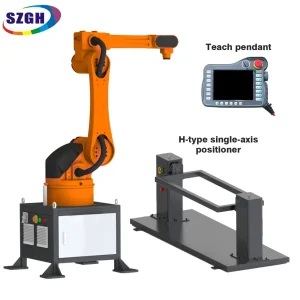
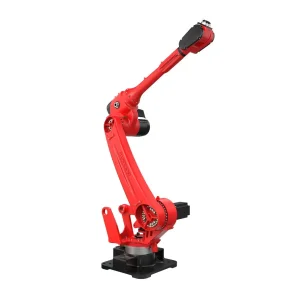
Standard 6-axis industrial robotic arms (such as our SZGH-T1600-15C or other heavy-payload models) are engineered for maximum speed, heavy duty cycles, and massive payloads. They require safety fencing, light curtains, or scanner integration due to high operating speeds. In contrast, industrial Cobots (collaborative robots) are designed with integrated high-sensitivity torque sensors that detect minor collisions, instantly stopping the system. This allows operators to work safely alongside them in tight workspaces. Cobots are highly portable and quick to program, making them ideal for high-mix, low-volume production, whereas standard industrial arms excel at high-speed, continuous, high-volume production runs.
In real-world manufacturing, workpieces often have minor fit-up tolerances, thermal deformation during welding, or slight variations from part to part. Dynamic laser seam tracking uses a high-frequency profile sensor mounted ahead of the torch to scan the joint. The software compares this data with your programmed path, making instant, sub-millimeter adjustments to the arm's trajectory in real-time. This guarantees precise bead placement and prevents defects such as undercuts, lack of fusion, or excessive burn-through, significantly reducing manual inspection and rework costs.
Yes, our control systems are designed for universal compatibility. Through standardized communication protocols like EtherNet/IP, DeviceNet, Profinet, or analog interfaces, our industrial arms and controllers integrate seamlessly with premium power sources. We provide custom integration support during the design phase to ensure flawless communication between the robotic path controller and the welding power supply.
Depending on local labor rates, duty cycles, and part complexity, most enterprise buyers achieve full ROI within 8 to 18 months of deployment. Our systems improve deposition rates by up to 2-3x, significantly reduce material waste (consumables and gas), and eliminate post-weld grinding and repair processes, generating substantial cost savings from day one.
 Sandai Robot