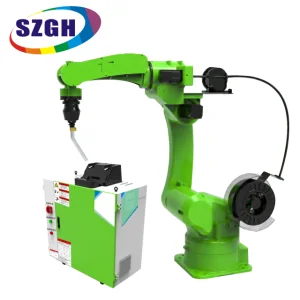
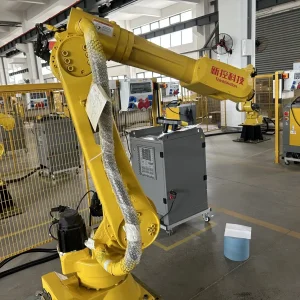
Top 10 Multi-Station Welding Automation Manufacturers & Exporters

Global Intelligence Report: Industrial Robotic Arc Systems, Laser Integration, and Multi-Station Automation Frameworks for Tier 1 Production Lines

Technological Evolution & Macro Industry Trends

The shift from single-purpose hardware cells to intelligent, modular, multi-station ecosystems.

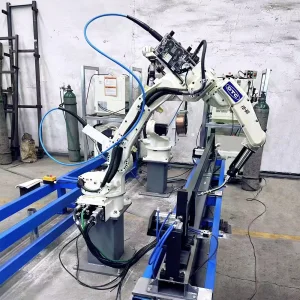
In the modern manufacturing landscape, the requirements for flexibility, high throughput, and uncompromised structural integrity have catalyzed a shift from standalone welding work cells to highly integrated multi-station welding automation systems. Traditionally, single-station robotic setups were plagued by downtime associated with loading, positioning, and unloading workpieces. By utilizing multi-station systems, production lines achieve continuous operation. While the robotic manipulator actively deposits weld material at Station A, safety-interlocked human operators or automated gantry systems load raw parts at Station B, driving the net system duty cycle to nearly 100%.
This structural transition is driven by three main factors:

Dynamic H-Frame & Ferris-Wheel Positioners

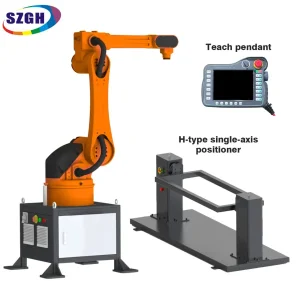
Multi-axis positioning tables coordinate in real-time with 6-axis arms. Multi-station systems employ dual or triple axis indexing, permitting complex continuous-path welding configurations without changing manual setups.

Adaptive AI Sensor Suites

Integrations of seam-tracking laser sensors and vision-based positioning correction resolve deviations caused by thermal distortion, ensuring precision to within fractions of a millimeter.

Modular Software & Digital Twins

Modern automation suites enable offline programming (OLP). Engineers can simulate welding cycles, run collisions analysis, and check cycle times virtualized before sending the code live.

Global Enterprise Procurement Requirements

Decisive criteria for global supply chains, operations directors, and system integrators.

International procurement agents sourcing multi-station robotic systems focus on more than just the capital cost of the robot. Modern decision-making processes balance mechanical uptime, control architecture interoperability, compliance with strict safety directives (such as ISO 10218-1/2 and ISO 13849-1), and vendor footprint. To help engineers validate system configurations, manufacturers must offer comprehensive technical transparency.
Important procurement factors include:
  • Control Architecture Compatibilities: Integration of standard fieldbus systems (EtherCAT, PROFINET, DeviceNet) to link robot controllers directly with enterprise manufacturing execution systems (MES) and main PLC cabinets.
  • Payload-to-Reach Ratio Stability: Heavy-duty applications require structural rigidity in the robot arm to prevent oscillation during high-acceleration paths, particularly when handling heavy laser-hybrid or dual-torch tooling.
  • Tool Center Point (TCP) Calibration: Automatic mechanical or laser-guided TCP calibration systems that guarantee sub-millimeter repeatable performance even after tip changes or collisions.
  • Thermal Drift Mitigation: Heat-resistant coatings, structural cooling, and compensation software to maintain repeatability despite hours of continuous welding at high current.

Industry Spotlight: Shenzhen Sandai Robot Co., Ltd.

Exemplary manufacturer defining standards in high-capacity industrial automation and multi-station integration.

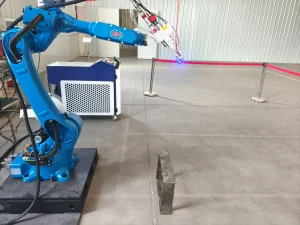
Shenzhen Sandai Robot Co., Ltd. is a professional industrial automation enterprise specializing in the development and manufacturing of welding robot arms, robotic welding systems, and intelligent welding automation solutions for global manufacturing industries. Established in 2012 and headquartered in Shenzhen, China, the company integrates advanced robotics technology, precision engineering, software development, and automated production capabilities to deliver reliable and efficient welding solutions worldwide.
32,000+
Production Space (SQM)
380+
R&D Engineers & Experts
8,000+
Annual Robot Output
20+
Automated Assembly Lines
Sandai Robot operates a modern manufacturing facility covering more than 32,000 square meters and employs over 380 experienced engineers, technicians, and production specialists. With 20 automated assembly and testing lines, the company maintains strict quality control procedures throughout design, production, calibration, and final inspection processes. Its annual production capacity exceeds 8,000 industrial robotic welding units, serving customers across automotive manufacturing, metal fabrication, shipbuilding, construction machinery, aerospace components, and heavy industrial equipment sectors.
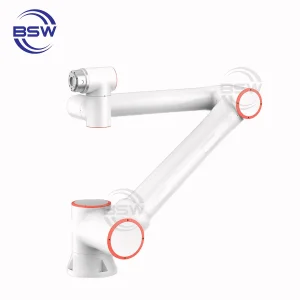
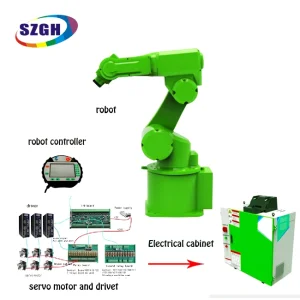
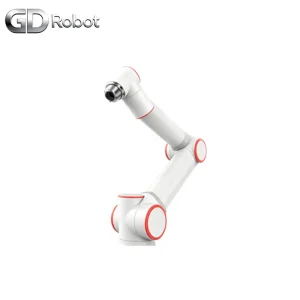
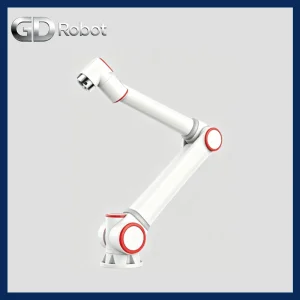
The company’s core product portfolio includes six-axis welding robot arms, collaborative welding robots, laser welding systems, MIG/TIG robotic welding stations, automated welding manipulators, and customized robotic integration solutions. By combining AI visual positioning, servo motion control technology, intelligent path programming, and real-time monitoring systems, Sandai Robot provides high-precision and stable welding performance for complex industrial applications. Driven by continuous innovation and smart manufacturing development, Sandai Robot invests heavily in robotics research and automation software optimization. The company is committed to helping global manufacturers improve production efficiency, welding consistency, workplace safety, and long-term operational performance through advanced robotic welding technologies and flexible OEM/ODM cooperation services.

Technological Roadmap & Integration Blueprint

Understanding kinematic structures, path control, and workstation layout options.

When planning a multi-station layout, engineering teams must evaluate structural and kinematic parameters to match their production requirements. The table below represents a typical evaluation framework for multi-station deployment configurations:
Configuration Type Typical Workstation Count Primary Applications Repeatability Limits Pros / Cons
Dual-Station Rotary Indexer 2 stations (A / B) High-volume auto brackets, structural components ±0.05 mm High throughput; limited workpiece dimensions.
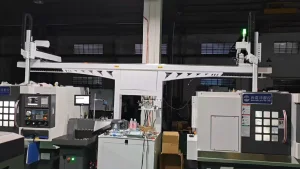
Gantry-Suspended Multi-Station Line 3 to 6 stations Chassis assembly, heavy railway frames ±0.10 mm Large working envelope; high floor footprint & structure cost.
Coordinated Positioner Multi-Cell 2 to 4 stations Pressure vessels, heavy turbine structures ±0.08 mm Flexible positioning; complex software coordination required.
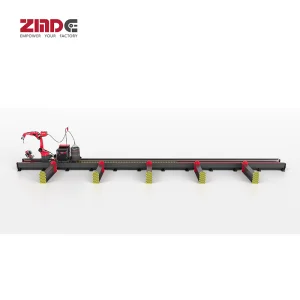
Linear Track Robot Transfer Multiple inline Structural building components, column processing ±0.15 mm Excellent reach expansion; track wear must be calibrated.
In terms of modern design, key players utilize finite element analysis (FEA) to design robot arms that handle thermal strain and inertia when moving at high feed speeds. Additionally, digital networking structures like OPC UA, EtherCAT, and CC-Link enable direct integration between the robotic welding cell and secondary factory systems.

Macro Industrial Solutions & Applications

How specialized industry sectors implement multi-station layouts to resolve bottleneck issues.

1. Automotive Tier-1 Manufacturing Assemblies
In the automotive sector, cycle times are measured in seconds. Multi-station layouts allow spot welding, laser seam welding, and gluing processes to occur sequentially without unloading. A three-station carousel cell is typical: Station 1 is dedicated to geometric jig tack welding, Station 2 handles continuous structural reinforcement welding, and Station 3 is reserved for automated inspection and unloading by collaborative handling robots.
2. Heavy Machinery & Earthmoving Equipment
Welding thick-plate materials for excavators, cranes, and mining equipment requires multi-pass welding. Multi-station systems here are combined with heavy-duty positioners capable of handling 5,000 kg payloads. Because of the long cycle times per part, these setups often utilize dual-arm systems where two robots weld on a single part at Station 1 while Station 2 prepares the next assembly.
3. Aerospace & Precision Thin-Gauge Fabrication
Aerospace alloys and thin-gauge sheets are prone to thermal distortion. Multi-station laser-welding configurations utilize custom tooling fixtures and cold-wire TIG installations to manage thermal input. Precise coordinate tracking and real-time sensor feedback ensure compliance with strict aerospace quality specifications.

Global Compliance & Localized Technical Support

Deploying complex automated installations internationally requires compliance with local regulations. Quality suppliers ensure their equipment conforms to ISO, CE, UL, and CSA standards. Beyond hardware delivery, look for manufacturers that provide remote diagnostics, comprehensive spare parts libraries, and field technicians capable of deploying to your facility within 48 hours.

Standard Certifications: ISO 9001:2015 | CE Directive Compliance | UL 1740 Robot Standards | CSA Z434 Compatibility

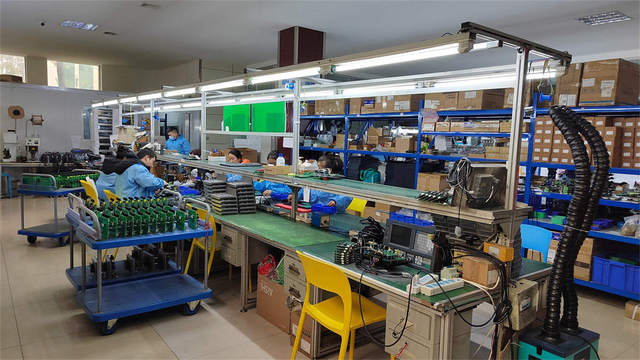
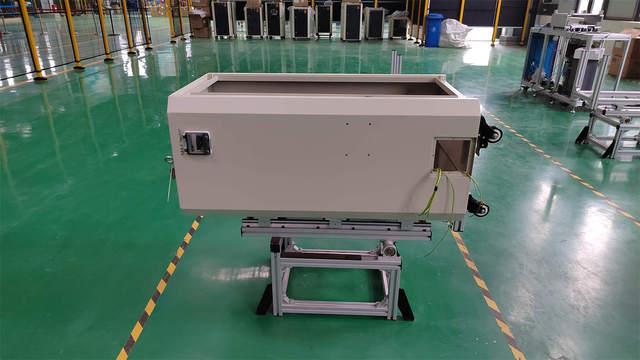
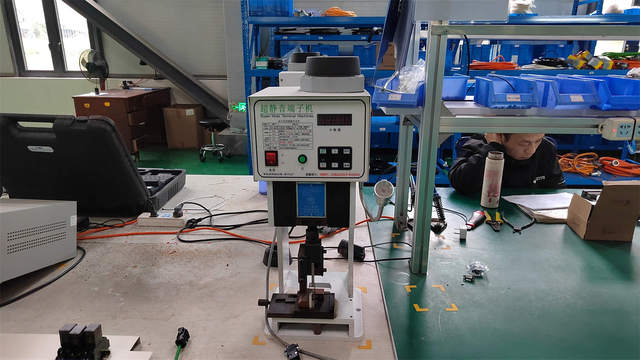
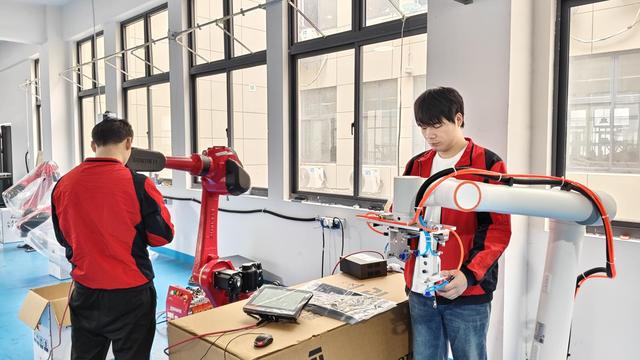
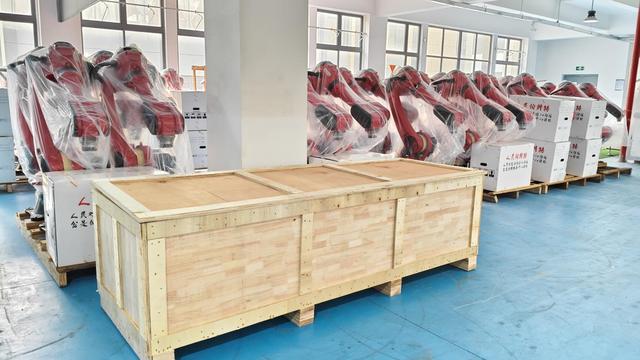
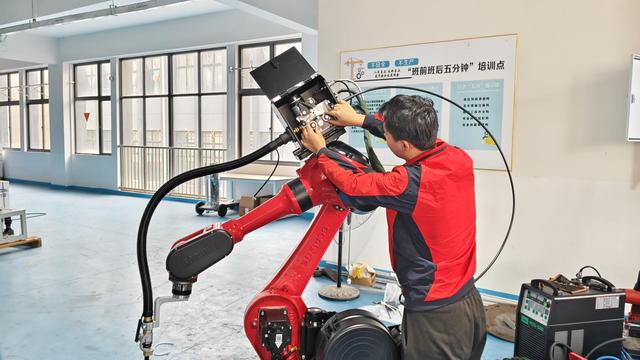
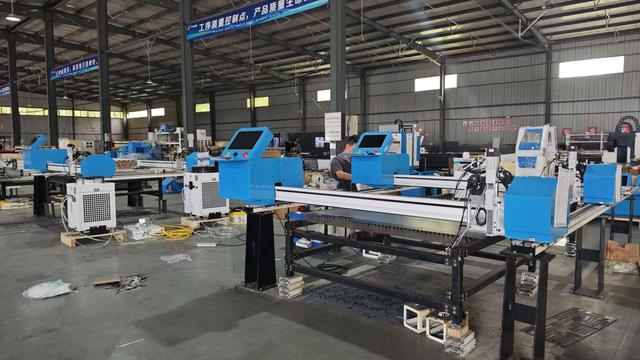
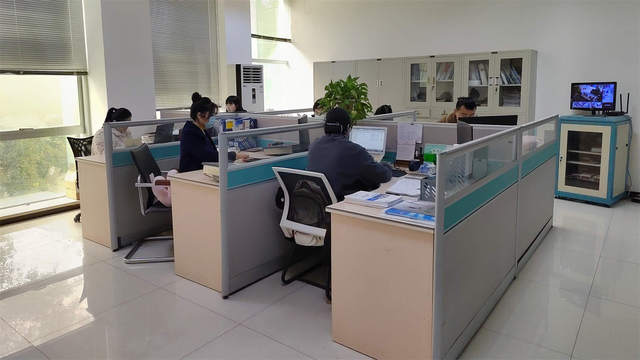
Factory Operations & Assembly Quality Visualized

A look into modern robotic manufacturing facilities, component assembly lines, and quality control systems.
Industrial Automation FAQ (Q&A)

Technical explanations addressing semantic search queries from industrial automation buyers.

What are the main advantages of multi-station welding cells compared to single-station systems?
Multi-station systems minimize loading and unloading downtime. While the robot is active on Station A, the operator or gantry works on Station B, improving throughput and maximizing the robot's duty cycle.
What safety protocols are required for human-robot collaboration in multi-station welding setups?
Safety measures include ISO 13849-1 category 3/4 light curtains, safety scanners, interlocked barriers, and safety-rated monitoring (SLS, SOS) in the robot controller. Collaborative robots (cobots) also feature built-in torque-sensing force feedback.
How does AI visual positioning improve weld seam tracking accuracy?
AI-based visual tracking uses structured laser light sensors to calculate the shape and position of the seam ahead of the arc. The system processes these measurements in real time to adjust the robot's path, compensating for assembly variations and thermal distortion.
Which fieldbus protocols are recommended for integrating welding systems with enterprise MES?
Profinet, EtherCAT, and EtherNet/IP are standard for high-speed, real-time control. For high-level enterprise MES integration, OPC UA is preferred because of its semantic information models and built-in security features.
What type of support services are critical for overseas manufacturing facilities?
Critical services include secure remote VPN diagnostics, localized field technicians for fast on-site support, structured training programs for operators, and local spare parts inventory to minimize downtime.