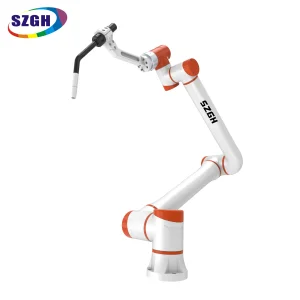
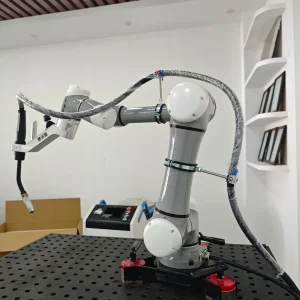
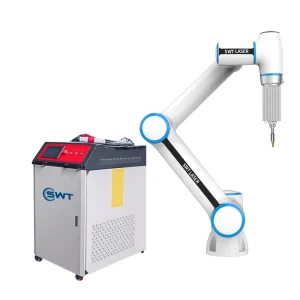
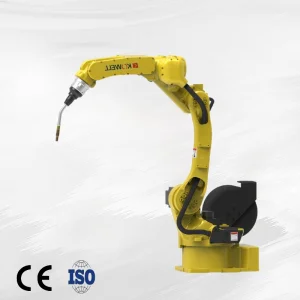
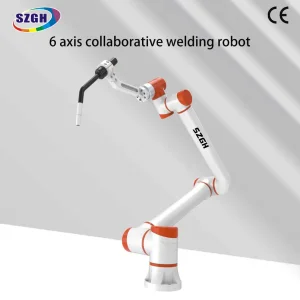
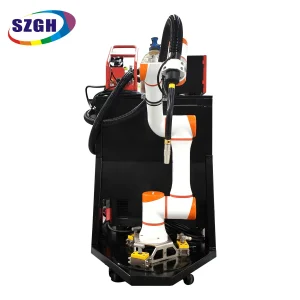
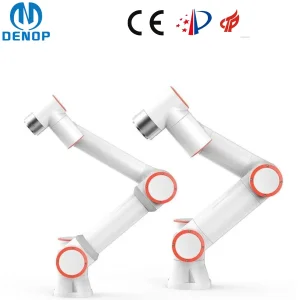
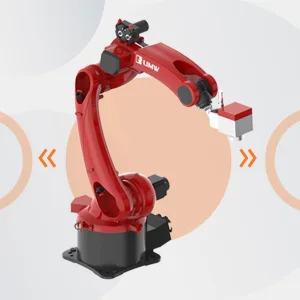
Maximize throughput and structural weld integrity with our field-proven six-axis articulated arms and automated collaborative cobots.
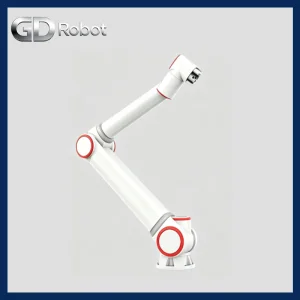
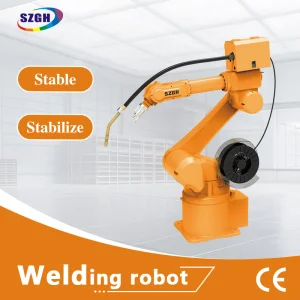
Shenzhen Sandai Robot Co., Ltd. is a leading professional industrial automation enterprise specializing in the development, manufacturing, and global exportation of advanced welding robot arms, robotic welding systems, and intelligent welding automation solutions. Headquartered in Shenzhen, China since its establishment in 2012, Sandai Robot integrates proprietary robotics software, high-precision motion controls, structural engineering, and system integration services to address the manufacturing challenges of the modern era.
By leveraging state-of-the-art artificial intelligence visual positioning, precise servo control, and real-time seam tracking systems, Sandai Robot provides global factories with the tools necessary to eliminate scrap, overcome skilled welder deficits, and maximize operational equipment effectiveness (OEE).
"Smart industrial welding is no longer a matter of simply automating motion—it demands real-time spatial intelligence, adaptive weld parameters, and seamless multi-system orchestration."
From component design to integrated software platforms, Sandai Robot controls the entire development lifecycle:
Operating from Shenzhen—the epicenter of global hardware innovation—our production base guarantees supply security and cost benefits.
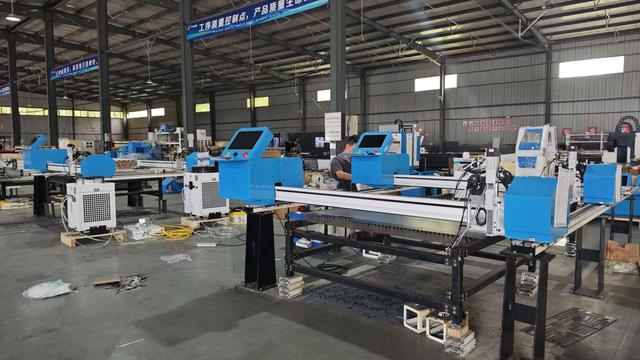
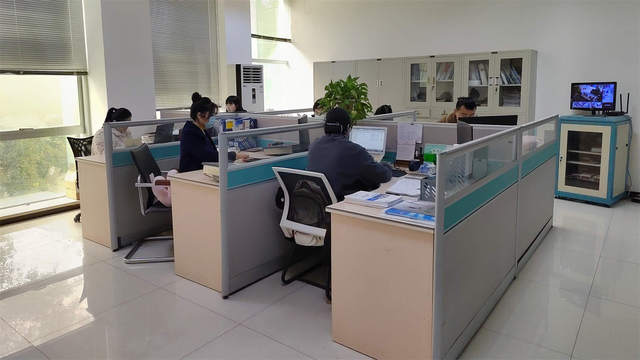
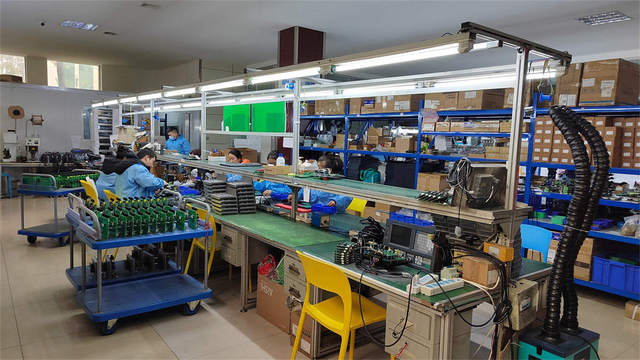
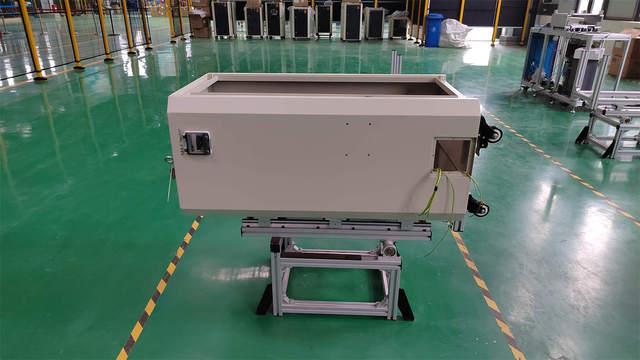
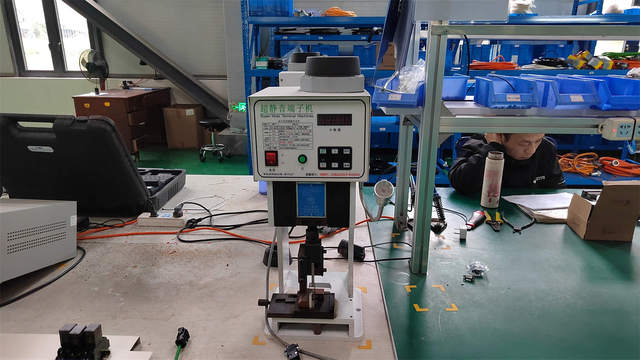
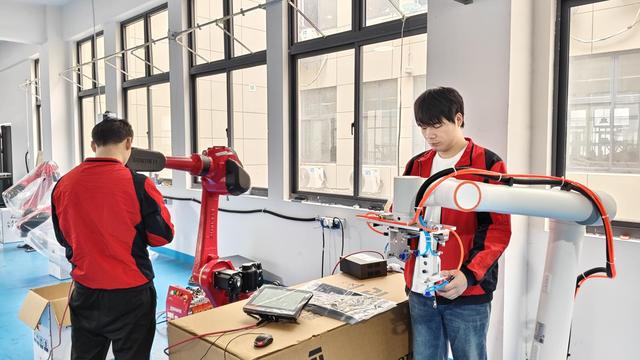
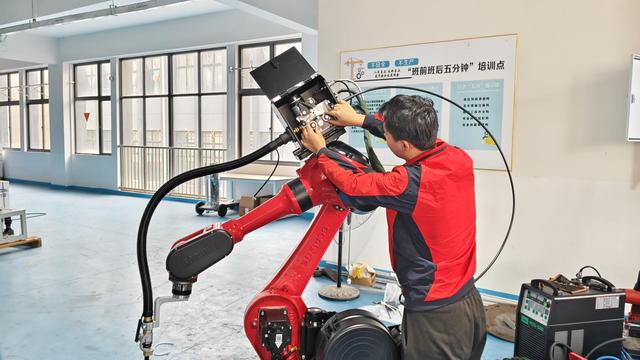
Our modern manufacturing facility covers a vast area of over 32,000 square meters and employs over 380 highly experienced engineers, technicians, and automated production specialists. Operating 20 fully automated assembly and quality control testing lines, Sandai Robot guarantees precision at every stage of mechanical assembly, electrical wiring, controller flashing, and kinematic calibration.
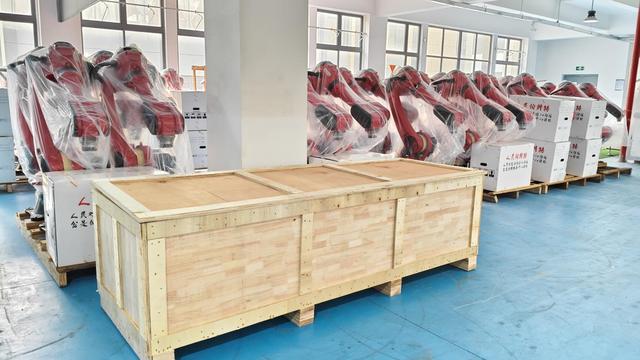
Our annual production capacity exceeds 8,000 industrial robotic units, allowing us to supply large-scale global projects with minimal lead times. Vertically integrated supply chain structures in Shenzhen allow us to source high-grade raw components, execute precision CNC milling, and conduct multi-day load testing far more efficiently than regional competitors. This operational velocity yields substantial cost savings which we directly transfer to our global clients.
No two welding challenges are identical. We configure end-to-end solutions designed for specific industrial operational profiles.
Designed for BIW (Body in White) assembly, aluminum battery tray sealing, and exhaust component welding. Integrates ultra-fast laser tracking sensors to compensate for heat distortion in thin-sheet structures, ensuring aesthetic, spatter-free joints.
For excavators, cranes, and structural steel frames. Supports heavy-deposition multi-pass MIG/MAG welding with high payloads. Intelligent adaptive control technology alters parameters dynamically based on joint variations in thick plates.
Resilient designs suited for rugged shipyards. Incorporates long-reach gantry installations, heavy-duty positioners, and portable magnetic-base crawlers to handle massive double-hull plates and structural bulkheads with uniform penetration.
We believe the future of industrial robotics lies in the convergence of kinematic reliability, sensory intelligence, and cloud connectivity. Our R&D efforts are focused on delivering next-generation capabilities that transition factories from reactive operation to predictive, self-optimizing workflows.
By prioritizing Open-API architectures and developing native compatibility with mainstream industry protocols (such as OPC UA and ROS-Industrial), we ensure that our hardware acts as a modular, future-proof node within any industrial Internet of Things (IIoT) ecosystem.
Overcoming cross-border barriers with certified equipment, flexible integration, and local technical alliances.
Every robot model exported by Sandai Robot carries certifications necessary for global integration, including CE for European markets, UL/CSA standards for North America, and ISO 9001 quality management seals. Enclosures meet IP65/IP67 ingress ratings for harsh fabrication dust.
We design our interfaces to support broad integration with international welding power source brands. Whether your facility relies on Fronius, Miller, Lincoln Electric, OTC Daihen, or Megmeet, our control cabinets plug-and-play via DeviceNet, EtherCAT, or Profinet.
To assure localized support, we cooperate with engineering systems integrators across Europe, Southeast Asia, South America, and the Middle East. Clients gain access to local commissioning, rapid spare parts distribution, and remote diagnostic assistance.
From heavy-duty material manipulation to high-speed laser cleaning, explore our specialized automation models.
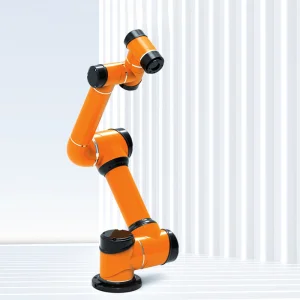
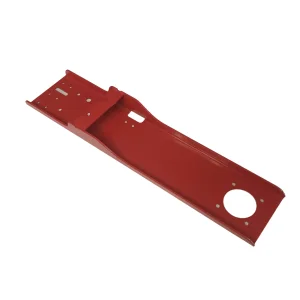
Technical answers to critical integration, process capability, and configuration questions.
Our robotic systems utilize laser-guided vision sensors integrated directly at the torch mount, paired with proprietary real-time trajectory correction software. This configuration dynamically monitors the weld groove structure, automatically adjusting the torch offset to compensate for thermal distortion and metal plate warpage. The mechanical arm itself achieves a repeat positioning accuracy of up to ±0.03mm, preserving weld bead consistency even under extreme thermal stress.
Sandai controllers support major industrial fieldbus communication protocols, including EtherCAT, PROFINET, DeviceNet, and Modbus TCP. This enables seamless, low-latency communication with prominent digital power supplies from manufacturers like Fronius (via TransSteel or TPSi profiles), Miller, Lincoln Electric, and OTC Daihen, giving operators full software control over wire feed speed, arc voltage, and pulsed parameters.
Yes, our collaborative series (cobots) comply with ISO 10218-1 and ISO/TS 15066 safety standards. They are equipped with high-sensitivity joint torque sensors that instantly halt motion upon detecting physical contact exceeding predetermined force thresholds. However, depending on local regulatory requirements and the specific risks of the welding process (such as arc radiation and weld spatter), dynamic light curtains or safety scanners may still be recommended.
For most mid-to-large-scale manufacturing facilities, ROI is typically realized within 8 to 14 months. This rapid amortization is driven by a 3x increase in welding speed compared to manual processes, a reduction in shielding gas and wire consumption by up to 20%, and the virtual elimination of post-weld grinding and repair operations. Additional savings are gained from minimized production downtime through offline programming.
Our industrial 6-axis arms are rated for a Mean Time Between Failures (MTBF) of 60,000 operational hours. Routine maintenance is limited to joint lubrication audits every 5,000 operating hours or once a year, along with simple regular cleaning of the wire feeder assembly and torch contact tips. Harmonic reducers and RV gear systems are sealed for life under standard operating payloads.
We combine digital tools with field engineering support. We provide localized system integrators for onsite setup, and our Shenzhen facility supports remote diagnostics via cellular or VPN-secured industrial gateways. In addition, we host digital training programs covering robot teaching, offline path programming, and safety parameter configuration to ensure your plant operators achieve autonomy quickly.
Continuous investment in high-precision testing machinery, advanced assembly bays, and strict quality control processes.
 Sandai Robot