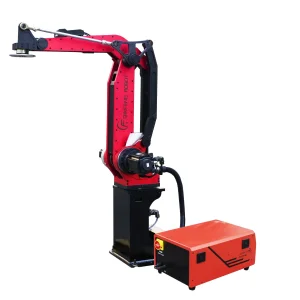
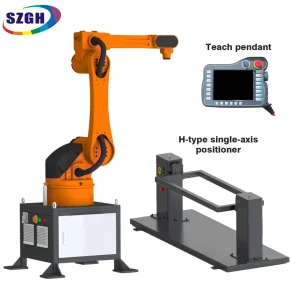
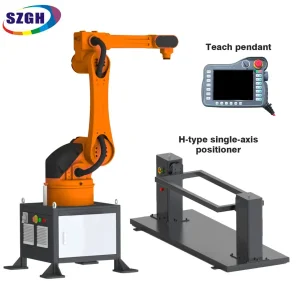
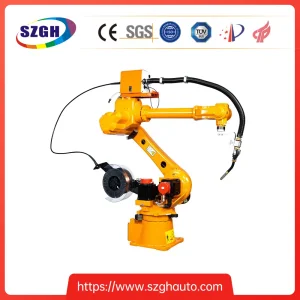
Explore our leading selection of heavy-duty robotic welding arms, collaborative cobots, and high-precision welding positioners engineered to reduce pipeline fabrication cycle times.
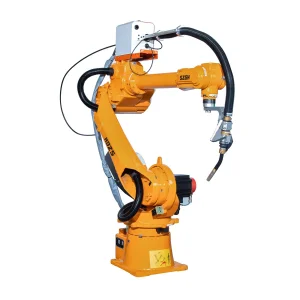
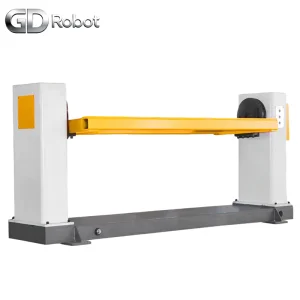
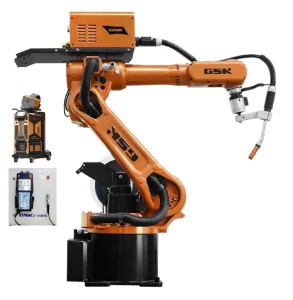
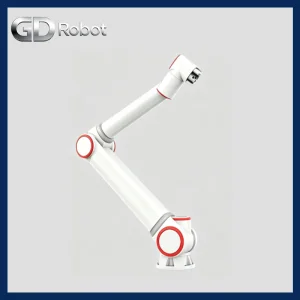
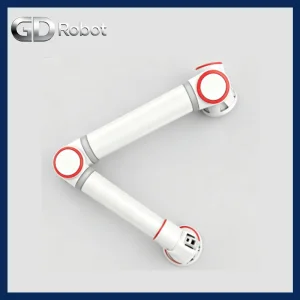
Discover how Shenzhen Sandai Robot Co., Ltd. drives heavy manufacturing productivity with industrial-scale fabrication solutions.
Shenzhen Sandai Robot Co., Ltd. is a professional industrial automation enterprise specializing in the development and manufacturing of welding robot arms, robotic welding systems, and intelligent welding automation solutions for global manufacturing industries. Established in 2012 and headquartered in Shenzhen, China, the company integrates advanced robotics technology, precision engineering, software development, and automated production capabilities to deliver reliable and efficient welding solutions worldwide.
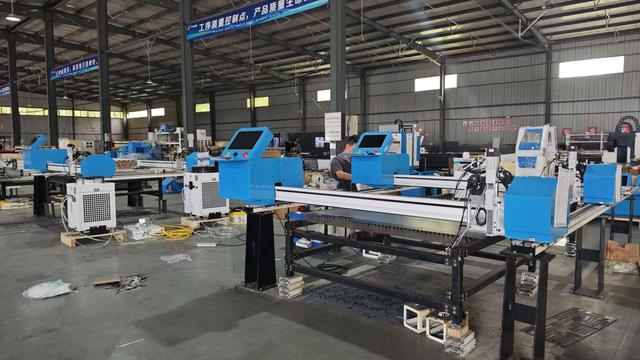
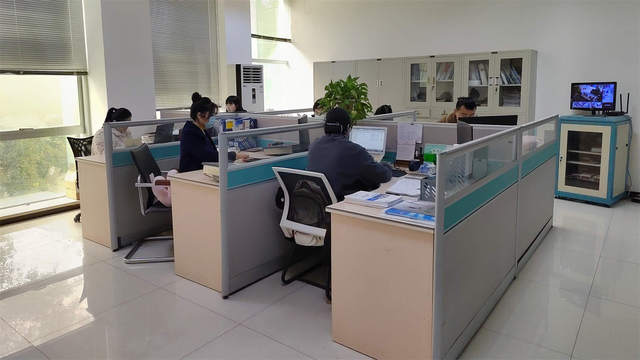
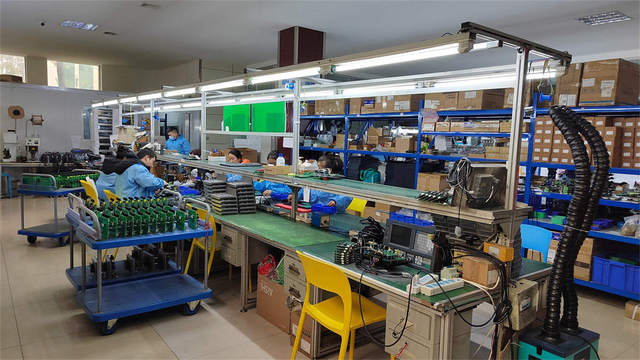
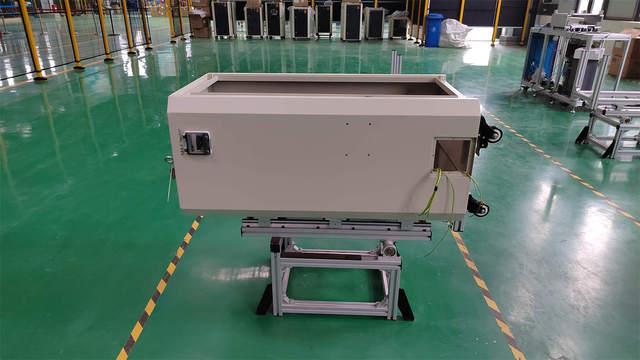
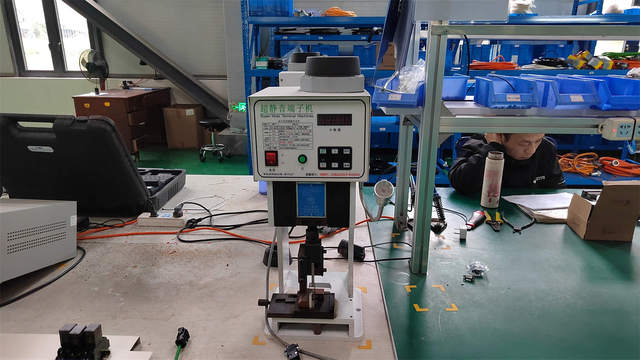
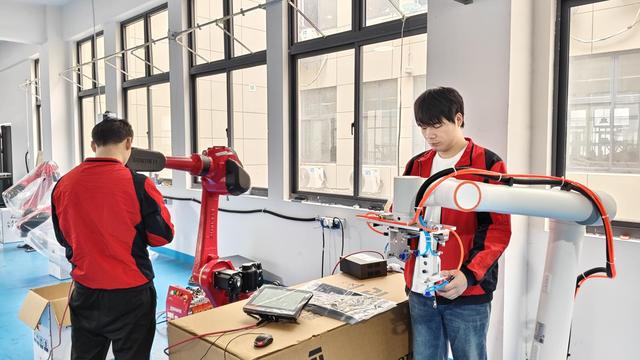
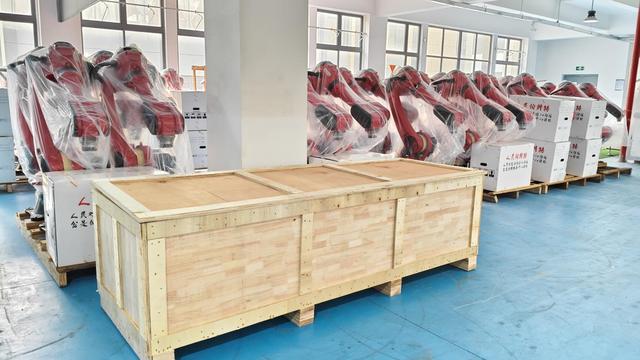
Sandai Robot operates a modern manufacturing facility covering more than 32,000 square meters and employs over 380 experienced engineers, technicians, and production specialists. With 20 automated assembly and testing lines, the company maintains strict quality control procedures throughout design, production, calibration, and final inspection processes. Its annual production capacity exceeds 8,000 industrial robotic welding units, serving customers across automotive manufacturing, metal fabrication, shipbuilding, construction machinery, aerospace components, and heavy industrial equipment sectors.
The company’s core product portfolio includes six-axis welding robot arms, collaborative welding robots, laser welding systems, MIG/TIG robotic welding stations, automated welding manipulators, and customized robotic integration solutions. By combining AI visual positioning, servo motion control technology, intelligent path programming, and real-time monitoring systems, Sandai Robot provides high-precision and stable welding performance for complex industrial applications.
Driven by continuous innovation and smart manufacturing development, Sandai Robot invests heavily in robotics research and automation software optimization. The company is committed to helping global manufacturers improve production efficiency, welding consistency, workplace safety, and long-term operational performance through advanced robotic welding technologies and flexible OEM/ODM cooperation services.
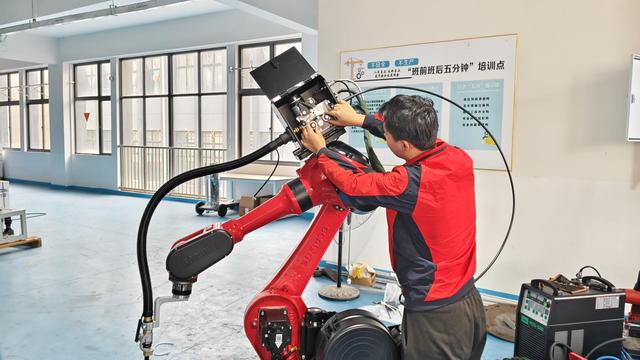
Understanding the transition from manual labor to automated pipeline welding systems in major energy and industrial projects.
The global energy transmission, water treatment, and petrochemical industries are undergoing a major shift. Strict regulatory guidelines such as the ASME Section IX and API 1104 govern the integrity of structural welds. To minimize high defect rates, manual pipe welding is rapidly being replaced by automated, computer-controlled systems. Standard manual pipeline welding faces high risks of porosity, slag inclusions, and lack of penetration—factors that can lead to catastrophic pipeline failures.
From a procurement perspective, Engineering, Procurement, and Construction (EPC) contractors require high duty-cycle machinery capable of continuous operation in harsh, dusty, or high-humidity environments. Procurement teams prioritize systems offering rapid return on investment (ROI), low maintenance costs, and open control architectures that easily integrate with standard power sources like Lincoln, Miller, or Fronius.
High-stakes engineering works demand repeatable precision that manual welders cannot consistently deliver over 12-hour shifts.
Before confirming an order with exporters, international buyers evaluate critical performance metrics to match regional safety laws.
Turnkey automation setups for oil & gas distribution networks, offshore piping, and complex urban infrastructure.
The technological convergence of AI, 3D laser vision tracking, and synchronous multi-axis control.
As smart manufacturing evolves, industrial robots must handle unpredictable real-world variations. The technical roadmap for modern pipeline welding robots focuses on several key areas:
1. Real-Time Laser Seam Tracking: Standard pre-programmed paths fail when fit-up tolerances shift. High-speed laser sensors map the joint profile milliseconds before the arc ignition, automatically adjusting the torch offset to ensure complete joint penetration.
2. Multi-Axis Synchronization: Synchronizing a 6-axis manipulator arm with a dual-axis rotary welding positioner (a total of 8 axes of motion) keeps the weld pool in the flat gravity position, which improves weld quality and aesthetics.
3. Industry 4.0 Integration: Standard controllers record critical parameters like current, voltage, travel speed, and gas flow rates for every weld bead. This data is linked to each pipeline segment's serial number, ensuring complete quality traceability.
| Robot Model Series | Degrees of Freedom | Payload Capacity | Reach Radius | Best Welder Compatibility | Primary Applications |
|---|---|---|---|---|---|
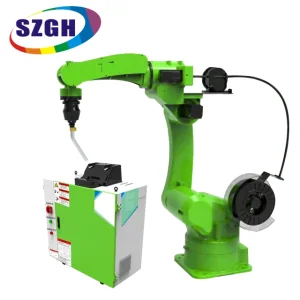
| SZGH-T1600-15C | 6 Axis | 15 kg | 1510 mm | MIG / MAG / TIG / Laser | Heavy steel piping, structural frames |
| GSK Preciseness | 6 Axis | 10-20 kg | 1450 mm - 1800 mm | MIG / MAC / TIG | Automotive structures, medium pipelines |
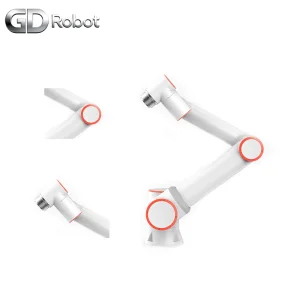
| GD20 Collaborative | 6 Axis | 20 kg | 1854 mm | MIG / TIG / Laser | Flexible custom batches, small workshops |
| SZGH-P1950-B | 6 Axis | 6 kg | 1950 mm | Plasma Cutting / Laser | Thin-walled piping, complex cutting & welding |
How we protect your investment through certifications and global engineering support.
Industrial machinery must meet safety and reliability standards before entering international ports and assembly lines. Sandai Robot tests and calibrates every unit, certifying compliance with EU directives. All robots carry the CE Mark, verifying that their electromagnetic interfaces, high-voltage servo motors, and emergency stop circuits comply with international directives.
For operations in outdoor staging areas or high-humidity coastal zones, our systems feature optional IP65 ingress protection upgrades. This upgrade seals vital servo drive motors, encoder cables, and control cabinets against fine dust particles and water sprays.
To support global markets, Sandai Robot offers flexible OEM/ODM options. We customize arm lengths, controller software interfaces, and integrate custom mounting brackets to fit existing welding power sources. Our engineering teams provide remote diagnosis, step-by-step video training, and on-site support to minimize setup times and keep your production lines running.
Answers to technical and commercial questions about integrating pipeline welding systems.
Discover additional specialized automation arms, positioners, and heavy-payload solutions designed to streamline your production output.
 Sandai Robot