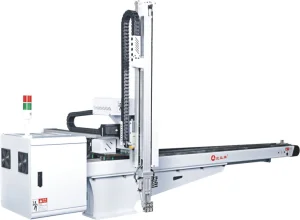
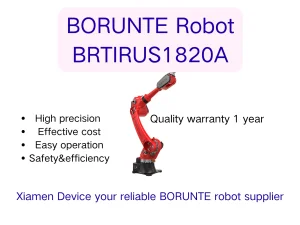
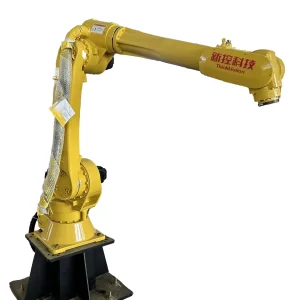
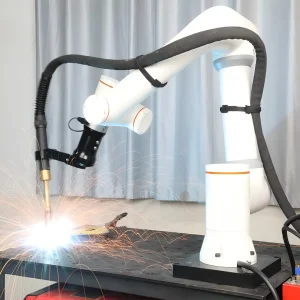
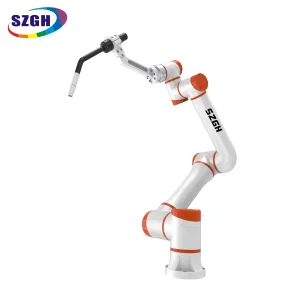
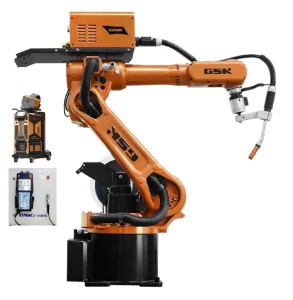
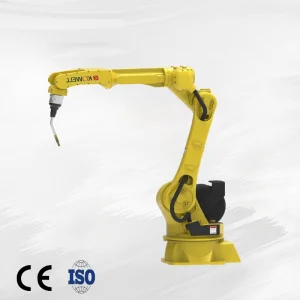
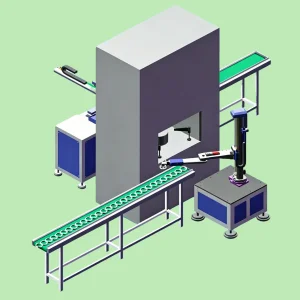
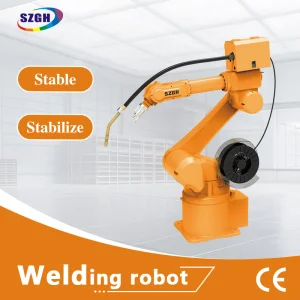
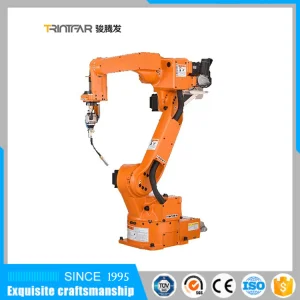
The industrial landscape is undergoing a radical transformation. As global labor shortages in skilled trades reach critical levels, Welding Task Automation has moved from a luxury to a fundamental necessity for survival. Today's manufacturing environment demands more than just repetitive motion; it requires "Intelligent Welding" — a synthesis of high-speed kinematics, real-time sensory feedback, and adaptive AI programming.
Information Gain Insight: Unlike traditional manual welding, automated robotic systems provide 100% duty cycles and millimetric precision. For OEM/ODM partners, this translates to predictable throughput and zero-defect manufacturing, eliminating the variance inherent in human fatigue.
Utilizing high-torque servo motors and harmonic reducers to achieve repeatability of ±0.02mm, essential for aerospace and automotive tolerances.
Robotic systems handle toxic fumes, intense UV radiation, and high temperatures, protecting your human capital from long-term occupational hazards.
Achieve ROI within 12-18 months through reduced scrap rates, optimized filler metal usage, and significantly lower energy consumption per unit.
As a leading OEM/ODM Welding Task Automation Manufacturer, Shenzhen Sandai Robot Co., Ltd. is actively developing the next generation of robotic interfaces. Our technical roadmap focuses on three pillars:
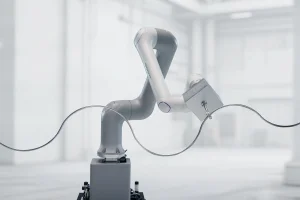
The future of welding is "Collaborative." We are seeing a massive shift towards Cobots (Collaborative Robots) that can work alongside humans without safety cages, empowered by capacitive skin sensors and force-torque feedback.
Why source your welding automation from Shenzhen? The answer lies in Supply Chain Density. Shenzhen Sandai Robot is located at the heart of the world's most sophisticated electronics and mechanical ecosystem. This allows us to procure high-grade aluminum alloys, precision sensors, and advanced semiconductors within a 50km radius.
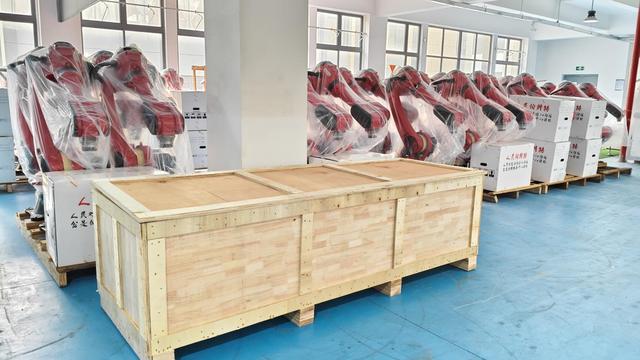
Our 20 automated assembly lines ensure that we can scale production from 10 units to 500 units without compromising on the 100-hour stress testing each robot must undergo. This resilience means that even during global logistics fluctuations, our lead times remain 30-40% shorter than our Western counterparts.
Entering the automation space requires more than just hardware; it requires a partner who understands Local Compliance. All Sandai Robot products are designed to meet CE (Conformité Européenne), ISO 9001, and ANSI/RIA safety standards.
We partner with local integrators in Southeast Asia, Europe, and the Americas to provide on-site installation and maintenance.
Handling everything from electromagnetic compatibility (EMC) testing to specialized environmental certifications for maritime applications.
Multi-lingual technical assistance to ensure your production line never stays dormant.
Shenzhen Sandai Robot Co., Ltd. is a professional industrial automation enterprise specializing in the development and manufacturing of welding robot arms, robotic welding systems, and intelligent welding automation solutions for global manufacturing industries. Established in 2012 and headquartered in Shenzhen, China, the company integrates advanced robotics technology, precision engineering, software development, and automated production capabilities to deliver reliable and efficient welding solutions worldwide.
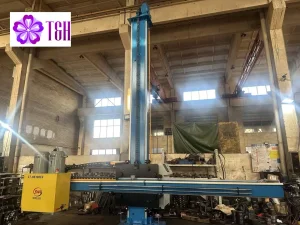
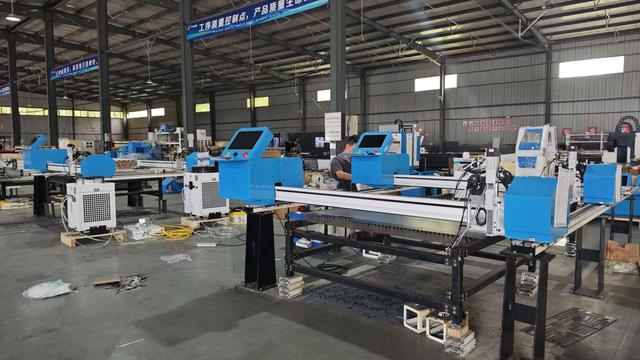
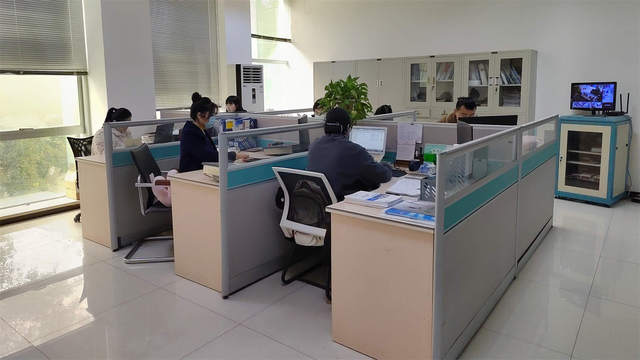
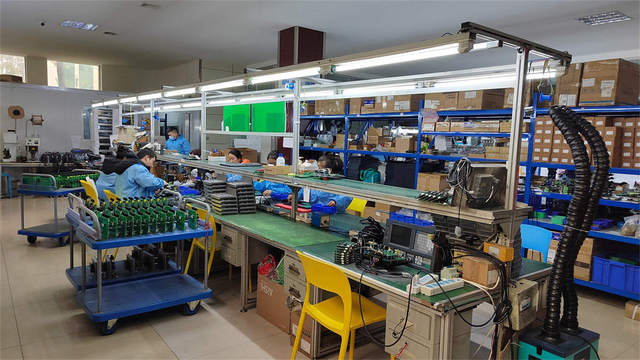
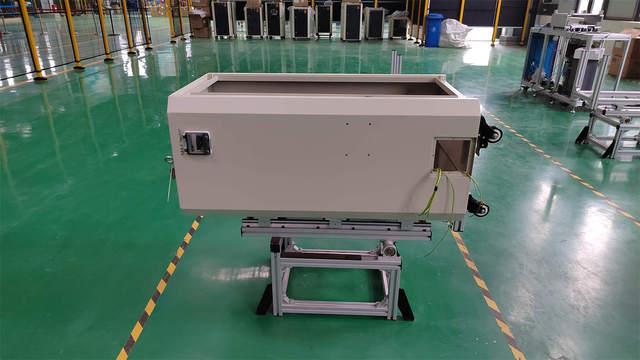
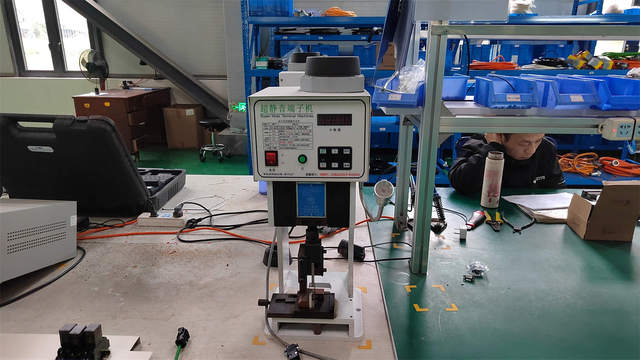
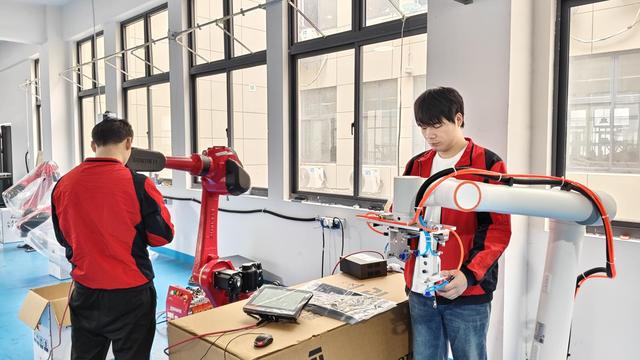
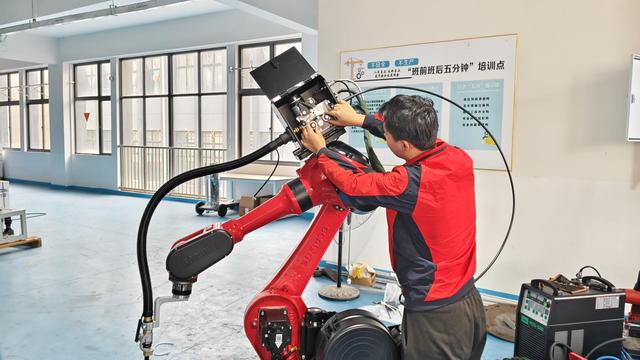
Sandai Robot operates a modern manufacturing facility covering more than 32,000 square meters and employs over 380 experienced engineers, technicians, and production specialists. With 20 automated assembly and testing lines, the company maintains strict quality control procedures throughout design, production, calibration, and final inspection processes. Its annual production capacity exceeds 8,000 industrial robotic welding units.
 Sandai Robot