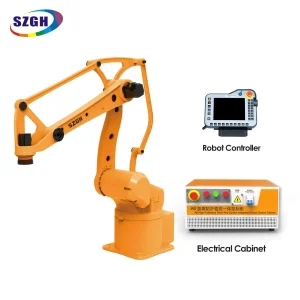
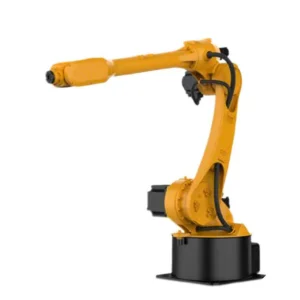
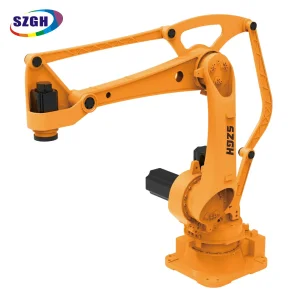
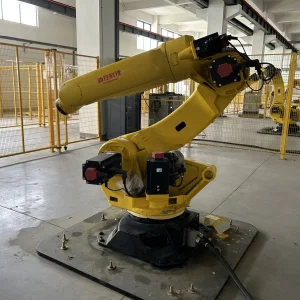
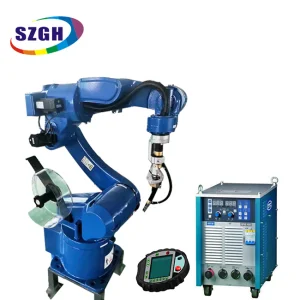
In the modern era of Industry 4.0, Heavy Payload Robotic Arms have transitioned from simple material handlers to the central nervous systems of manufacturing floors. Defined by their ability to manage payloads exceeding 50kg with micron-level repeatability, these machines are critical for automotive assembly, shipbuilding, and construction infrastructure. Unlike traditional heavy machinery, modern robotic arms integrate AI-driven path planning and real-time sensor feedback to adjust for material variances dynamically.
The global market for industrial robotics is witnessing a structural shift toward "Intelligent Integration." Companies like Shenzhen Sandai Robot Co., Ltd. are at the forefront, merging mechanical prowess with software intelligence. The industry roadmap currently focuses on three pillars:
Established in 2012, Shenzhen Sandai Robot has evolved into a powerhouse of industrial automation. With a massive 32,000 square meter facility and a team of over 380 experts, the company isn't just selling hardware; they are exporting reliability. Their annual capacity of over 8,000 units serves as a testament to their scaling capabilities, ensuring that global partners in the automotive and aerospace sectors receive consistent, high-quality welding solutions.
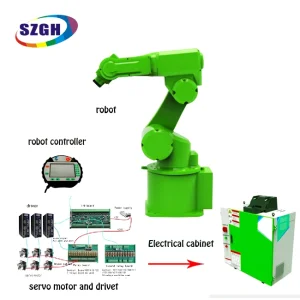
The strategic advantage of Sandai Robot lies in their Vertical Integration. By controlling the entire lifecycle—from CNC machining of the arm components to the final PLC (Programmable Logic Controller) software configuration—they ensure that the end-user receives a plug-and-play solution rather than a collection of mismatched parts.
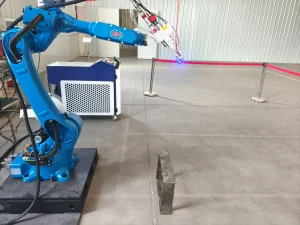
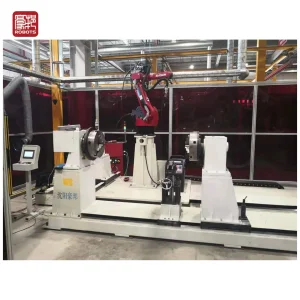
Heavy payload arms are essential for spot and laser welding of vehicle chassis. High precision is non-negotiable to maintain structural integrity.
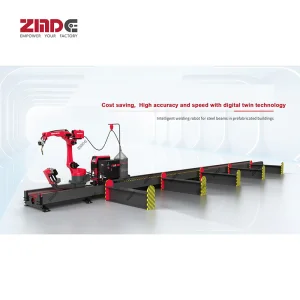
Welding thick metal plates in ship hulls requires high-torque, stable arms that can operate in harsh, dusty, and high-heat environments.
Q: What is the primary benefit of a 6-axis welding robot over a 3-axis system?
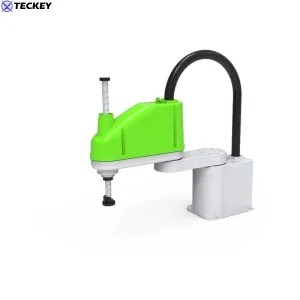
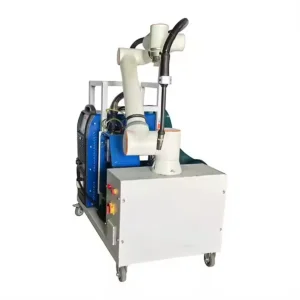
A: A 6-axis robot offers greater "degrees of freedom," allowing the torch to reach complex weld joints (like pipes or curved flanges) that a 3-axis system cannot access without constant position changes.
Q: How does Sandai Robot ensure long-term reliability?
A: Through rigorous testing on 20 automated assembly lines, every unit undergoes stress testing, calibration, and final inspection to meet international quality standards before export.
 Sandai Robot