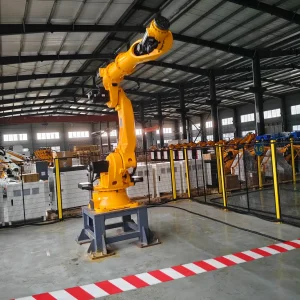
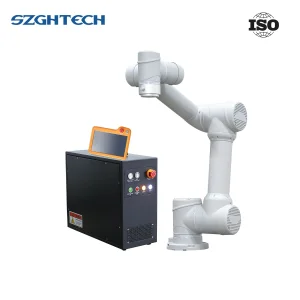
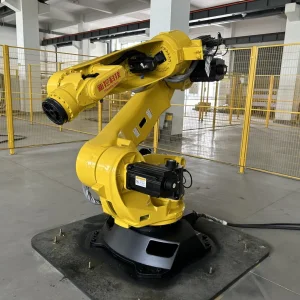
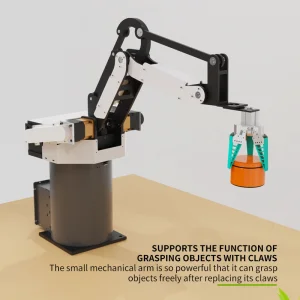
The global manufacturing landscape is facing structural challenges, including specialized labor shortages, rising wages, and increasingly strict regulatory requirements for operator safety. Traditional welding setups rely on large, heavy, fixed gantry designs that require significant space and lack adaptability for low-volume, high-mix production setups. The industry is rapidly shifting toward portable welding robots and collaborative systems (cobots).
By integrating lightweight designs with robust multi-axis capabilities, modern portable systems deliver sub-millimeter precision, quick changeover tooling, and rapid installation. These systems allow operators to program new weld paths dynamically, transforming automated welding from a rigid process into a flexible, on-demand solution.
Utilizing high-speed digital signal processors (DSP) to achieve synchronous 6-axis interpolation, path trajectory planning, and real-time posture adjustments for complex spatial joints.
Integrated laser vision trackers scan groove geometry in real time. They automatically compensate for thermal distortion and joint gaps, ensuring precise bead placement.
Equipped with IP65-rated joints and high-grade arm seals, these systems are built to withstand high levels of electromagnetic interference, spatter, and dust in heavy industrial environments.
When sourcing portable welding robots, organizations evaluate technical features, manufacturing scale, OEM capacity, and localized support. Below is an analytical review of the top 10 global manufacturers leading this sector.
Fanuc is a global leader in factory automation. Its specialized Arc Mate series of lightweight industrial robots offers exceptional control precision and speed. Fanuc's portable setups leverage advanced servo drives and robust structural castings, making them reliable options for high-throughput production lines. Their proprietary welding software allows for seamless integration with major power sources.
KUKA, a pioneer in industrial automation, offers the KR Cybertech Nano and KR Agilus series, which are widely used in compact and mobile welding cells. Renowned for their German-engineered mechanical components and intuitive control pads, KUKA robots excel in high-speed, intricate arc welding tasks. Their modular design simplifies integration into customized mobile rigs.
ABB is known for its high-performance motion control software, such as TrueMove and QuickMove. The IRB 1520ID and compact GoFa collaborative robot series are frequently integrated into portable, modular welding systems. ABB's solutions are valued for their path accuracy and ease of programming, reducing setup times for complex geometries.
Yaskawa's AR series (Arc Welding Robots) is a benchmark in high-duty cycle automation. With slim-profile designs, these robots fit well in compact workspaces. Yaskawa provides integrated weld packages, including the robot arm, controller, weld power source, and torch cabling, engineered for maximum uptime and durability.
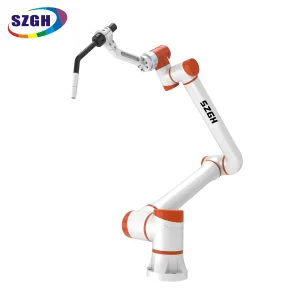
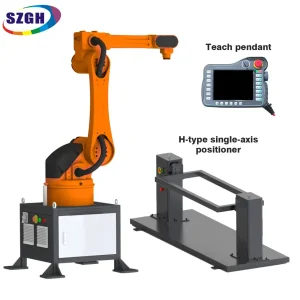
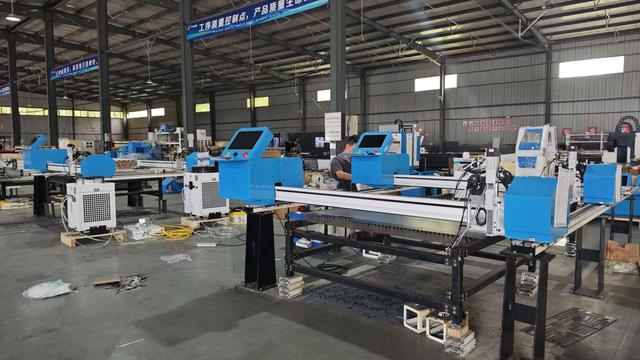
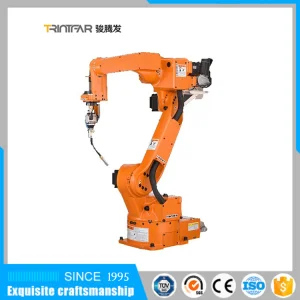
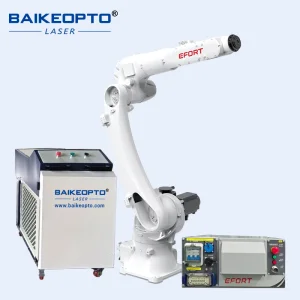
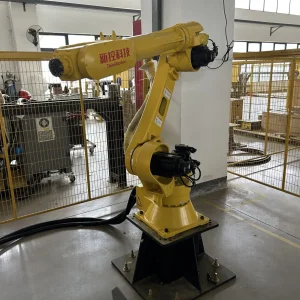
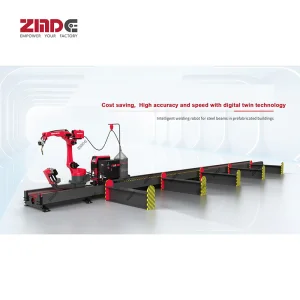
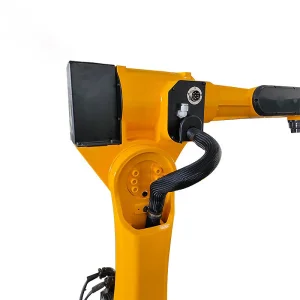
Headquartered in Shenzhen's tech cluster, Sandai Robot offers high-performance, cost-effective solutions. With a 32,000-square-meter facility and a strong engineering team, they specialize in 6-axis welding arms, collaborative welding robots, and automated positioners. Sandai is a top choice for B2B global procurement and customized OEM/ODM projects.
OTC Daihen stands out as a manufacturer that produces both robotic arms and high-end welding power sources. This vertical integration ensures optimal compatibility. OTC's compact welding robots feature advanced torch-cable management and specialized welding wave control, making them highly effective for aluminum and thin-sheet steel welding.
As a pioneer in collaborative robotics, Universal Robots’ UR10e and UR20 models are widely utilized by third-party integrators to build portable welding stations. Their lightweight construction, ease of hand-guiding programming, and built-in safety sensors make them suitable for job shops transitioning to automated welding.
While primarily known for advanced welding power supplies, Fronius has expanded into mechanized and robotic welding systems. Their smart welding tractors and compact multi-axis welding cells are engineered for demanding on-site fabrication tasks, delivering exceptional arc stability and weld consistency.
Kemppi offers specialized software-driven solutions for automated welding. Their KempArc robotic welding systems integrate with various robot brands. Their mobile welding platforms are designed for heavy industries like shipbuilding and structural steel, emphasizing ease of use and digital weld data tracking.
Miller Electric, a major name in welding equipment, offers the Copilot collaborative welding system. Built for easy integration on fab shop floors, Miller's portable systems feature intuitive software interfaces and reliable welding power configurations, helping operators deploy automated welding quickly.
Chinese manufacturing hubs, particularly in Shenzhen and the Pearl River Delta, bring together raw materials, precision component suppliers (such as harmonic reducers, RV reducers, and high-performance servo motors), and software development firms in close geographic proximity. This concentration speeds up R&D cycles, prototype testing, and full-scale production ramp-up.
Modern Chinese robotics plants feature state-of-the-art testing floors equipped with laser trackers, Coordinate Measuring Machines (CMM), dynamic load testers, and environmental chambers. This testing ensures that every 6-axis manipulator meets strict international standards for accuracy and durability before shipment.
Unlike rigid production setups, Chinese manufacturers excel at tailored engineering. Whether clients need specialized mounting brackets, extended reach parameters, customized software protocols, or specific color schemes, these factories can quickly adapt their production processes to meet custom requirements.
Shenzhen Sandai Robot Co., Ltd. is a professional industrial automation enterprise specializing in the development and manufacturing of welding robot arms, robotic welding systems, and intelligent welding automation solutions for global manufacturing industries. Established in 2012 and headquartered in Shenzhen, China, the company integrates advanced robotics technology, precision engineering, software development, and automated production capabilities to deliver reliable and efficient welding solutions worldwide.
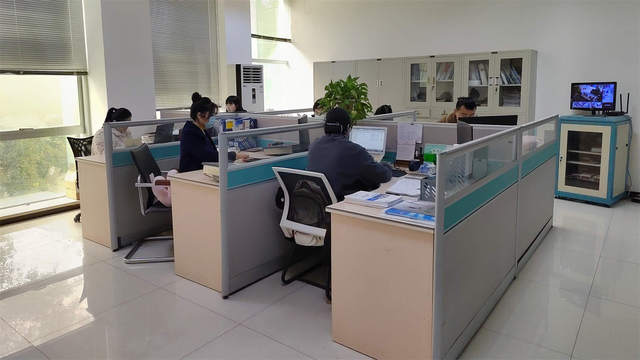
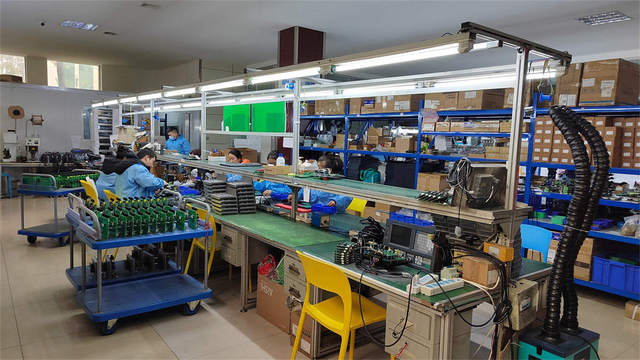
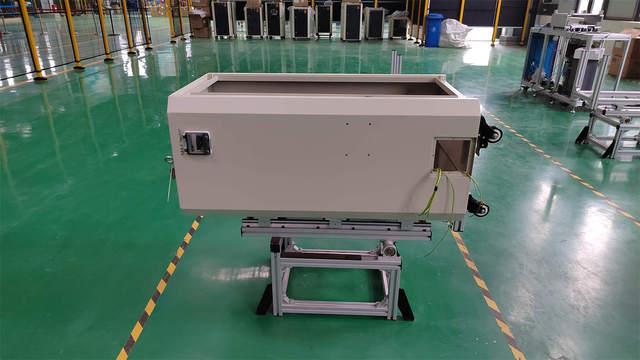
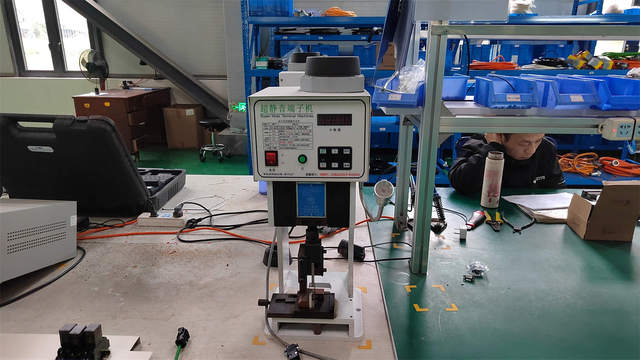
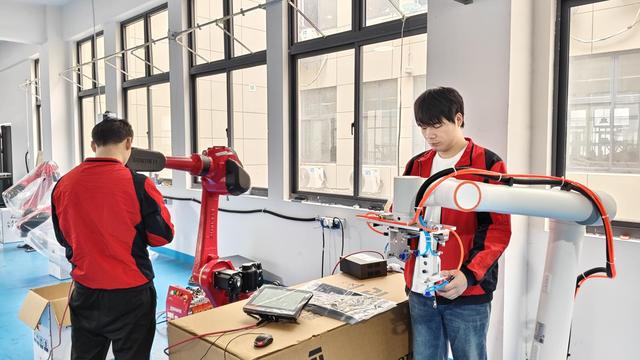
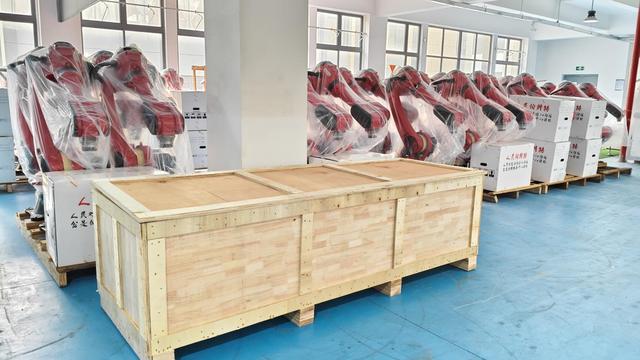
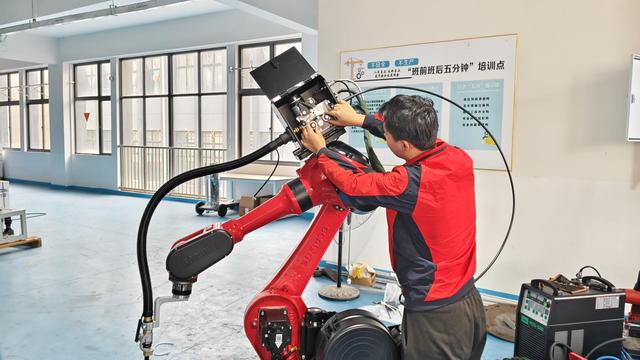
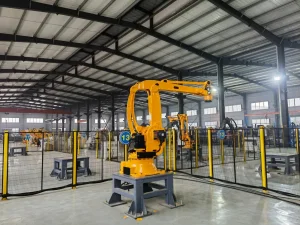
Sandai Robot operates a modern manufacturing facility covering more than 32,000 square meters and employs over 380 experienced engineers, technicians, and production specialists. With 20 automated assembly and testing lines, the company maintains strict quality control procedures throughout design, production, calibration, and final inspection processes. Its annual production capacity exceeds 8,000 industrial robotic welding units, serving customers across automotive manufacturing, metal fabrication, shipbuilding, construction machinery, aerospace components, and heavy industrial equipment sectors.
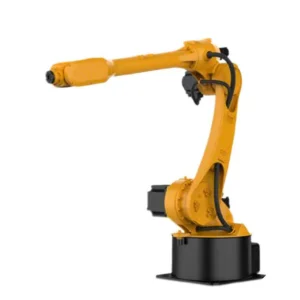
The company’s core product portfolio includes six-axis welding robot arms, collaborative welding robots, laser welding systems, MIG/TIG robotic welding stations, automated welding manipulators, and customized robotic integration solutions. By combining AI visual positioning, servo motion control technology, intelligent path programming, and real-time monitoring systems, Sandai Robot provides high-precision and stable welding performance for complex industrial applications.
Driven by continuous innovation and smart manufacturing development, Sandai Robot invests heavily in robotics research and automation software optimization. The company is committed to helping global manufacturers improve production efficiency, welding consistency, workplace safety, and long-term operational performance through advanced robotic welding technologies and flexible OEM/ODM cooperation services.
In modern automotive assembly plants, portable multi-axis systems perform intricate spot welding and structural seam operations on chassis frames, suspension towers, and body-in-white (BIW) panels. Their compact footprint enables them to operate in confined spaces alongside other manufacturing equipment.
Heavy fabricators utilize 6-axis arms to execute multi-layer, multi-pass welds on excavators, cranes, crane booms, and mining dump bodies. These components require deep penetration welds that can be automated with integrated seam trackers for consistency.
Shipyards use portable crawler-type welding robots and flexible 6-axis arms to weld structural bulkheads, hull components, and deck plating. These mobile systems can be positioned inside double bottoms or tanks, reducing the need to move large assemblies.
The future of automated welding centers on the integration of artificial intelligence. Next-generation systems use machine learning algorithms to analyze real-time video feeds from high-speed cameras. By evaluating arc stability, puddle shape, and slag formation, these systems adjust welding parameters (such as wire feed speed, travel speed, and voltage) dynamically during operation. This closed-loop control system minimizes weld defects, reducing the need for post-weld rework and manual inspection.
Offline programming (OLP) software allows engineers to design, simulate, and verify weld paths on a computer before deployment. This approach minimizes downtime on the shop floor. By linking virtual simulation environments with real-world robot cells, factories can optimize production lines and transition between different batch runs with minimal setup delay.
When sourcing portable welding robots, purchasing agents and technical directors evaluate specific technical and operational factors. A clear procurement matrix helps ensure the chosen system aligns with production requirements.
Match the arm’s payload capacity with the weight of your torches, wire feed units, and sensor packages. Ensure the arm's working envelope covers the dimensions of your largest workpiece without requiring frequent physical repositioning.
Evaluate how well the robot controller integrates with your existing welding power sources (such as Miller, Lincoln Electric, Fronius, or Kemppi). Standard communication interfaces like EtherNet/IP, DeviceNet, or Profinet simplify integration.
For facilities without dedicated programmers, systems featuring hand-guiding lead-through teaching or intuitive graphical interfaces (such as teach pendants with visual apps) reduce training times and speed up deployment.
 Sandai Robot