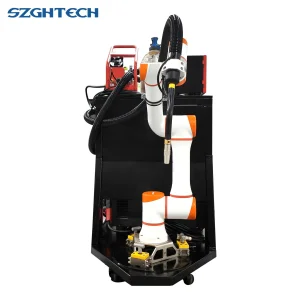
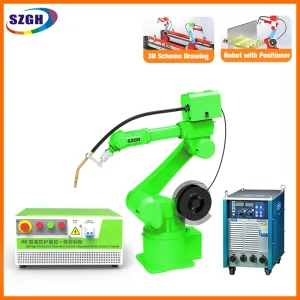
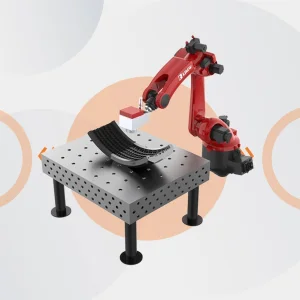
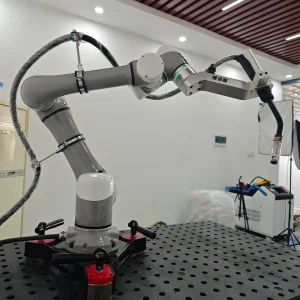
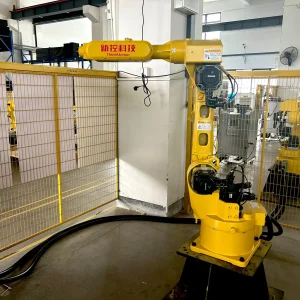
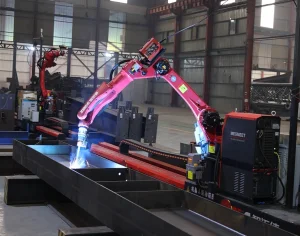
Explore our high-duty automated robotic welding arms engineered for maximum structural consistency and heavy-duty continuous cycles.
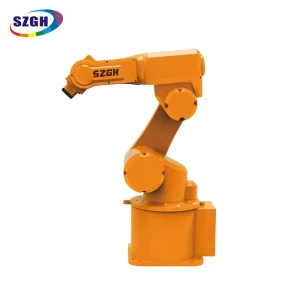
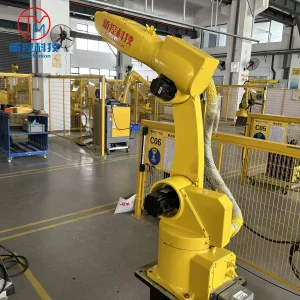
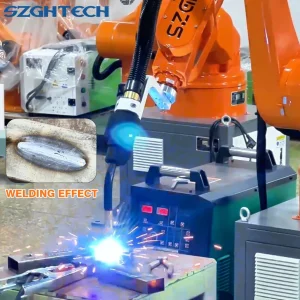
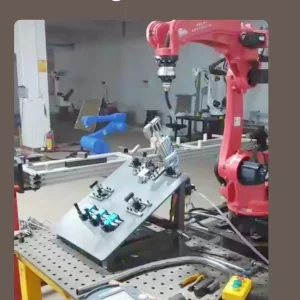
As manufacturing demands pivot toward lightweighting, structural efficiency, and high-strength alloys, aluminum fabrication has become a cornerstone of modern industrial growth. Welding aluminum, however, poses distinct thermal and metallurgical challenges—such as high thermal conductivity, rapid oxidation, and high susceptibility to porosity. Hand-guided or manual processing is no longer viable for high-throughput industries. This is where automated robotic intervention becomes critical.
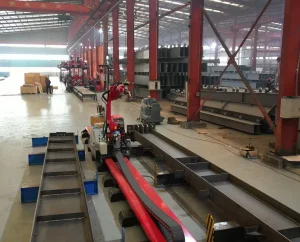
Shenzhen Sandai Robot Co., Ltd. (established in 2012) stands at the forefront of this industrial revolution. Operating a massive, state-of-the-art manufacturing facility spanning over 32,000 square meters, we specialize in high-efficiency, multi-axis automated robotic systems tailored for aluminum, stainless steel, and carbon steel structures. With over 380 seasoned control engineers, system integration experts, and metallurgy technicians on staff, we possess the raw technical capability and infrastructural scale required to supply, customize, and export robust robotic workstations globally.
Through our dedicated OEM/ODM division, we collaborate directly with international system integrators, automotive tier-1 suppliers, heavy equipment manufacturers, and commercial fabrication factories. We design fully integrated solutions featuring automated path-planning, adaptive arc adjustments, and laser seam tracking, guaranteeing reliable penetration and flawless bead appearance on challenging aluminum profiles.
Every robot shipped undergoes a 72-hour continuous dynamic calibration cycle and ISO-certified non-destructive testing (NDT). We document and execute production under rigid compliance with CE, UL, and regional safety mandates, establishing unmatched operational reliability.
Why aluminum requires specialized robotic programming, advanced control loops, and custom end-effectors.
Aluminum is covered by a persistent oxide layer ($Al_2O_3$) with a melting point exceeding 2,072°C, while the base aluminum alloy melts at approximately 660°C. Sandai's MIG/TIG software utilizes high-frequency AC cleaning cycles or double-pulse waveform controls to actively disrupt the oxide layer before deposition, avoiding inclusion defects.
With thermal conductivity five times higher than structural steel, heat drains rapidly from the joint zone. This results in lack of fusion at start points and burn-through at terminations. Our robots run real-time adaptive parameter adjustment, tapering energy output relative to temperature feedback along the path.
Hydrogen dissolves rapidly in molten aluminum, escaping during cooling to form gas pockets. Our robotic cells are equipped with synchronized dual-drive push-pull wire feeders that ensure steady wire delivery. This feed profile prevents micro-slippages that cause arc instability and subsequent porosity.
Selecting the optimal technological route is critical for maximizing ROI and production yield. The comparative matrix below outlines our standard integrations:
| Welding Process Type | Typical Applications | Penetration and Speed Profiles | Critical Engineering Challenges Addressed |
|---|---|---|---|
| Pulsed MIG (GMAW-P) | EV Battery Trays, Automotive Chassis, Structural Framing | High deposition rate, fast linear travel speeds | Lowers overall average heat input, suppressing solidification cracking. |
| Robotic AC TIG (GTAW) | Thin-walled aerospace tubes, precision cleanroom hardware | Aesthetic bead formation, lower travel speed | Provides independent control of cleaning action vs. penetration depth. |
| Fiber Laser Welding | Automotive door structures, high-volume production batteries | Ultra-deep penetration, minimal distortion, high speeds | Overcomes high surface reflectivity via keyhole mode dynamics. |
| Laser-Hybrid Arc Welding | Shipbuilding panel lines, rail transit major structures | Extreme depth capability, forgiving of joint gaps | Combines the speed of lasers with the gap-bridging of arc welding. |
How Sandai Robot simplifies international supply chains, localized integration, and OEM/ODM specifications.
Global procurement teams must balance hardware cost against integration expenses and field downtime. Standard, off-the-shelf welding arms frequently fall short because they lack the specific tooling, sensor suites, and safety protocols demanded by local factory systems.
To eliminate these pain points, Sandai Robot implements a structured 4-Phase OEM/ODM Customization Process:
Exporting systems to Europe (EU) and North America requires strict adherence to machinery directives. Our systems are engineered and documented to satisfy:
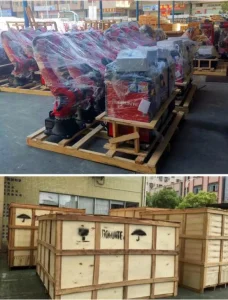
All international shipments feature ocean-safe vacuum preservation packing, moisture absorbers, and reinforced, custom crate structures to eliminate transit damage.
Where advanced robotic aluminum fabrication is heading, and how we are preparing your production line.
Manual positioning tolerances on large aluminum structures are notoriously variable. By mounting structured light laser-line scanners directly ahead of the torch, our system dynamically detects the joint groove center and variations in gap size, updating the path coordinates 100 times per second.
By integrating deep learning algorithms into the weld controller, our system monitors current, voltage, and wire feed speed variables. The system identifies anomalies (such as gas shielding interruptions or burn-through risks) and automatically adapts parameters on-the-fly to maintain quality.
Our new-generation systems export welding telemetry to local servers or cloud dashboards. Managers can trace individual part logs, monitor gas consumption, track cycle times, and predict wear-part replacements (like contact tips and liner status) before faults occur.
Addressing the technical, commercial, and integration questions of automation engineers and procurement directors.
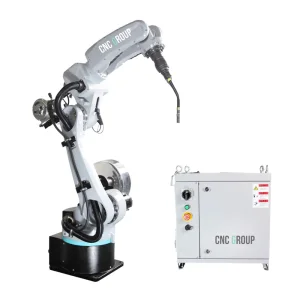
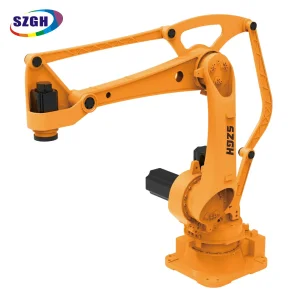
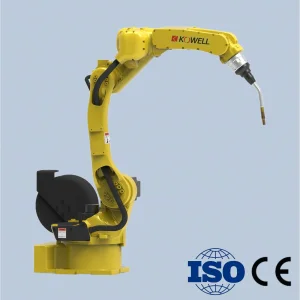
Advanced heavy-payload machinery, specialized cleaning arms, and complete turnkey automated cell integration.
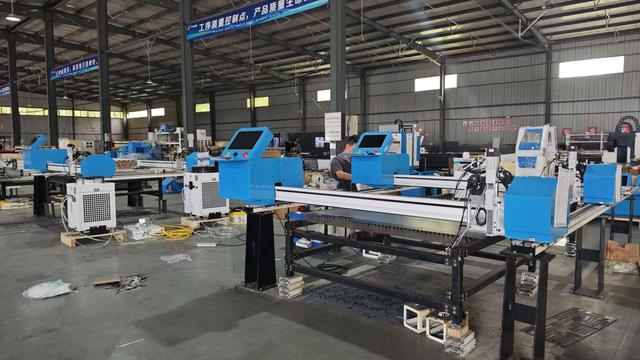
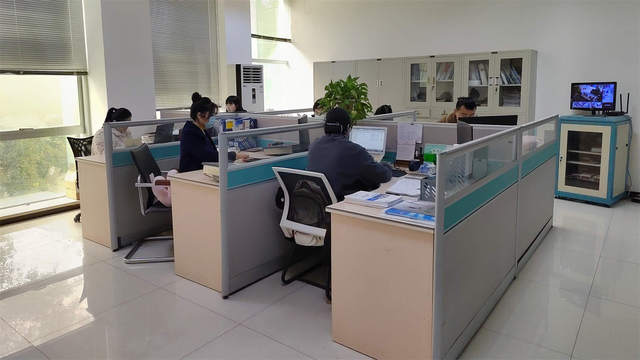
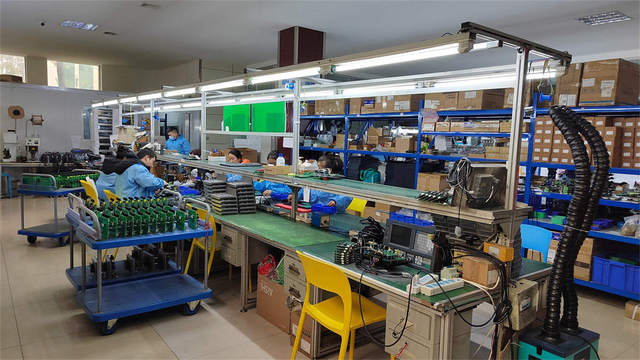
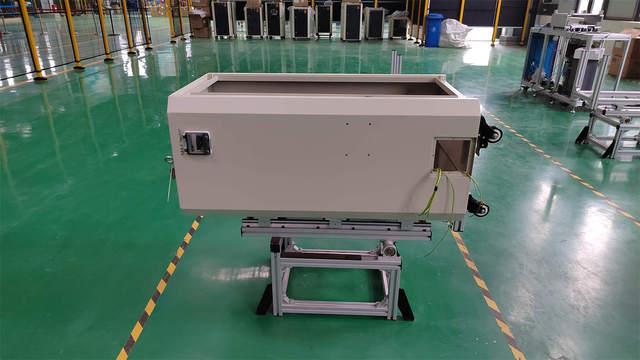
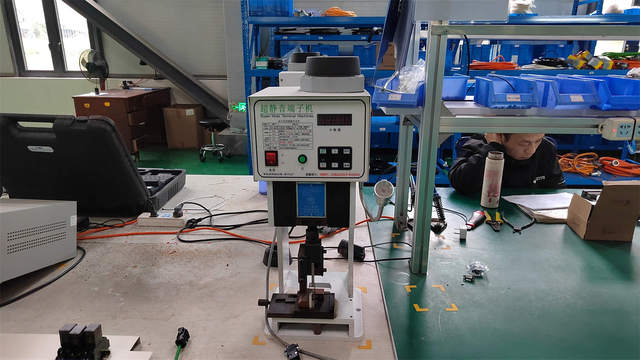
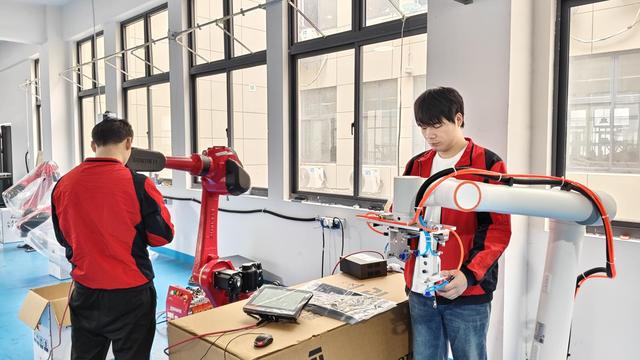
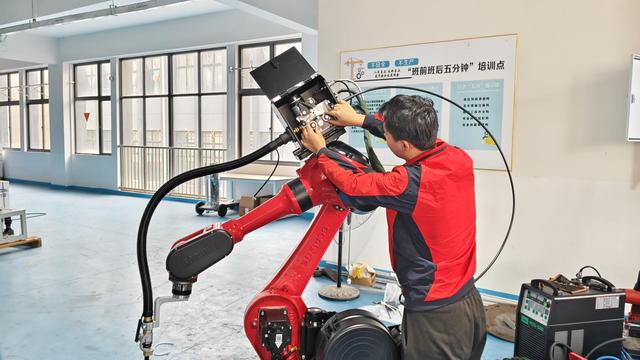
Take a tour of our high-capacity production lines, clean assembly areas, and calibration labs.

 Sandai Robot