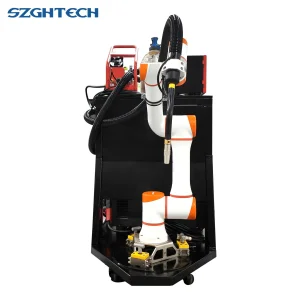
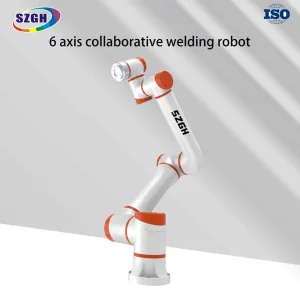
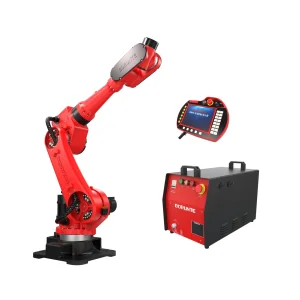
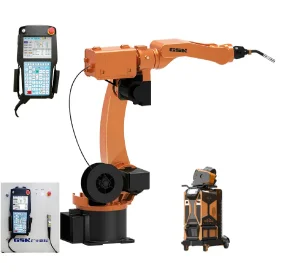
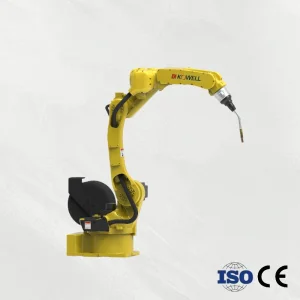
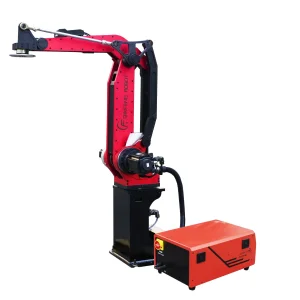
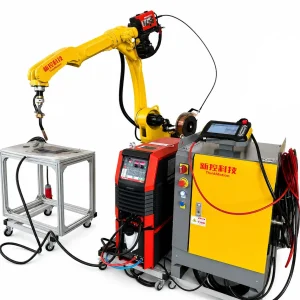
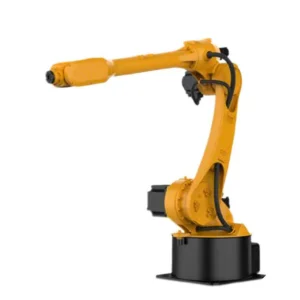
Explore the first segment of our high-precision heavy industrial setups, automated arms, and customized welding peripherals.
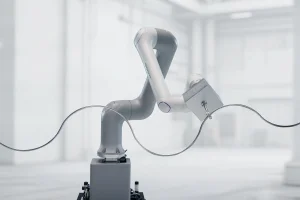
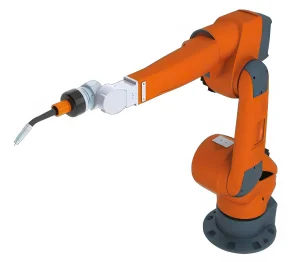
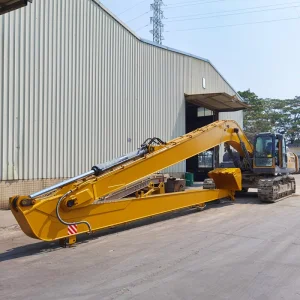
An exhaustive overview of smart end-effector architectures, system integration, and global supply economics.
In modern smart factories and automated manufacturing lines, the robotic welding end effector (also recognized as the robot's end-of-arm-tooling, or EOAT) represents the physical interface between the mechanical arm and the metal workpiece. As heavy manufacturing transitions to Industry 4.0, end effectors have evolved from simple passive torches into hyper-connected, sensor-rich mechatronic systems. Today's global market demand is heavily driven by requirements for rapid precision, multi-process versatility (MIG, TIG, Laser, and Spot welding), and integrated AI inspection metrics.
An end effector's dynamic performance determines the quality, strength, and structural integrity of the final weld. The global market is witnessing an unprecedented surge in demand for smart end effectors due to a global skilled labor shortage. High-growth sectors including automotive manufacturing, pressure vessel production, heavy infrastructure, and aerospace components rely heavily on automated systems to maintain continuous 24/7 output.
Key challenges such as thermal distortion mitigation, electromagnetic interference (EMI) protection during high-frequency arc initiation, and real-time path deviation are addressed by embedding micro-sensors directly within the end-effector housing. This makes the modern welding end effector an active data node in the factory network.
A B2B procurement matrix designed to guarantee high ROI, process safety, and long-term reliability.
Continuous thermal expansions during high-current operations cause TCP shifts. Premium end effectors must feature highly stable mechanical mounts and automatic alignment interfaces to prevent weld path drifts.
For high-throughput lines, choosing liquid-cooled torches that support 100% duty cycles at maximum amperage (e.g., 500A for MIG/MAG) prevents component degradation and shortens cycle runtimes.
Integrated mechanical and electrical deflection sensors instantaneously stop the robotic manipulator during unexpected impacts, saving expensive torches and delicate sensor assemblies from permanent damage.
Torsional strain on supply lines leads to wire feed delays and cable failures. A robust high-flex dress pack ensures continuous, snag-free 360-degree rotation of the 6-axis arm.
Laser seam tracking and vision-guided cameras must be seamlessly mounted to the end effector to dynamically adjust parameters for joint gaps and real-time thermal warpages.
Feeding aluminum and specialty alloy wires requires push-pull end-effector setups located directly at the wrist, ensuring constant, slip-free speed to eradicate micro-porosity defects.
Deciphering the paradigm shifts in automated welding architectures, AI pathfinding, and industrial integration.
The mainstreaming of visual cameras & automatic grippers allows welding end effectors to locate spatial joint coordinates, compensate for structural variations, and perform real-time visual-assisted path adaptation. The integration of 2D/3D structured light sensors enables rapid joint-profile extraction.
Combining the deep penetration of laser beams with the bridging capabilities of traditional MIG/TIG processes. Future end effectors are moving toward light, ultra-precise, hybrid configurations with embedded digital galvanometers that can swing the laser path at ultra-high frequencies.
Edge-computing modules directly integrated on the welding wrist will monitor the optical arc spectrum, acoustic signatures, and thermal histories in real time. Advanced machine-learning algorithms will adjust current, voltage, feed rate, and torch angle dynamically to ensure zero-defect outcomes on safety-critical components.
A global leader in high-end industrial automation and smart robotic welding ecosystems.
Shenzhen Sandai Robot Co., Ltd. is a professional industrial automation enterprise specializing in the development and manufacturing of welding robot arms, robotic welding systems, and intelligent welding automation solutions for global manufacturing industries. Established in 2012 and headquartered in Shenzhen, China, the company integrates advanced robotics technology, precision engineering, software development, and automated production capabilities to deliver reliable and efficient welding solutions worldwide.
Sandai Robot operates a modern manufacturing facility covering more than 32,000 square meters and employs over 380 experienced engineers, technicians, and production specialists. With 20 automated assembly and testing lines, the company maintains strict quality control procedures throughout design, production, calibration, and final inspection processes. Its annual production capacity exceeds 8,000 industrial robotic welding units, serving customers across automotive manufacturing, metal fabrication, shipbuilding, construction machinery, aerospace components, and heavy industrial equipment sectors.
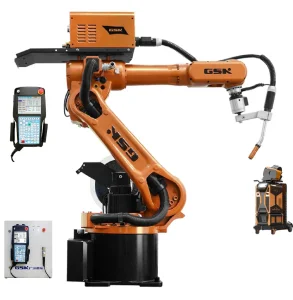
The company’s core product portfolio includes six-axis welding robot arms, collaborative welding robots, laser welding systems, MIG/TIG robotic welding stations, automated welding manipulators, and customized robotic integration solutions. By combining AI visual positioning, servo motion control technology, intelligent path programming, and real-time monitoring systems, Sandai Robot provides high-precision and stable welding performance for complex industrial applications.
Driven by continuous innovation and smart manufacturing development, Sandai Robot invests heavily in robotics research and automation software optimization. The company is committed to helping global manufacturers improve production efficiency, welding consistency, workplace safety, and long-term operational performance through advanced robotic welding technologies and flexible OEM/ODM cooperation services.
Inside the Shenzhen Sandai Robot modern manufacturing complex and validation centers.
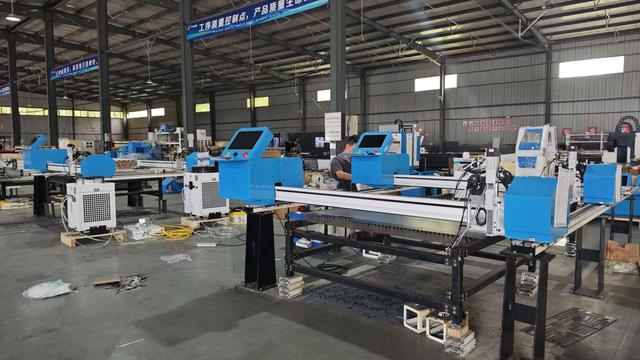
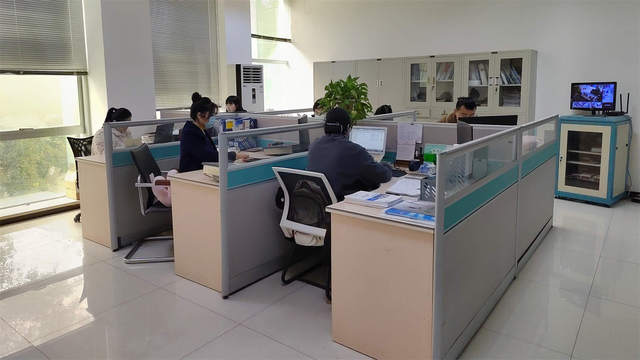
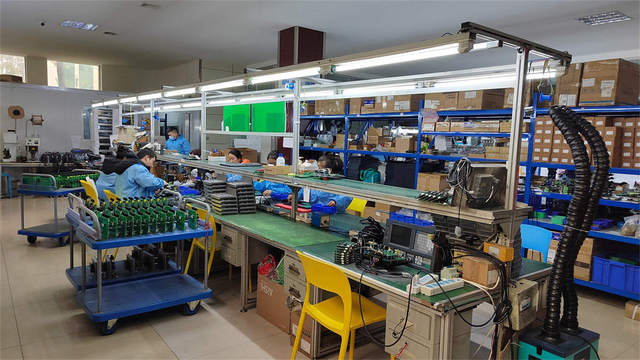
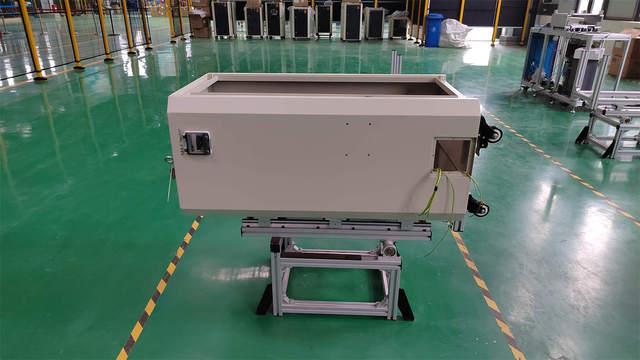
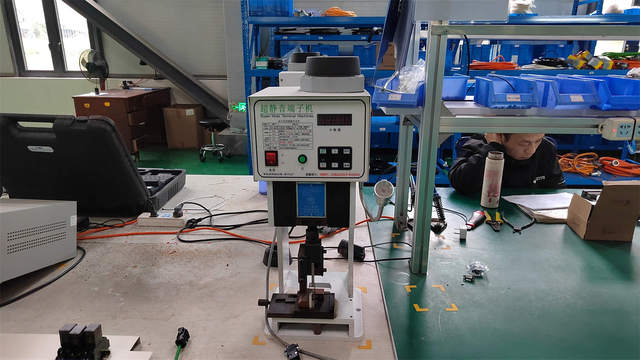
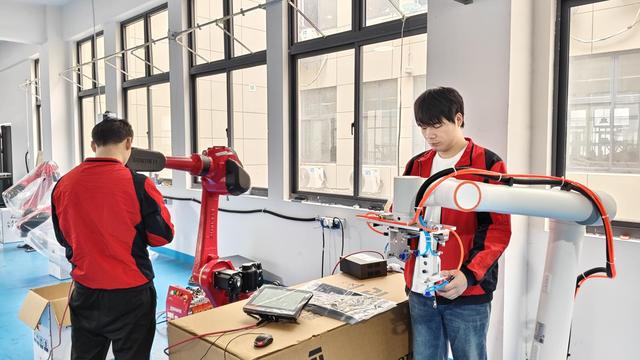
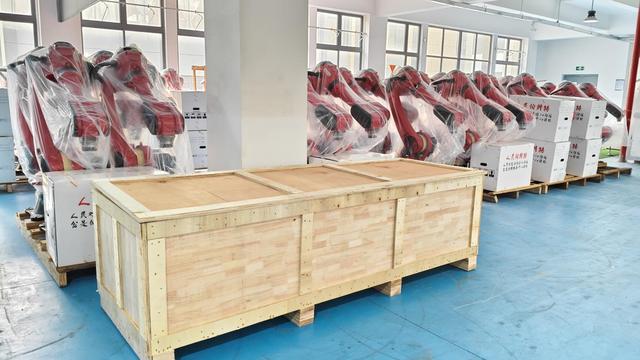
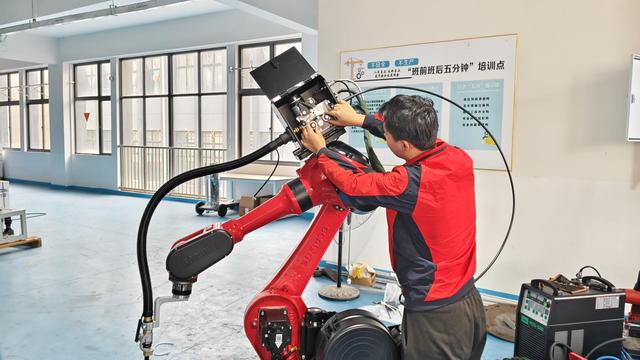
From heavy-duty steel structures to high-precision automotive lines: engineering solutions for global markets.
Deploying IP54-rated robotic arms paired with servo-controlled spot-welding guns. This setup guarantees constant electrode force, microsecond weld timing control, and high protection against harsh automotive factory dust and spatter.
Large cylindrical vessels require deep, defect-free welds. Combining customizable six-axis gantry robots with laser-tracking TIG or SAW end effectors allows for automatic bead height tracking, and real-time groove width adaptations.
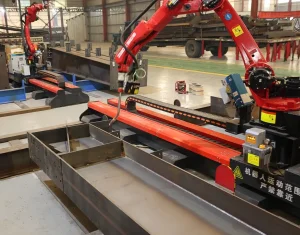
For large-scale building profiles, gantry-mounted robotic systems integrated with high-payload end effectors operate smoothly on ground rails. These configurations overcome the physical boundaries of reach, handling multi-ton beams with absolute consistency.
Analyzing key variables that differentiate premium end effectors from standard components.
An end effector's thermal management directly shapes the final weld's metallurgical properties. By incorporating specialized dual-circuit water cooling channels inside the gas nozzle and contact tip assembly, heat accumulation is dissipated immediately. This lowers the temperature of vital tooling components and significantly extends the lifespan of consumables.
Furthermore, advanced digital torch cleaning stations remove spatter build-up automatically in regular cycles. Integrated reamers cut through hardened slag while injecting specialized anti-spatter fluids. This prevents gas flow restrictions, ensures stable shielding gas dynamics, and eliminates porosity in the weld bead.
Direct technical answers from senior automation specialists regarding robotic end effector configuration and operation.
TCP (Tool Center Point) deviation is primarily caused by cumulative thermal expansion under intensive high-current arc heat, as well as minor physical impacts. It is addressed by: 1) Utilizing premium double-water-cooled torch necks to limit expansion. 2) Deploying automatic calibration stations that verify and adjust TCP variables in the robot controller dynamically. 3) Utilizing stable mechanical mounting flanges with integrated locating pins.
Laser seam trackers are physically mounted directly on the end-effector housing via a rigid, vibration-isolated bracket. The sensor projects a laser line ahead of the welding arc. The real-time camera captures the reflections, computes the precise seam profile, and forwards offset corrections to the robot controller via high-speed EtherCAT or PROFINET interfaces, allowing the arm to dynamically adjust its trajectory.
Push-Pull systems are essential when welding with soft filler wires (like aluminum or silicon bronze) or when using extended torch cables (typically exceeding 3 meters). A push-pull end effector integrates a synchronized drive motor inside the torch head itself, keeping the wire in constant tension to prevent feeding issues, birdnesting, and erratic arc starts.
A physical crash during robotic movement can bend the torch neck, shift the TCP, or damage the robot's wrist joints. Mechanical deflection clutches or digital safety sensors inside the end-effector interface instantly break the electrical safety loop when a pre-set torsional force threshold is exceeded. This stops the robot arm within milliseconds, preventing expensive component replacement and preserving production uptime.
Complete your deployment setup with our heavy-duty platforms, precise joints, and dedicated fabrication units.
 Sandai Robot