Expert Procurement Technical Q&A
Get answers to common technical, logistics, and deployment questions when installing manipulators in South Sudan.
Q:
What primary power supply configuration do these manipulators require in South Sudan?
Our manipulators are standardly configured for 3-phase 380V/50Hz power systems, which align with South Sudan’s national grid specifications. To protect against voltage fluctuations common in remote regions, we integrate voltage protection relays and line filters. Custom configurations, such as 220V or 440V systems, are also available upon request.
Q:
How do you protect sensitive PLC electronics from dust and heat in high-temperature regions?
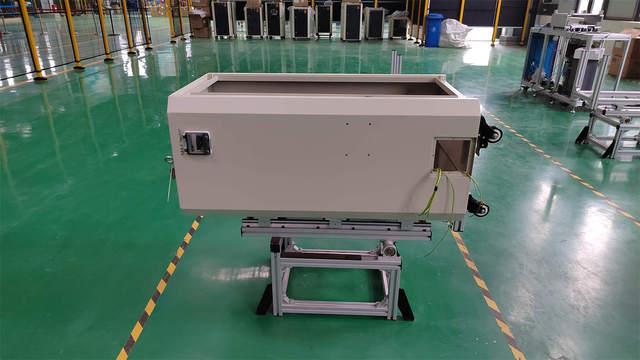
We build our control cabinets to IP54 standards and equip them with active heat exchangers or air conditioning units. This keeps the cabinet pressurized to prevent ambient dust from entering and maintains a stable internal operating temperature, even when outdoor temperatures reach 45°C.
Q:
What shipping routes do you recommend for Juba, South Sudan?
We typically ship heavy machinery via ocean container to the Port of Mombasa in Kenya or the Port of Djibouti. From there, we coordinate overland transit via the Northern Corridor transit route through Kampala directly to Juba, using specialized transport partners to ensure safe delivery.
Q:
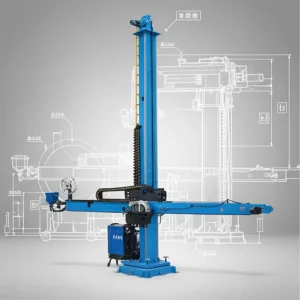
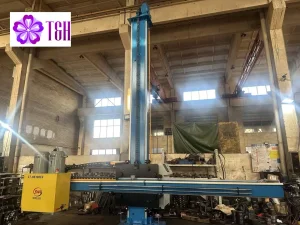
What is the typical lifespan and maintenance cycle of the mechanical column-and-boom system?
With regular lubrication and gear alignment checks, our welding manipulators have a design lifespan exceeding 10 years of continuous operation. We recommend greasing the guide tracks every 150 hours of operation and changing the gearbox gear oil once a year to ensure smooth motion.
Q:
Can Sandai’s manipulators integrate with third-party welding power sources?
Yes. Our control systems use standard industrial interfaces (such as DeviceNet, Profibus, Modbus, or analog connections). This compatibility allows our manipulators to integrate with major international welding power sources like Miller, Lincoln Electric, Fronius, or Kemppi.
Q:
How do you provide technical support and replacement parts to clients in South Sudan?
We offer online troubleshooting, real-time diagnostic checks via built-in VPN modules, and direct shipping of replacement parts through international express carriers like DHL or FedEx to South Sudan. For large-scale installations, we can also dispatch field engineers to assist with setup and hands-on staff training.
Q:
What safety features are integrated into the automated vertical lift boom mechanisms?
Our vertical systems feature mechanical anti-fall safety brakes. In the event of a chain or drive belt failure, the safety mechanism engages automatically to prevent the boom arm from dropping, protecting both the operator and the workpiece.
Q:
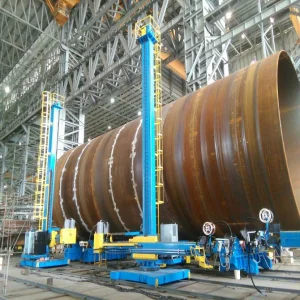
What type of weld seam tracking system do you provide for large-diameter oil tanks?
We offer both mechanical tactile seam trackers and advanced non-contact laser vision sensors. The laser tracking system reads the weld joint geometry in real-time, sending corrections to the controller to keep the torch centered in the joint groove.
 Sandai Robot