Sandai Robot
1. The Global Landscape of Industrial Welding Automation
In contemporary heavy manufacturing, the transition toward intelligent welding automation systems has accelerated beyond simple productivity improvements. Today, it represents a core strategic mandate for global industrial competitiveness. High-precision welding is critical in structural integrity, and the global manufacturing market faces structural headwinds: a severe shortage of skilled human welders, rising raw material costs, and stringent regulatory standards for structural safety.
Heavy industries, including automotive chassis production, structural steel construction (such as H-beam fabrication), energy vessel fabrication, and aerospace assembly, require absolute repeatability. Traditional manual processes introduce operator-to-operator variance, thermal distortion, and slower cycle times. Advanced robotic welding platforms integrate high-precision multi-axis mechanics, closed-loop sensor networks, and real-time vision algorithms to resolve these issues. Consequently, industrial manufacturers are replacing legacy standalone systems with fully connected robotic welding cells that offer high uptime and seamless enterprise resource planning (ERP) integration.
2. Technology Trends Reshaping the Welding Sector
Modern fabrication is driven by several key technological advancements that transform basic robotic kinematics into highly intelligent, adaptive production systems:
These technologies address the limitations of traditional pre-programmed industrial arms. Historically, a variations in joint alignment or small thermal shifts would ruin a weld seam. Modern systems adapt in real-time, reducing weld defects, improving arc-on time, and maximizing operational efficiency.
3. Shenzhen Sandai Robot Co., Ltd.: Manufacturing Excellence & Scale
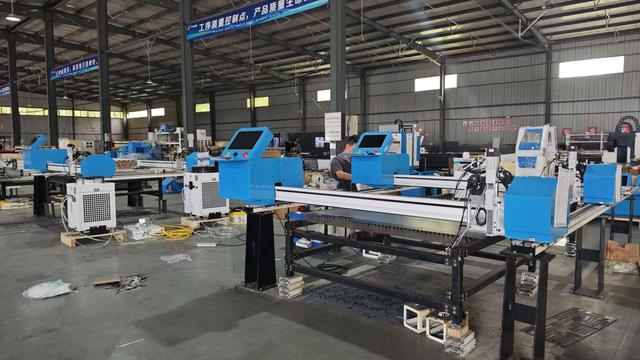
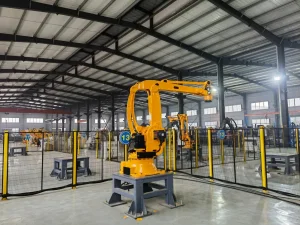
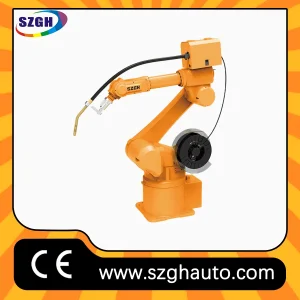
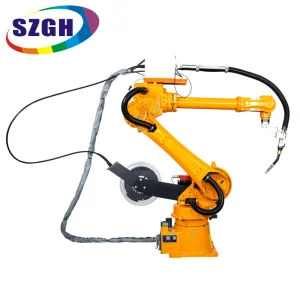
Shenzhen Sandai Robot Co., Ltd. is a professional industrial automation enterprise specializing in the development and manufacturing of welding robot arms, robotic welding systems, and intelligent welding automation solutions for global manufacturing industries. Established in 2012 and headquartered in Shenzhen, China, the company integrates advanced robotics technology, precision engineering, software development, and automated production capabilities to deliver reliable and efficient welding solutions worldwide.
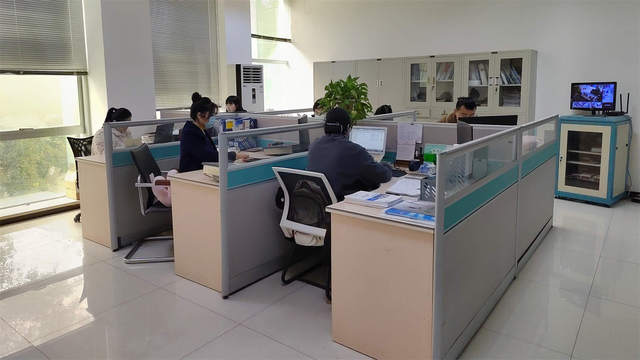
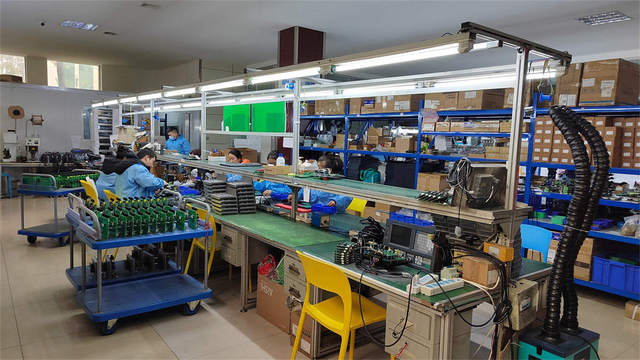
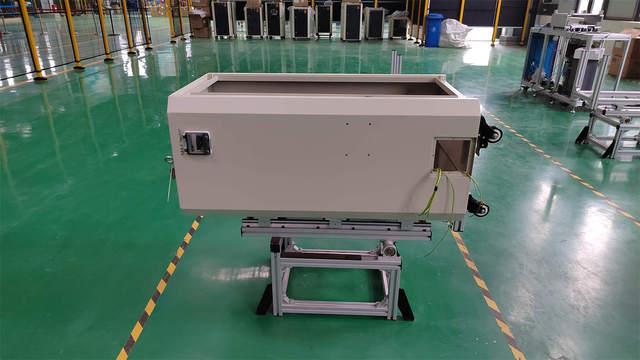
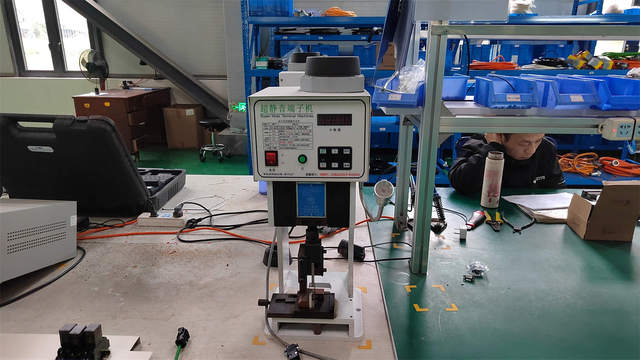
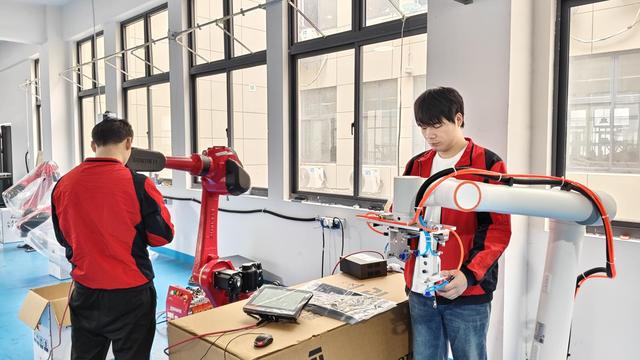
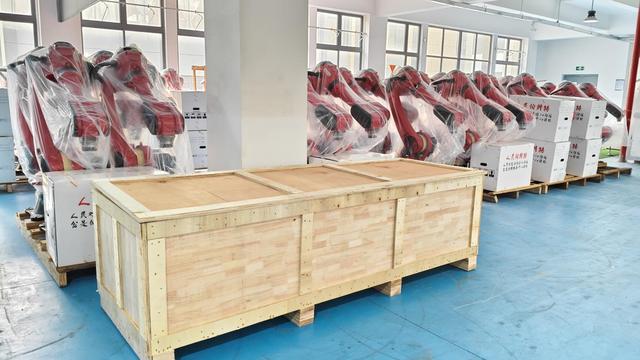
Sandai Robot operates a modern manufacturing facility covering more than 32,000 square meters and employs over 380 experienced engineers, technicians, and production specialists. With 20 automated assembly and testing lines, the company maintains strict quality control procedures throughout design, production, calibration, and final inspection processes. Its annual production capacity exceeds 8,000 industrial robotic welding units, serving customers across automotive manufacturing, metal fabrication, shipbuilding, construction machinery, aerospace components, and heavy industrial equipment sectors.
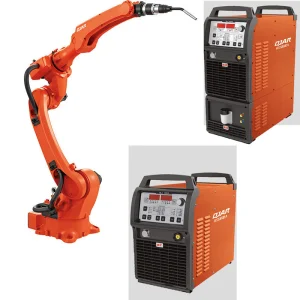
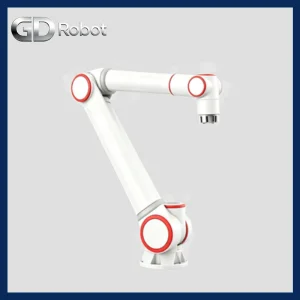
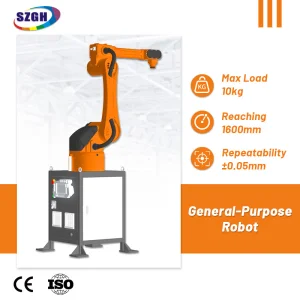
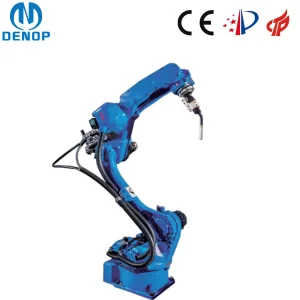
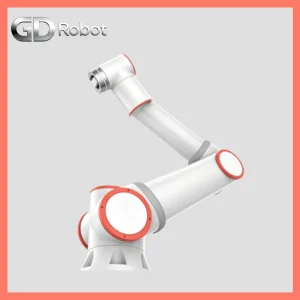
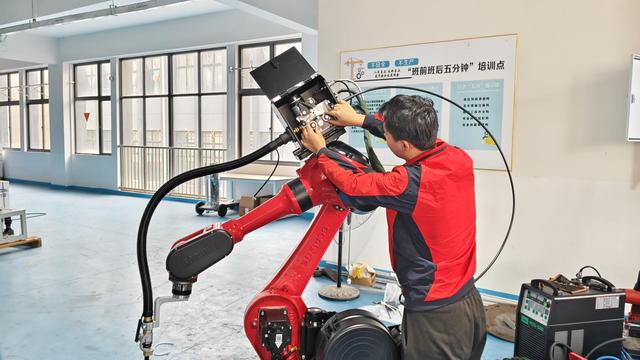
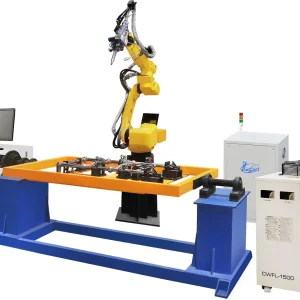
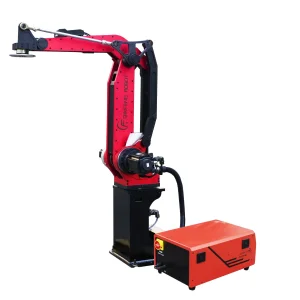
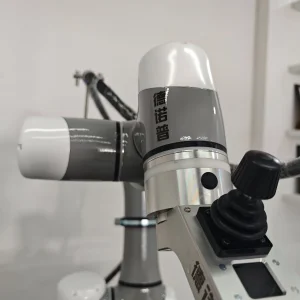
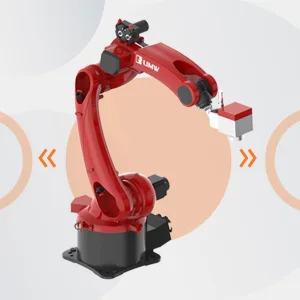
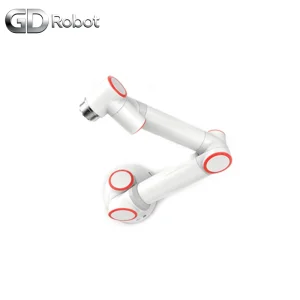
The company’s core product portfolio includes six-axis welding robot arms, collaborative welding robots, laser welding systems, MIG/TIG robotic welding stations, automated welding manipulators, and customized robotic integration solutions. By combining AI visual positioning, servo motion control technology, intelligent path programming, and real-time monitoring systems, Sandai Robot provides high-precision and stable welding performance for complex industrial applications.
Driven by continuous innovation and smart manufacturing development, Sandai Robot invests heavily in robotics research and automation software optimization. The company is committed to helping global manufacturers improve production efficiency, welding consistency, workplace safety, and long-term operational performance through advanced robotic welding technologies and flexible OEM/ODM cooperation services.
4. Macro-Industry Solutions & Application Scenarios
To meet the requirements of modern production facilities, industrial robot systems must be customized for their specific operating environments. Sandai Robot provides tailored integration solutions across several key sectors:
A. Automotive Manufacturing & EV Subframes
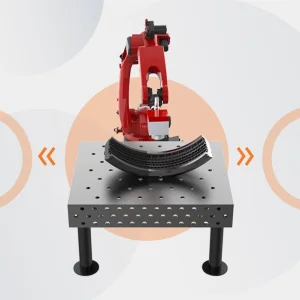
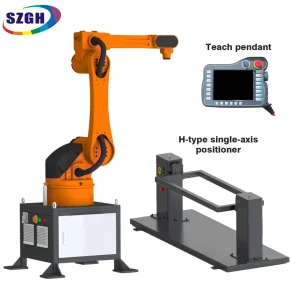
The rapid adoption of Electric Vehicles (EVs) requires lightweight, high-strength structures. Our 6-axis robot arms, configured with customized MIG systems, deliver the precise control needed for thin-walled aluminum battery trays and high-strength steel chassis parts. Using synchronized external positioners, these systems control heat input to prevent component warping.
B. Heavy Infrastructure & Structural Steel Fabrication
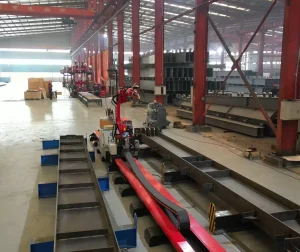
For H-beam fabrication, bridge girders, and building frames, welding automation systems must handle massive dimensions and thick structural plates. Our laser tracking systems enable multi-pass weld fill layers. The robot automatically adjusts its path for weld gap variations, producing high-penetration joints that meet strict structural standards.
C. High-Speed Surface Preparation & Eco-Cleaning
Welding quality depends heavily on clean joint preparation. Our advanced robotic arms for eco-friendly laser cleaning remove rust, mill scale, and oxides without toxic chemicals or abrasive blasting. This integrated step improves joint preparation efficiency and ensures clean weld metallurgy.
5. Technical Path & R&D Roadmap
Sandai Robot is focusing its R&D efforts on three core areas to drive future system performance:
- Multi-Sensor Data Fusion: Combining optical cameras, laser trackers, and arc current sensors into a single feedback control loop to optimize weld puddle characteristics.
- Offline Programming (OLP) & Digital Twins: Allowing programmers to generate and validate complex weld paths in a virtual environment, minimizing production line downtime.
- Advanced Path Kinematics: Upgrading our servo motion controllers with dynamic acceleration algorithms to reduce cycle times on complex, multi-curve joints.