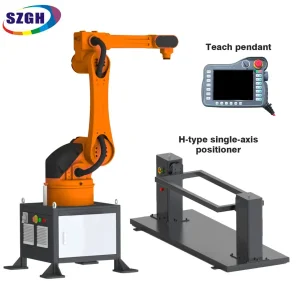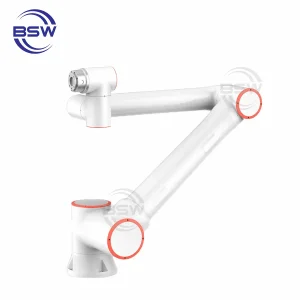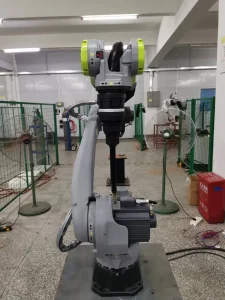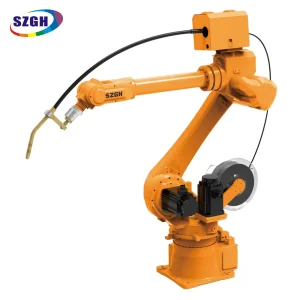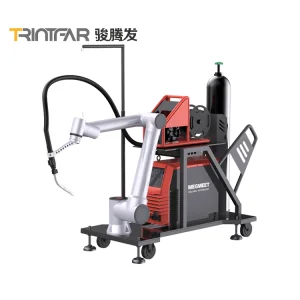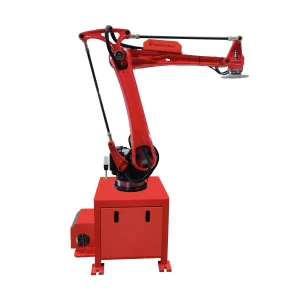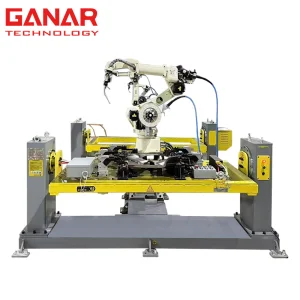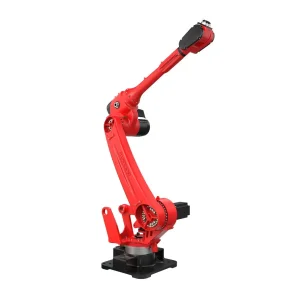
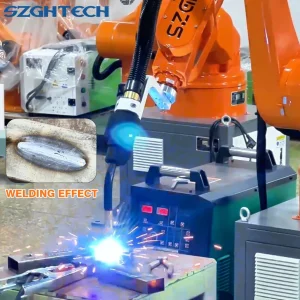
The worldwide manufacturing ecosystem is undergoing an unprecedented shift. As traditional welding systems struggle with rising labor costs, structural welder shortages, and strict safety regulations, robotic welding systems have evolved from high-end options to critical components for standard operations. Standard manual MIG (Metal Inert Gas) welding is highly susceptible to human error, inconsistencies, and high spatter generation. Modern production metrics mandate repeatable structural integrity, which can only be efficiently achieved through specialized robotic automation.
For global procurement directors, choosing the right partner requires navigating beyond basic robot parameters. It involves selecting an OEM/ODM provider capable of integrating kinematic precision, advanced welding software, and real-time sensory loops. Shenzhen Sandai Robot Co., Ltd. addresses this demand by offering highly customizable, performance-driven MIG welding robot arms designed for industrial-scale deployment.
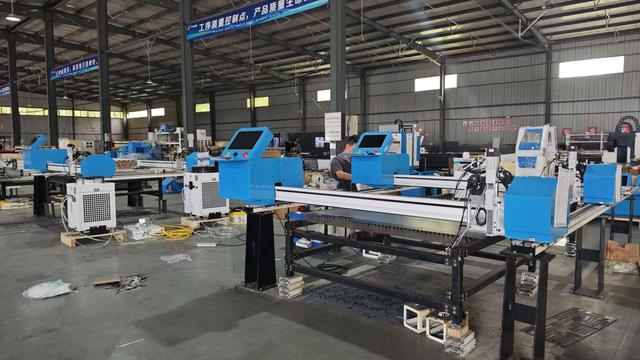
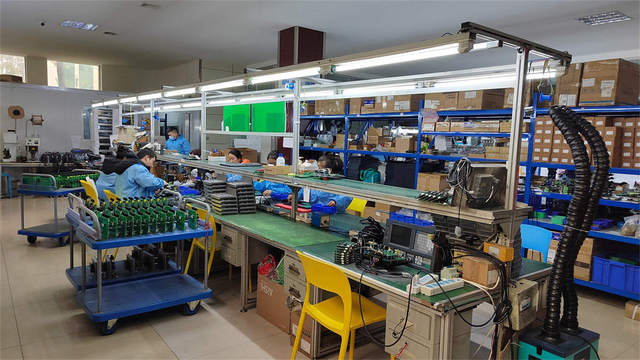
Headquartered in the manufacturing hub of Shenzhen, China, our advanced facility runs 20 automated assembly and testing lines to support global demand with fast, high-volume production.
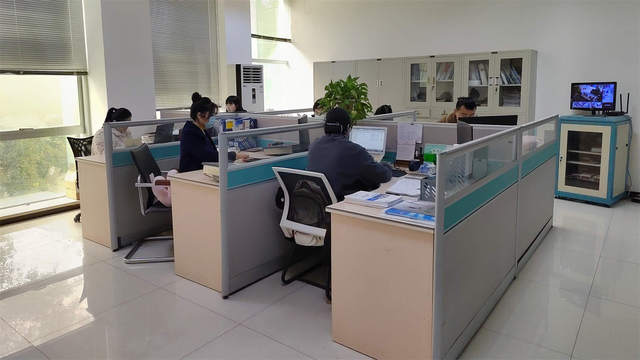
Our R&D division features over 380 seasoned engineers, software developers, and integration experts who build robotic mechanical profiles and custom weld path algorithms.
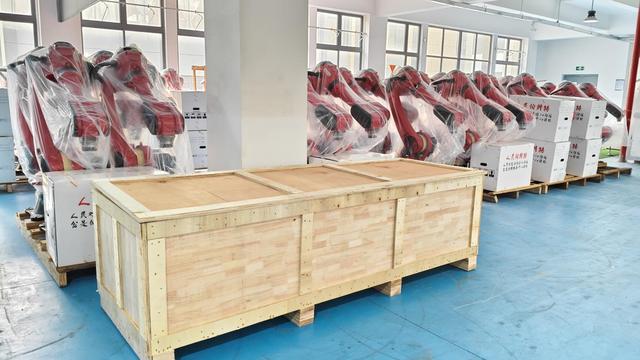
With a production capacity exceeding 8,000 industrial units per year, we are positioned to support tier-1 automotive and global OEM equipment suppliers.
Established in 2012, Shenzhen Sandai Robot Co., Ltd. has grown into a leading industrial automation enterprise. We specialize in developing and manufacturing advanced welding robot arms, robotic welding systems, and custom automation solutions. By integrating high-speed servo-motion controls, visual positioning, and real-time parameter tracking, we ensure precise and stable welding performance across demanding sectors, including automotive, heavy industry, shipbuilding, and aerospace.
Our 6-axis configurations utilize high-rigidity RV and harmonic reducers, allowing smooth joint articulation and steady path tracking even during high-velocity accelerations. This reduces micro-vibrations, ensuring clean, consistent weld beads.
Real-time laser vision sensors dynamically correct torch positions to adapt to joint deviations, thermal warping, and variation in raw materials. Adaptive fill-pass algorithms automatically adjust deposition rates for multi-pass welds.
Our robotic controllers interface directly with leading power supplies (Fronius, Miller, Kemppi, Megmeet) via high-speed communication buses like EtherCAT and PROFINET. This enables millisecond-level control over arc parameters, wire feed speeds, and voltage settings.
High-speed thin-sheet welding requires precise thermal control to avoid burn-through. Our robotic systems offer low-spatter control modes and high axial speeds, optimizing assembly lines for exhaust systems, EV battery enclosures, and structural chassis components.
Excavator booms, crane arms, and heavy chassis require deep penetration welds on thick plates. Our systems feature multi-layer path programming, arc sensor tracking, and heavy-payload capability (up to 20kg+) to manage heavy-duty torches and tracking sensors.
Large structural projects require portable and long-reach welding solutions. We offer customized linear tracks, gantry systems, and lightweight mobile workstations to cover wide working envelopes and maintain arc quality over extended distances.
All robotic systems comply with international standards, including CE, ISO 9001, and ANSI/RIA R15.06, ensuring safe and compliant site inspections.
Integrated Industry 4.0 gateways enable our engineering teams to perform remote diagnostics, troubleshoot programs, and optimize cycle times globally.
We provide full design customization, matching specific mechanical paint profiles, branding, custom software interfaces, and specialized welding kits.
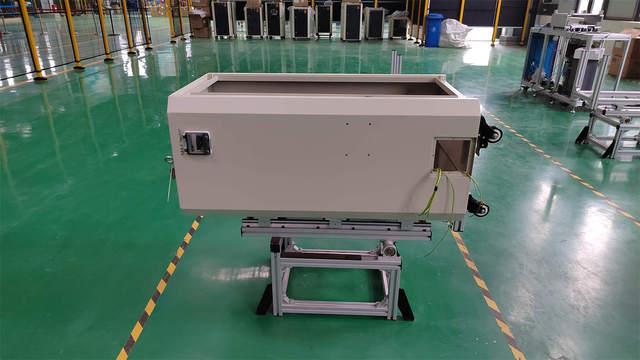
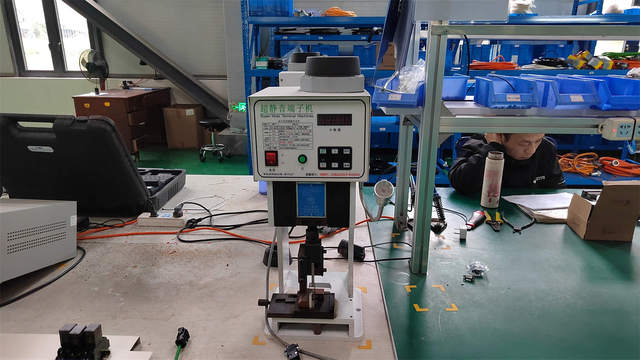
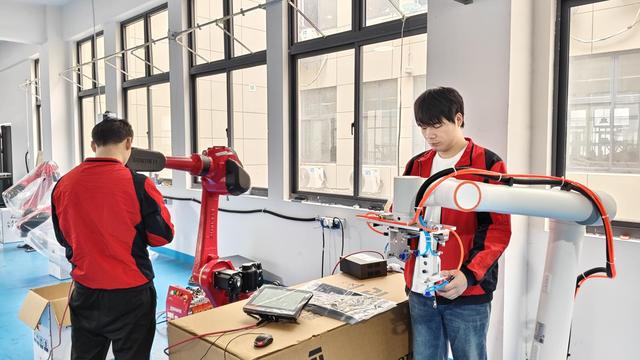
Our facility uses state-of-the-art diagnostic equipment to verify path accuracy, joint rigidity, and electrical compliance for every unit before dispatch.
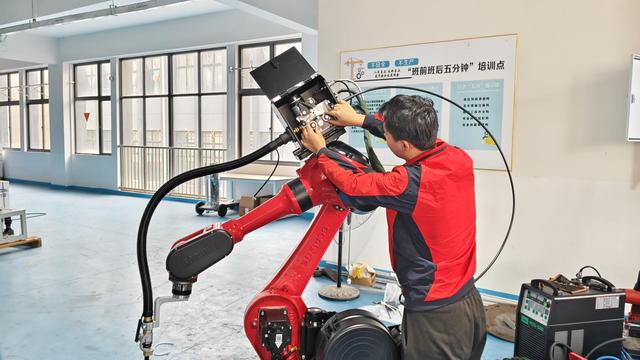
Our control system is built on an open communications architecture, enabling plug-and-play integration with leading global brands, including Fronius, Miller, Lincoln Electric, OTC Daihen, and Kemppi. Communication is handled via digital interfaces such as EtherCAT, PROFINET, DeviceNet, or standard analog connections, allowing direct control over voltage, wire feed rate, and gas flow rates from the teach pendant.
The seam tracking system uses structured laser light to scan the joint geometry profile directly ahead of the welding arc. It dynamically adjusts the robot's coordinates to compensate for issues like thermal distortion, joint variations, or assembly misalignments. This system ensures consistent weld placement and penentration depth, which minimizes scrap rates.
We provide full customization options for global clients. This includes custom kinematic lengths and axis reach configurations, specialized mounting options (gantry, pedestal, track systems), custom-designed teach pendant user interfaces, custom paint colors, and specialized integration kits to suit unique production environments.
Standard robot models are typically dispatched within 2 to 4 weeks. For fully integrated, custom OEM workstations—including fixture design, safety enclosures, PLC programming, and multi-robot configurations—lead times generally range from 8 to 12 weeks. Every system is fully assembled and tested before shipping.
Our robots are designed for minimal downtime. Standard maintenance includes daily checking of the torch nozzle and cleaning station, weekly inspection of wire feed rollers, and scheduled grease replacement for the joints every 5,000 operational hours. The robot's closed-loop design helps protect internal mechanics from dust and spatter.
We provide comprehensive global support. This includes detailed installation manuals, video guides, and direct technical support. For complex lines, we work with a network of local system integrators or deploy our field engineers for onsite commissioning and operator training to ensure a smooth transition.
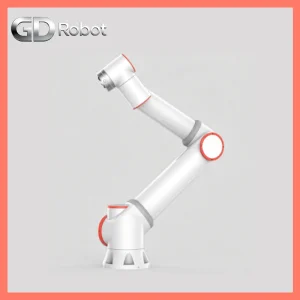
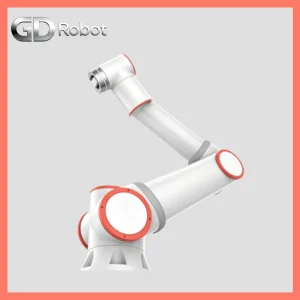
Yes. Collaborative robots like our GD30 and GD16 models support payloads up to 30kg and 20kg respectively. These capacities allow them to easily carry heavy water-cooled MIG torches, wire-feeding units, and vision tracking systems, making them ideal for heavy industrial environments.
Our quality management system is ISO 9001 certified. We verify component precision using Coordinate Measuring Machines (CMM). Every robot undergoes a 72-hour continuous runtime test under load, along with path accuracy testing via laser trackers, to ensure performance meets our strict standards before shipment.
 Sandai Robot